Puffed LiPo Battery: What to Do (No Heroics)
A puffed LiPo is a dead LiPo, and the only correct response is retirement —…
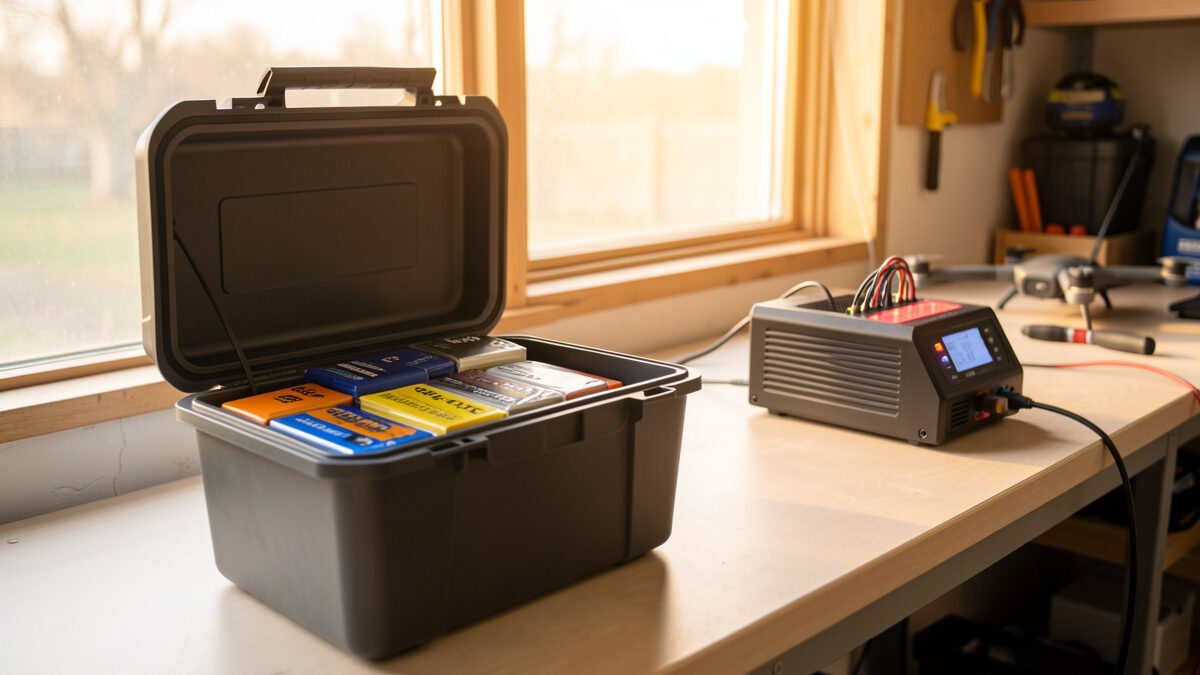
LiPo battery care comes down to four habits done consistently: charge to a storage voltage of about 3.8V per cell when packs sit unused, always balance charge, keep packs in a fireproof container, and retire any pack that puffs. Get those right and a quality pack commonly lasts 150 to 300 charge cycles; get them wrong and a single overnight mistake can end a pack — or start a fire. This is the calm, adult version of LiPo care, written from a battery bench, with zero pack surgery anywhere in it.
I fly two lines of aircraft — sub-250g camera drones and FPV quads I build myself — and both run on lithium-polymer packs that I have charged, stored, transported, and retired by the dozen. The battery bench is where my electrical habits and my flying habits meet, and it is the one part of this hobby where I am genuinely strict, because the failure mode is not a lost drone, it is a fire in the garage. Everything below is care and habit. None of it is building, modifying, repairing, or opening a pack. If a pack is damaged, it gets retired, not fixed — and I will say that more than once before we are done.
A LiPo stores a lot of energy in a soft pouch with no hard case, and that combination is exactly why it earns respect: there is enormous energy density and very little physically protecting it. Each cell sits happiest in a voltage window of roughly 3.0V (empty) to 4.2V (full), and pushing past either end is where the damage and the danger live. Treat the window as a hard fence, not a guideline.
The chemistry is unforgiving in a specific way: a lead-acid or even a phone battery tolerates abuse that a LiPo answers with swelling, venting, or worse. That is not a reason to be afraid of them — millions of pilots fly them safely every day — it is a reason to build a few non-negotiable habits and never break them. The pilots who lose packs (or worse) almost always lost a habit first, not a coin toss. Every aircraft I own runs on these packs, from the tinywhoop I recommend as a first quad to my sub-250g camera drone, and the care routine is the same for all of them.
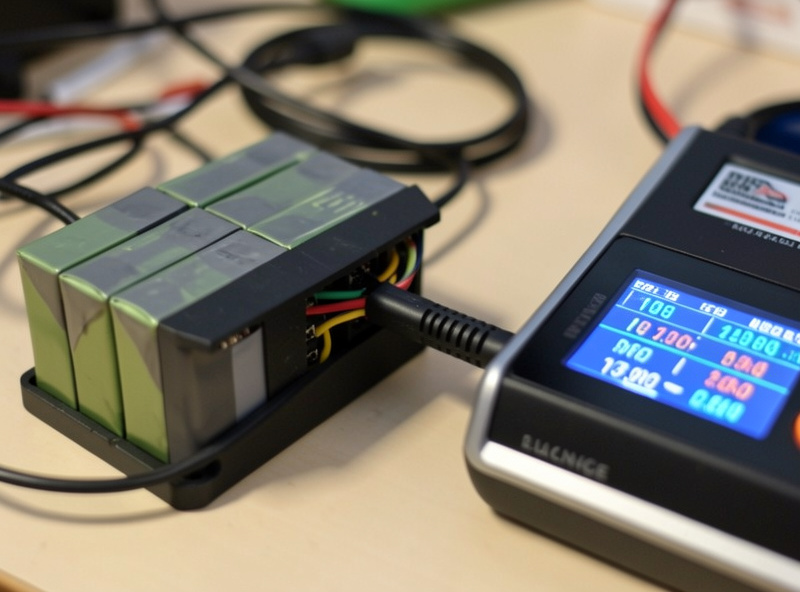
The habit that protects a LiPo more than any other is leaving it at storage charge — about 3.8V per cell, roughly half capacity — whenever it will sit unused for more than a day or two. A LiPo left full at 4.2V per cell ages and swells far faster than one rested at storage voltage; the cell is chemically stressed at the top of its window, and time at that stress is what kills it.
This is why I never charge packs the night before unless I am certain I will fly, and why the last thing I do after a session is discharge anything left full back down to storage. A modern charger has a dedicated storage function that takes a pack to 3.8V per cell from either direction. The discipline is simple: a pack at rest lives at storage charge, not full. I have walked through exactly why that 3.8V figure matters, and what actually happens to the cell chemistry above and below it, in my dedicated piece on LiPo storage charge and why 3.8V per cell matters most. There are no exceptions in my routine — not before a flying day, not after a cancelled one, not for the packs in my FPV starter kit.
Balance charging means the charger watches every cell in the pack individually and brings them all to the same voltage, rather than just filling the pack as a whole. A multi-cell pack whose cells drift apart in voltage is a pack heading for trouble, and the only thing that keeps them matched is charging through the balance lead every single time.
I do not own a charging mode that skips the balance lead, and I would not use one if I did. The few minutes balance charging adds is the cheapest insurance in the hobby. An unbalanced cell can be quietly overcharged while the pack as a whole reads fine, and that overcharge is exactly the condition that leads to swelling and fire. This is one of the habits I wish someone had drilled into me before I made any of the expensive beginner mistakes that the hobby is famous for. If you have ever wondered what the balance lead is actually doing while the charger sits there a few minutes longer, I unpack the whole process in my explainer on LiPo balance charging and why I never skip it.
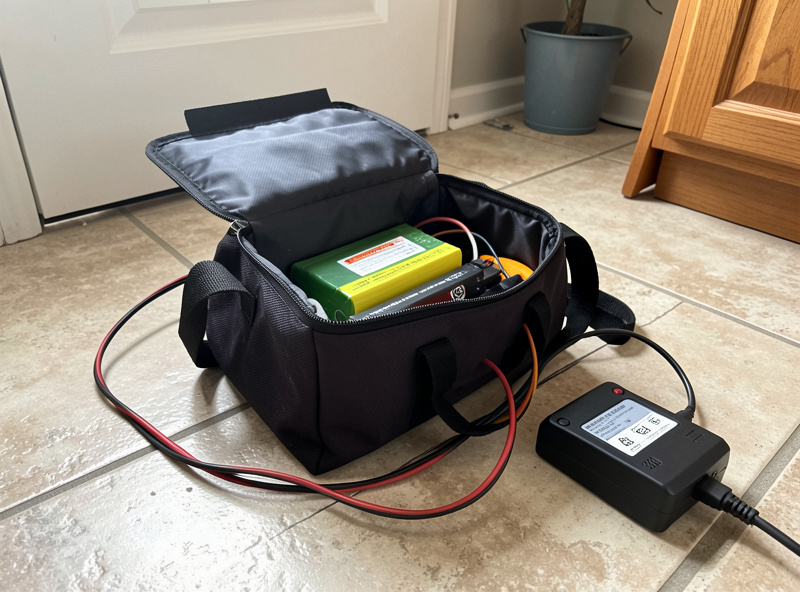
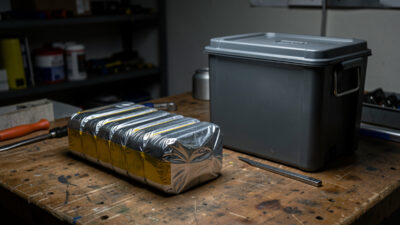
Every pack I own charges and rests inside a fireproof LiPo container — a bag or an ammo-can-style box — placed on a non-flammable surface, never on carpet, never on a wooden bench unattended, and never overnight while I sleep. The container does not make a LiPo safe; it buys time and contains a failure if one happens, which is exactly what you want a fire-resistant barrier to do.
I will be honest about what these containers can and cannot do, because the marketing oversells them: a fireproof bag is a containment layer, not a force field, and the more important habit is charging attended and in a sensible place. I weighed up whether these bags are actually worth buying — and where they genuinely earn their keep versus where they give false confidence — in my honest answer on whether a LiPo safe bag is worth it. The same honesty applies to gear across the hobby — it is the lens I bring to everything from analog versus digital FPV to which simulator is actually worth buying.
The rule on my bench is absolute: a puffed pack is a dead pack, and there are no heroics. Puffing — the pack swelling as gas builds inside the pouch — means the cell chemistry has degraded irreversibly, and a swollen pack is both worse-performing and more dangerous than a healthy one. I do not deflate it, I do not nurse it through a few more flights, and I never open it. If you are staring at a swollen pack right now and wondering what to actually do with it, I wrote a calm step-by-step on what to do with a puffed LiPo battery — no heroics, just the safe sequence.
Retirement means discharging the pack safely to a low voltage and disposing of it through proper battery recycling — not the household bin, where a damaged cell can start a fire. Treating retirement as a normal, routine part of owning packs is what keeps a tired battery from becoming an incident. The same no-heroics judgement is how I decide when a sub-250 camera drone pack has reached the end of its useful life rather than chasing one more flight out of it.
LiPos hate the cold. A pack that delivers a full, punchy flight on a mild day gives noticeably less in winter, sags harder under load, and is more easily damaged if you draw heavily from it while it is cold. In the seasons I fly most, this is not a minor footnote — it changes how I plan every flight and how I handle every pack.
The habits that handle it are all care, never modification: bring packs out warm rather than letting them sit cold, fly shorter and gentler until a pack has warmed under light load, and never charge a pack that is still cold from outside. I have learned the winter routine the hard way over four Swedish seasons, and I put the full cold-weather flying playbook in my guide to LiPo batteries in cold weather. Cold also stacks with other handicaps — it is a big part of why a sub-250 struggles so much in winter wind, when a cold pack and a hard headwind both eat your reserve at once.
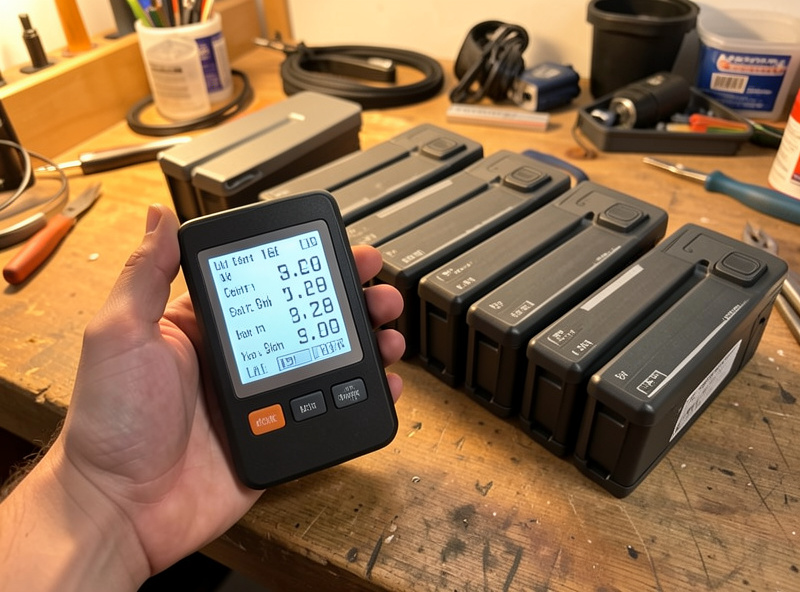
Beyond the big four, a handful of smaller habits are what separate packs that last a couple of seasons from packs that die in months. Land with a sensible reserve instead of flying packs flat; let a pack cool before you charge it and cool again before you store it; charge at a sane rate rather than the highest the pack will tolerate; and check resting cell voltages now and then with a simple checker to catch a cell starting to drift. None of these cost much effort once they are habit, and together they are the difference between a pack that quietly serves three seasons and one that swells in its first winter. I treat the cell checker the way a mechanic treats a torque wrench: a thirty-second check that prevents a problem far more expensive than the check itself. There is a deeper routine I run for squeezing maximum cycles out of every pack, and it is laid out in my guide on how I extend LiPo battery life.
None of it is dramatic, and that is the point — LiPo longevity is a boring discipline, not a clever trick. A pack treated gently in a hundred small ways outlasts an identical pack flown hard and charged carelessly by a wide margin. It is the same patient mindset I bring to logging simulator hours before my first armed flight — the slow, unglamorous habits are the ones that pay off.
The charge rate is the one number worth understanding, and the honest answer is that slower is almost always kinder. Charge rate is expressed in C — 1C means charging a pack at a current equal to its capacity, so a 1300mAh pack at 1C charges at 1.3A. Many packs are rated to accept more, but rated-maximum and habitually-good are not the same thing, and I default to a gentle rate rather than the highest the label allows.
The reason is simple: heat is what ages a LiPo, and faster charging makes more heat. When I am in no hurry — which is most of the time, because I storage-charge in advance rather than scrambling before a flight — I charge at a relaxed 1C and let the pack stay cool. The only time a higher rate earns its place is a genuine field session where I need a pack back quickly, and even then I keep it inside the manufacturer’s rating and watch the pack the whole time. A few extra minutes of patience buys cycles of pack life, and that trade is never close.
This connects directly to where you charge. A pack charged gently on a cool, non-flammable surface, attended, is doing everything in its favour at once. This patient, get-the-fundamentals-right mindset is the same one I bring to choosing a first aircraft, whether that is a sub-250g camera drone or a beginner FPV setup. A pack charged hard, hot, and unwatched is stacking risks on top of each other. The habits compound in both directions, which is exactly why building the good ones early matters so much.
Most dead LiPos do not die in a dramatic event; they die slowly from small, repeated mistakes, and recognising them is half the battle. The most common is leaving packs sitting full for weeks because the storage step felt like a chore — that single habit lapse swells more packs than anything else I see in other pilots’ bins. Close behind is over-discharging, flying a pack so flat that it drops below the safe floor, which damages cells permanently even if the pack still looks fine.
Then there are the handling mistakes: yanking on the balance lead instead of the connector and damaging the thin wires, letting a connector short against metal on the bench, or tossing packs loose in a bag where a key can puncture a pouch. None of these are exotic. They are the ordinary carelessness that creeps in once the novelty wears off and the packs start to feel routine, which is exactly when they deserve the most respect.
The fix for every one of them is the same: a fixed routine you run on autopilot. Mine never changes — fly with a reserve, let the pack cool, check it, balance charge it or storage-charge it depending on when I will fly next, and put it back in the fireproof box. The routine is boring, and boring is the goal. A pack that lives inside a calm, unchanging routine is a pack that lasts, and a pilot with that routine is a pilot who never has the story that begins with “I only left it for a minute.”
You do not need much to do this properly, and what you do need is inexpensive next to the packs and aircraft it protects. The table below is the entire care kit — a charger that balances, a fireproof container, a cell checker, and a safe place to do the work. Everything else is habit.
| Tool | What it does | Why it matters | The habit it enables |
|---|---|---|---|
| Balance charger | Charges each cell individually and offers a storage mode | Prevents cell drift and overcharge; sets storage voltage | Balance every charge; storage-charge at rest |
| Fireproof container | Contains a failure during charge and storage | Buys time and limits damage if a pack vents | Charge and store inside it, on a safe surface |
| Cell checker | Reads per-cell resting voltage quickly | Catches a cell drifting or a pack over-discharged | Spot-check packs; catch problems early |
| Safe charging spot | Non-flammable surface, attended, ventilated | Most failures are survivable if contained and watched | Never charge on carpet, never unattended, never overnight |
Two honest caveats. First, this guide is about care habits only — charging, storage, transport, and retirement. It contains no pack building, no cell replacement, no repair, and no opening of any pack, because those are genuinely dangerous and outside what any care guide should teach. If a pack is damaged, the answer is always retirement.
Second, if you transport packs by air or ship them, lithium battery transport is regulated and the rules are specific; check your carrier’s and your national authority’s current lithium-battery rules rather than trusting a forum post, including a guide of mine. There is more on the practical side of moving packs around in my piece on traveling with a drone, but the regulations themselves always deserve to be read at the source.
I am calm about LiPos, not casual, and the distinction matters. Casual treats a pack like a phone battery you never think about; calm understands the risk precisely and has built habits that make it a non-issue. I have never had a pack fire, and the reason is not luck — it is that every pack I own lives inside the same boring, unbroken routine, charged attended, stored at the right voltage, contained, and retired the moment it shows the first sign of swelling.
That routine costs almost nothing. A balance charger, a fireproof container, and a cell checker together cost a fraction of one good drone, and the habits cost only a little attention. Against that, the downside of getting it wrong is a damaged pack at best and a house fire at worst. No part of the hobby has a worse ratio of effort to consequence — not even the optics decisions I obsess over, like how much sensor size really matters on a tiny drone — which is exactly why this is the one area where I refuse to cut a single corner — and why I would rather you finish this guide slightly bored by how simple the rules are than impressed by some clever trick that does not exist.
Store LiPo packs at roughly 3.8V per cell, about half capacity, whenever they will sit unused for more than a day or two. A pack left full at 4.2V per cell ages and swells much faster. Modern chargers have a dedicated storage mode that reaches 3.8V per cell from either direction.
No. Always charge LiPo packs attended, on a non-flammable surface, inside a fireproof container, and never overnight while you sleep. The failure mode is fire, and the single habit that prevents most incidents is simply being present and able to act if a pack misbehaves.
Puffing means the pack is swelling as gas builds inside the pouch, which signals that the cell chemistry has degraded irreversibly. A puffed pack is a dead pack: discharge it safely and dispose of it through battery recycling. Never deflate it, never keep flying it, and never open it.
Balance charging brings every cell in the pack to the same voltage instead of just filling the pack as a whole. Without it, cells drift apart and one can be quietly overcharged while the pack reads fine overall, which is exactly the condition that leads to swelling and fire.
A quality LiPo cared for well commonly lasts somewhere in the range of 150 to 300 charge cycles, though this varies widely with how hard it is flown and how it is charged and stored. Storage charging, balance charging, and gentle use all push that count higher; abuse cuts it short fast.
No. There is no safe home repair for a damaged, puffed, or failing LiPo pack. Opening, deflating, or modifying a pack is dangerous and is never part of responsible battery care. The correct response to any damaged pack is safe discharge and proper recycling disposal.
A puffed LiPo is a dead LiPo, and the only correct response is retirement —…

You extend LiPo battery life with a handful of unglamorous habits done every single time:…

LiPo batteries behave noticeably worse in cold weather: a pack that gives a full, punchy…
Leave a Reply