Best FPV Simulator 2026: An Honest, Skill-First Pick
Ask ten FPV pilots which simulator is best and you’ll get ten answers, half of…
The 5-inch freestyle quad in the YouTube thumbnail is gorgeous, fast, and exactly the wrong first FPV drone to buy. I own one — built it from parts on my own bench — and I love it. It is still not where any beginner should start. If you take one piece of advice from me about your first real flying hardware, take this: your first FPV quad should be a tinywhoop, and almost every expensive beginner mistake flows from ignoring that single sentence.
I run a tinywhoop fleet through the long Nordic winters precisely because they let me keep flying when it’s dark and freezing outside. But the deeper reason I push beginners toward them has nothing to do with winter — it’s that the tinywhoop is the perfect bridge between the simulator and the open sky, and skipping that bridge is how people crash hard, get discouraged, and quit. Let me make the full case.
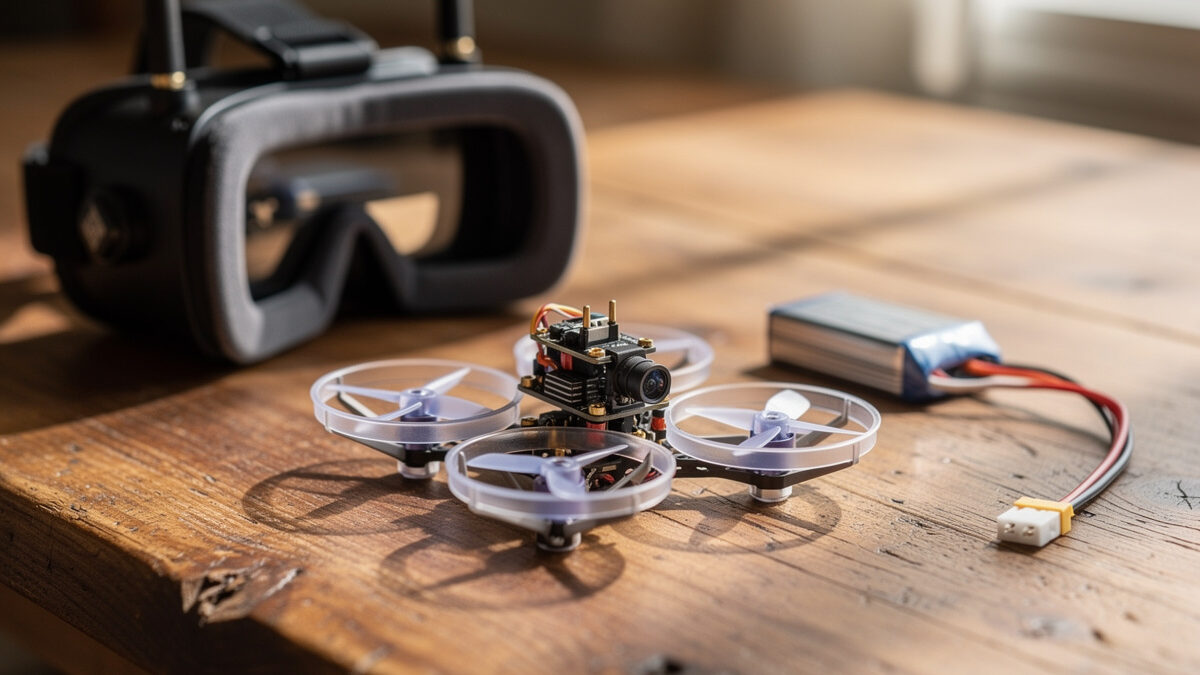
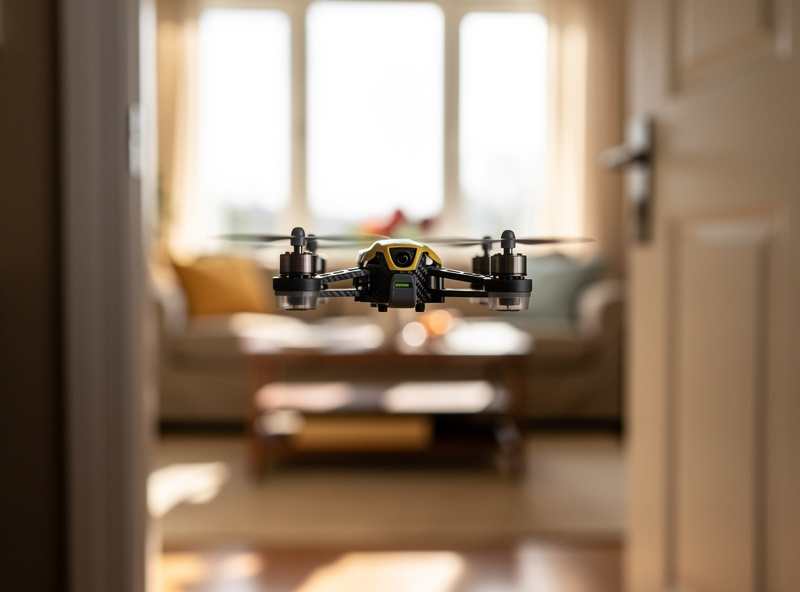
A tinywhoop is a tiny FPV quadcopter — typically well under 30 grams — with its propellers enclosed in ducts. That ducting is the magic. It means the props are protected when the quad hits a wall (which it will, constantly, while you learn), and it means the quad is genuinely safe to fly around indoors near people and furniture. They fly the same acro flight modes a big quad does, on the same kind of radio, so everything you learn transfers directly upward.
Think of it as a real quad shrunk down until its mistakes stop being expensive. That’s not a toy distinction — a tinywhoop is a real FPV aircraft that teaches real skills. It just does it at a scale where crashing is a shrug instead of a repair bill.
Every advantage of the tinywhoop compounds into the same outcome: you fly more, learn faster, and spend less. Here’s the breakdown:
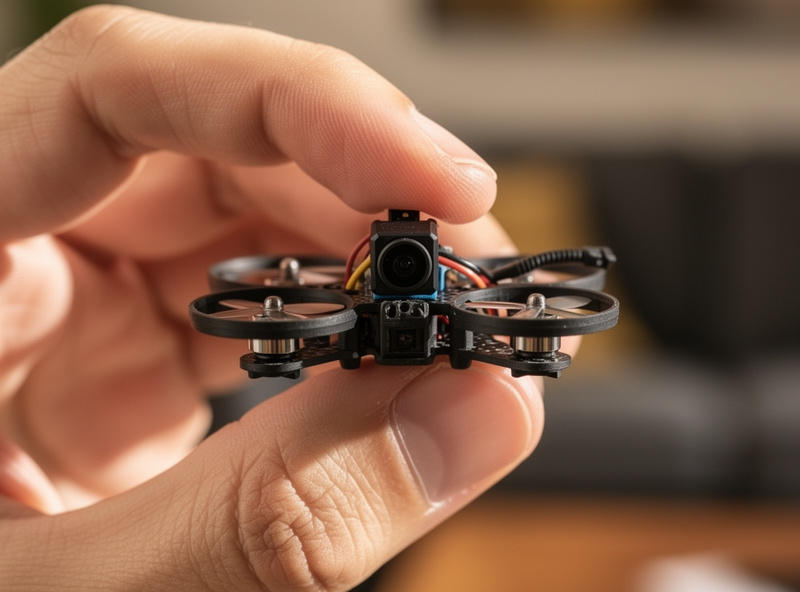
Let me put the two side by side honestly, because the comparison is where the argument lands. This isn’t tinywhoop-is-better-than-5-inch — it’s tinywhoop-first, 5-inch-later, and here’s exactly why.
| Factor | Tinywhoop (first quad) | 5-inch freestyle (later) |
|---|---|---|
| Where you fly | Indoors, year-round | Open outdoor space only |
| Crash cost | Negligible; props protected | Props, motors, arms, frames |
| Safety near people | Ducted, low energy, safe | Exposed props, high energy, hazardous |
| Skill transfer | Full — same acro, same radio | It’s the destination |
| Beginner outcome | Flies more, quits less | Crashes hard, often quits |
The 5-inch is faster, more powerful, and what most people picture when they imagine FPV. It is also unforgiving, dangerous near people, expensive to crash, and confined to open spaces. Leading with it is the classic beginner trap. Earn it. You’ll enjoy it ten times more when you can actually fly it.
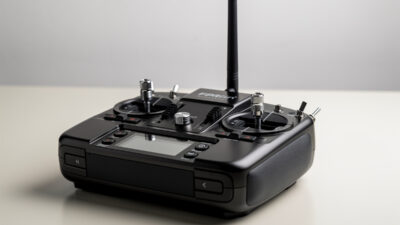
The whoop itself is only part of the kit. To actually fly you also need a radio (the same hall-gimbal transmitter I tell everyone to buy first, which doubles as your sim controller), goggles to see through, a charger, and a few batteries so you’re not waiting between flights. The beauty of starting with a whoop is that the supporting gear is all modest — you don’t need a big field charger or a fistful of expensive packs. A simple charger and a handful of tiny batteries keeps you in the air.
The whoop starter kit I point beginners toward. As an Amazon Associate I earn from qualifying purchases. These are category search links, not endorsements of a specific listing.
The packs a whoop uses are small, but they’re still LiPo cells and deserve the same calm respect as any other. The habits don’t change with size: charge them on a proper charger, store them at storage charge when you won’t fly for a while, charge inside a LiPo bag, and retire any pack that puffs. A puffed cell is done — no heroics, no “just one more flight.” None of this is pack modification; it’s just adult battery behavior, and it’s worth building the habit from your very first tiny pack so it’s automatic by the time you’re flying bigger ones.
Here’s how the progression actually goes once the whoop has done its job. You fly the whoop until orientation and throttle control are second nature indoors. Then you step outdoors — often to a slightly bigger quad like a 3.5-inch cinewhoop-class machine — where you add wind and open space to the mix. Only once that feels comfortable do you reach for the 5-inch freestyle quad that started this whole obsession. The whoop isn’t a detour on the way to “real” FPV. It is real FPV, and it’s the rung of the ladder that makes every rung above it reachable.
This whole sequence — sim, then radio, then whoop, then bigger quads — is the entry path I lay out in full in my guide to getting into FPV, and it pairs naturally with the case for putting in your simulator hours before flying. The whoop is the moment all those couch hours pay off in the real world for the first time. It’s a genuinely great feeling, and a tinywhoop is the cheapest, safest way to reach it.

Ask ten FPV pilots which simulator is best and you’ll get ten answers, half of…
Somewhere early in the hobby every newcomer hits the fork that splits the whole of…
I’m going to defend a piece of advice that sounds completely backwards to every newcomer:…
Leave a Reply