Is a LiPo Safe Bag Worth It? An Honest Answer
A LiPo safe bag is worth it, but not for the reason the marketing implies.…

LiPo batteries behave noticeably worse in cold weather: a pack that gives a full, punchy flight at 20°C delivers meaningfully less in near-freezing conditions, sags harder under load, and is more easily damaged if you draw heavily from it while it is cold. None of this is a defect — it is chemistry — and none of it requires modifying a pack. It requires habits. As someone who flies sub-250g camera drones through Nordic winters, I plan for cold every time the temperature drops, and here is exactly how.
The cold does not break LiPos; it temporarily reduces what they can deliver and makes them more fragile under load until they warm up. Understanding that distinction is the whole game, because the fixes are all about timing, warmth, and margin — not about doing anything to the pack itself. This is the honest cold-weather picture from real winter flying, care and habit only, with no pack surgery anywhere in it.
Inside a LiPo, charge moves by chemical reactions, and cold slows those reactions down. The colder the pack, the higher its internal resistance, which means it cannot deliver current as freely and its voltage sags harder the moment you ask it to work. A pack that holds a strong voltage under throttle at room temperature will dip much lower under the same load when it is cold, and that dip is what cuts your usable flight short.
The effect is fully temporary in a healthy pack — bring it back to room temperature and it performs normally again. But while it is cold, the reduced capacity and harder sag are real and have to be flown around. The danger is treating a cold pack like a warm one: expecting the same flight time and the same punch, and getting caught out when the voltage drops faster than you planned for.
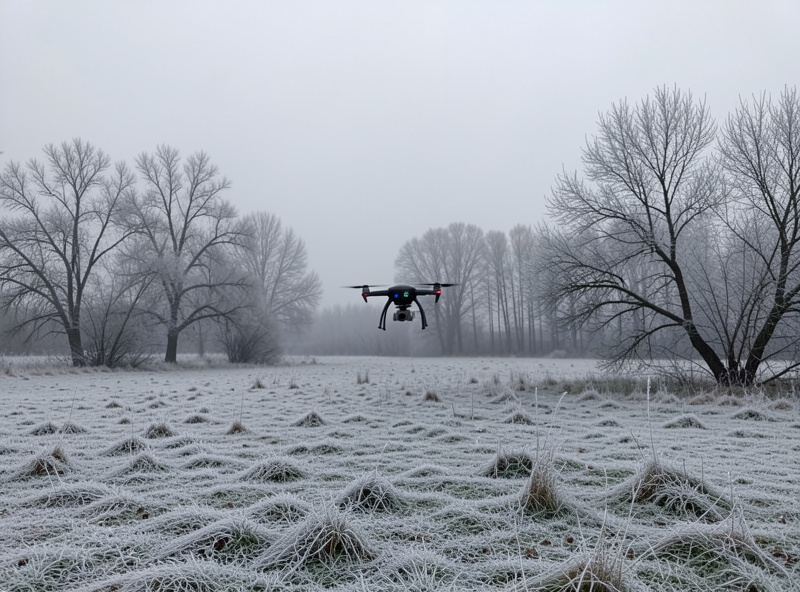
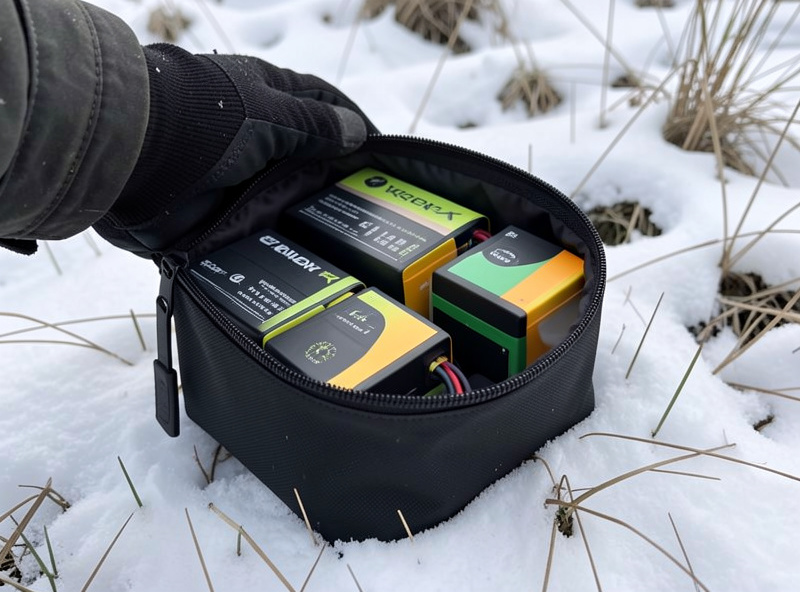
The single best cold-weather habit is launching with a warm pack. I keep packs warm right up until I fly — in an inside pocket, in an insulated pouch, or in the warm car — rather than letting them sit out in the cold where they lose performance before they ever spin a motor. A pack that starts the flight warm delivers far more of its capacity than one that started cold, even if both cool somewhat during the flight. In real Nordic winter sessions I treat the packs the way I treat my hands — they live in a warm pocket until the last possible second, and they go straight back into the warm the instant a flight ends rather than sitting on a frozen tailgate losing temperature for the next launch. On the coldest days I will fly two packs and rotate so one is always warming while the other is in the air, which keeps every launch starting from a sensible temperature instead of a steadily colder one.
The flight itself helps a little, because a pack under load generates a small amount of its own heat, but that is not enough on its own — you want the pack warm at launch, not relying on the flight to warm it. An insulated battery pouch is a cheap way to keep a stack of packs at temperature in the field between flights. As an Amazon Associate I earn from qualifying purchases; the gear I link is what I actually use.
The firmest cold-weather rule is this: never charge a pack that is still cold, and avoid drawing heavy current from a cold pack. Charging a cold LiPo can plate lithium inside the cell and cause permanent damage, so a pack brought in from the cold must warm to room temperature before it goes on the charger. This is not a suggestion; it is one of the few hard lines in battery care.
The same caution applies to discharge. Pulling maximum current from a very cold pack stresses it far more than the same draw would when warm, which is another reason to fly gently until a pack has warmed under light load. Let the pack ease into the flight rather than punching it hard the moment it leaves your hand. Warm before charge, gentle before hard load — those two habits prevent essentially all cold-related pack damage.
Cold shrinks your usable flight, so I shrink my plan to match. In winter I treat the effective flight time as shorter, keep the aircraft closer and lower, and land with a larger reserve than I would in summer, because a cold pack’s voltage falls off faster near the end and a low-voltage warning in the cold means business. The margin that feels generous in mild weather is the right margin in winter.
This stacks badly with wind, which winter often brings along, since fighting a headwind and a cold pack at once eats your reserve from both ends. When it is cold and windy, I am conservative twice over — short flights, close in, and home with plenty to spare. The cold-weather mindset is simply to assume less from the pack and leave more in the tank, every flight, until spring — the same conservative judgement that keeps me out of trouble when I am avoiding the mistakes that cost beginners drones.
Cold storage is genuinely fine for LiPos — they are happiest cool, and an unheated space is a perfectly good place to keep packs over winter, provided they are at storage charge of about 3.8V per cell. The only rule cold storage adds is the one already covered: a pack brought in from cold storage warms to room temperature before it is charged. Cold rest is good; cold charging is not.
So my winter storage routine is unchanged from the rest of the year except for that warming step. Packs live at storage charge in their fireproof container in an unheated space, perfectly content, and when I want to fly I bring them in, let them warm, then charge. Cold weather changes how I fly and how I handle packs in the field far more than it changes how I store them.
| Cold-weather situation | What happens | The habit |
|---|---|---|
| Cold pack at launch | Less capacity, harder voltage sag | Keep packs warm until you fly |
| Charging a cold pack | Risk of permanent cell damage | Warm to room temperature first |
| Hard throttle on a cold pack | Extra stress, sharp voltage dip | Fly gently until the pack warms |
| Cold plus wind | Reserve drains from both ends | Shorter flights, bigger reserve |
| Winter storage | Cold rest is fine for packs | Storage charge, fireproof box, warm before charging |
Yes. Cold slows the chemistry inside a LiPo and raises its internal resistance, so a cold pack delivers less capacity and its voltage sags harder under load. A pack that gives a full flight at room temperature gives noticeably less near freezing. The effect is temporary and reverses once the pack warms up.
No. Charging a cold LiPo can plate lithium inside the cell and cause permanent damage. Always let a pack warm to room temperature before charging it. Cold storage is fine, but cold charging is one of the few hard lines in battery care that should never be crossed.
Keep packs warm right up until you fly, in an inside pocket, the warm car, or an insulated battery pouch, rather than letting them sit out in the cold. A pack that starts the flight warm delivers far more of its capacity than one that started cold, even if it cools somewhat during the flight.
Yes. Treat the usable flight time as shorter, keep the aircraft closer and lower, fly gently until the pack warms under light load, and land with a larger reserve. A cold pack’s voltage falls off faster near the end, so the margin that feels generous in summer is the right margin in winter.
No. Cold storage is genuinely fine and LiPos are happiest cool. Keep them at storage charge of about 3.8V per cell in a fireproof container, even in an unheated space. The only rule cold storage adds is to warm a pack to room temperature before charging it.
Cold reduces the usable capacity a LiPo can deliver and makes its voltage sag harder under load, so the pack hits its low-voltage limit sooner. This is normal chemistry, not a fault. Keeping packs warm until launch recovers much of the lost flight time.
A LiPo safe bag is worth it, but not for the reason the marketing implies.…
Balance charging means the charger monitors and equalises every cell in a multi-cell LiPo individually,…

LiPo storage charge means resting a pack at roughly 3.8V per cell — about half…
Leave a Reply