Puffed LiPo Battery: What to Do (No Heroics)
A puffed LiPo is a dead LiPo, and the only correct response is retirement —…
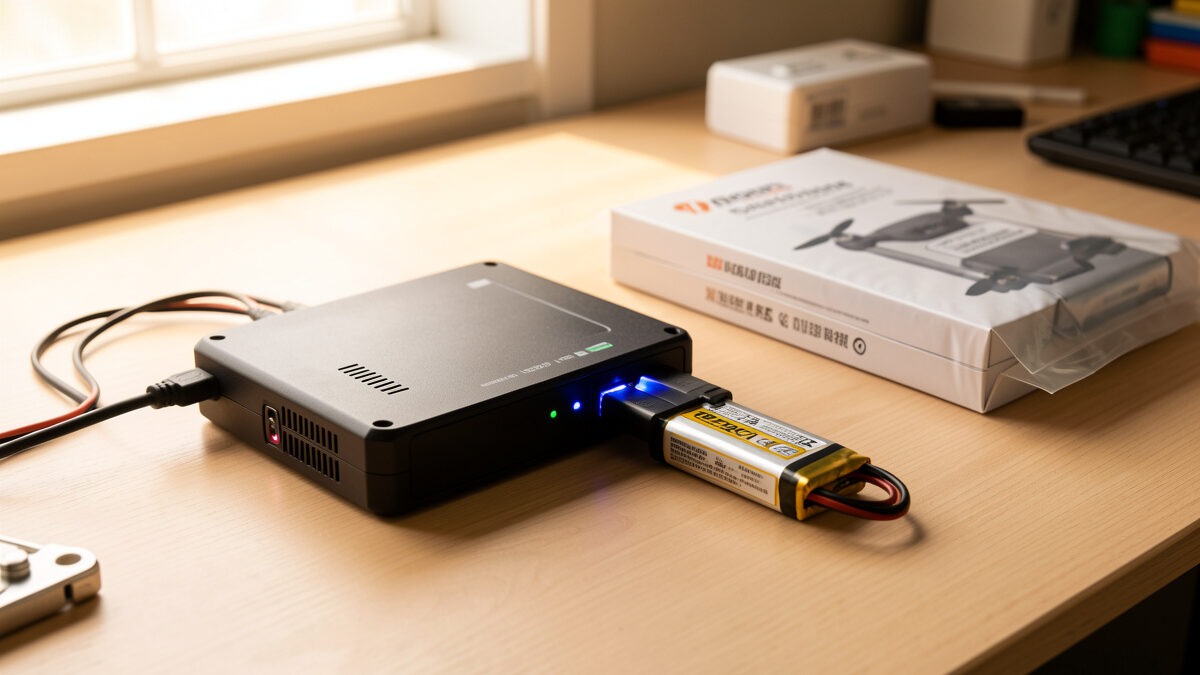
LiPo storage charge means resting a pack at roughly 3.8V per cell — about half capacity — whenever it will sit unused for more than a day or two. It is the single highest-return habit in battery care: a pack stored at 3.8V per cell ages slowly, while an identical pack left full at 4.2V per cell swells and degrades far faster. One unattended setting on your charger decides whether a pack lasts seasons or months.
I learned to respect this the unglamorous way — by watching packs I had left full “just for the weekend” come back puffy weeks later, while the packs I had storage-charged out of habit stayed flat and healthy for years. This is the storage-charge habit exactly as I run it on my own bench, why it works, and the small judgement calls that come with it. Everything here is care and habit; nothing in it involves opening, building, or modifying a pack.
Storage charge is a resting voltage of about 3.8V per cell, which sits right in the comfortable middle of a LiPo’s 3.0V-to-4.2V window. At that midpoint the cell chemistry is under the least stress: it is neither pushed up against the full ceiling nor scraping the empty floor. A pack held there is essentially relaxed, and relaxed cells age slowly.
The number is not arbitrary. The damage that ages a LiPo accelerates near the top of the voltage window, so the closer a resting pack sits to 4.2V per cell, the faster it deteriorates. Dropping it to 3.8V per cell removes most of that stress while leaving the pack ready to top up quickly when you next fly. It is the best of both worlds: minimal aging now, fast turnaround later.
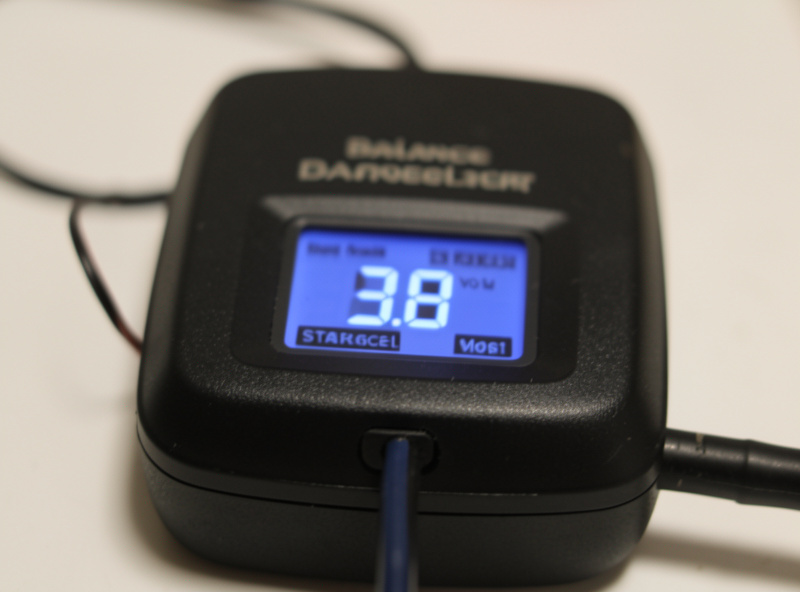
A LiPo at 4.2V per cell is a fully tensioned spring. It is doing exactly what you want during a flight, but at rest that tension is pure liability — the cell is chemically stressed and every hour spent there nudges it toward swelling. This is why the timing of your charging matters as much as the charging itself.
The practical consequence is the rule I never break: I do not charge a pack until I am genuinely confident I will fly it soon. A pack charged to full the night before a session that then gets rained out has spent a stressful night at 4.2V per cell for nothing. Multiply that across a season of optimistic charging and you have aged a whole fleet of packs for flights that never happened. The fix is simple discipline about when you press start.
My routine is fixed and boring, which is the point. When I get home, packs cool first — a warm pack from flying should never go straight onto the charger. Once cool, any pack I will not fly within a day or two goes to storage charge, and the charger’s storage function handles it whether the pack is sitting high from a cut-short flight or low from a full one.
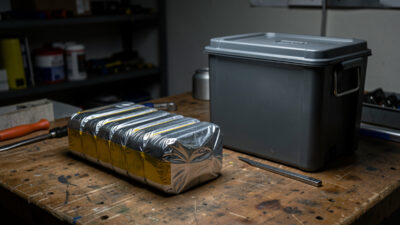
The charger discharges a too-full pack down to 3.8V per cell or tops up a too-low pack up to it, landing in the middle either way. I storage-charge on the same fireproof surface I use for everything else, and a healthy balance charger with a storage mode makes the whole thing a one-button job. The packs then live in their fireproof container at storage charge until the next flying day — the same packs that power everything from my indoor tinywhoop to my sub-250 camera drone.
As an Amazon Associate I earn from qualifying purchases; the gear linked here is the kind I genuinely keep on my own bench.
My rule of thumb is the day-or-two line: if a pack will rest longer than that, it goes to storage charge. A pack left full for a single evening is no crisis, but past a couple of days the aging at full voltage starts to matter, and beyond a week it matters a lot. The habit is easier to keep as “always storage-charge at rest” than to litigate each pack’s timeline.
The flip side is over-discharge. A pack left sitting low — well under storage voltage for a long stretch — can self-discharge below the safe floor and be permanently damaged. Storage charge protects against this too, because 3.8V per cell leaves a healthy buffer above the danger zone. Both extremes are bad; the middle is safe, which is exactly why the middle is where resting packs belong.

Where you store packs matters alongside their voltage. A cool, dry place is ideal; a hot car or a sun-baked shelf is not, because heat accelerates the same aging that high voltage does. In the colder seasons I keep packs in an unheated space, and cold storage is genuinely fine for LiPos — they are happiest cool — provided you never charge or heavily discharge a pack while it is still cold.
The one rule cold adds is patience: a pack brought in from the cold should warm to room temperature before it goes on the charger. Storage charge itself is gentle enough that this is rarely an issue, but it is part of the same calm discipline. Cold rest, warm charge, and a pack at 3.8V per cell will wait out a whole winter without complaint. Cold and batteries are a bigger topic than storage alone, which is part of why winter flying is so much harder in the first place.
Storage charge is preventive, not curative. It keeps a healthy pack healthy; it does not rescue a pack that has already been abused. A pack that has been left full for months, over-discharged hard, or that shows any swelling is not saved by belatedly storage-charging it — it is a pack to retire, safely and through proper recycling, not nurse along.
This is where I stay strict: if a pack is puffed or has been deeply mistreated, storage charge is irrelevant and the only correct move is retirement. There is no setting, no trick, and certainly no opening or modifying the pack that brings a damaged LiPo back. Storage charge is the habit that means you rarely face that decision in the first place, which is the whole reason it earns its place at the top of the list. In years of running packs this way I have retired far more batteries for simple old age — a slow, honest decline in capacity after a few hundred cycles — than for damage, and that is exactly the outcome you want. A pack that dies of old age after serving you faithfully is the system working; a pack that swells at six months is almost always a habit that slipped. Keep the storage-charge habit unbroken and you tilt every pack you own toward the first ending and away from the second.
| Resting state | Per-cell voltage | What happens over time |
|---|---|---|
| Stored full | ~4.2V | Accelerated aging and swelling — avoid |
| Storage charge | ~3.8V | Minimal stress, slow aging — ideal |
| Stored low | below ~3.6V | Risk of self-discharge below the safe floor |
| Over-discharged | under ~3.0V | Permanent cell damage — likely retirement |
Store LiPo packs at about 3.8V per cell, roughly half capacity. That midpoint of the 3.0V to 4.2V window puts the least chemical stress on the cells, so a pack rested there ages slowly while staying ready to top up quickly before your next flight.
A single evening at full charge is fine, but past a day or two the accelerated aging at 4.2V per cell starts to matter, and beyond a week it matters a lot. The simple habit is to storage-charge any pack that will rest longer than a day or two.
Yes. A pack rested at 3.8V per cell ages far more slowly than an identical pack left full at 4.2V per cell. Storage charging is widely regarded as the highest-return single habit in LiPo care, often the difference between a pack lasting seasons versus months.
Let a cold pack warm to room temperature before charging. Cold storage itself is fine for LiPos, but charging or heavily discharging a cold pack can damage it. The rule is simple: cold rest is okay, but always charge a pack only once it has warmed up.
No. Storage charge is preventive, not curative. A pack that is already puffed, deeply over-discharged, or left full for months is not rescued by storage charging it. A damaged pack should be safely discharged and recycled, never nursed along or opened.
A puffed LiPo is a dead LiPo, and the only correct response is retirement —…

LiPo batteries behave noticeably worse in cold weather: a pack that gives a full, punchy…

LiPo battery care comes down to four habits done consistently: charge to a storage voltage…
Leave a Reply