Why Does 250 Grams Matter for Drones? The Logic Behind the Line
Ask most new pilots why the 250-gram line matters and you get some version of…
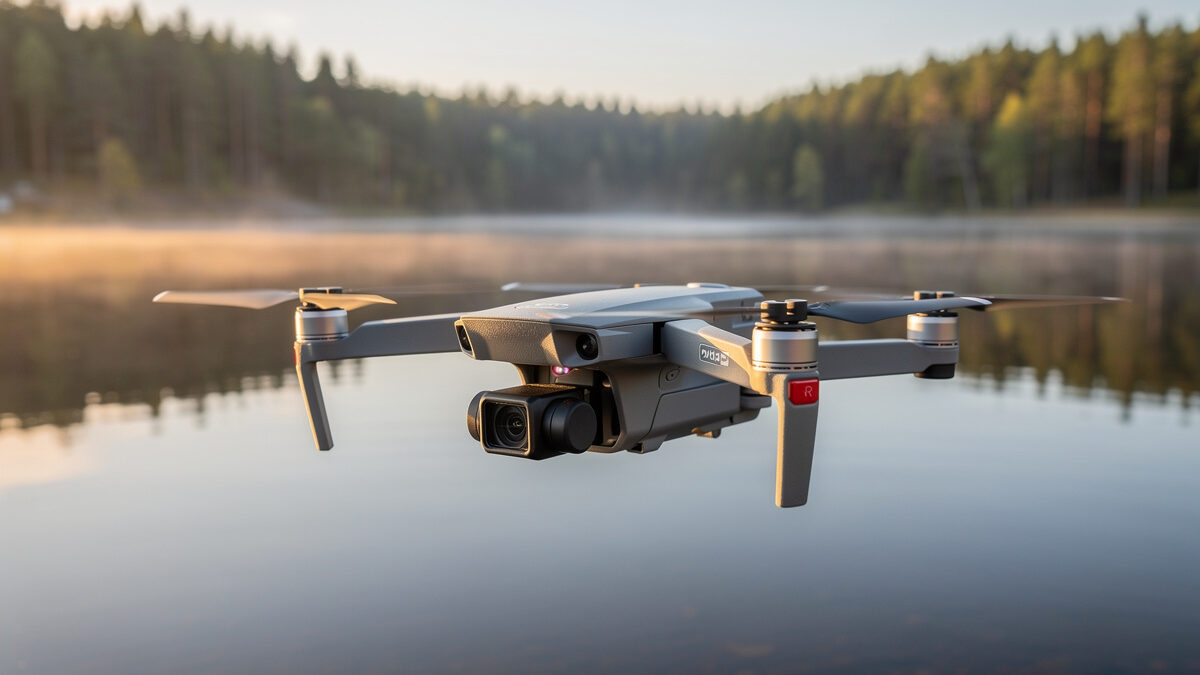
The sub-250-gram drone is the single most consequential weight class in consumer flying, and most buyers reach for it for exactly the wrong reason. They think the number buys them invisibility from the rules. It does not. What it buys is a lighter, more proportionate set of obligations in most countries, a drone you can actually slip into a jacket pocket on a hike, and a flying experience that is genuinely different from the bigger camera birds in ways nobody puts on the box. I fly a Mini-class sub-250 as my daily, alongside a heavier Air-class drone with a larger sensor, and I have run that pair through four Swedish seasons specifically to learn what the weight class gives and what it quietly takes away.
This guide is the map for that whole decision. It is the regulation-friendly volume segment of the hobby for a reason, but “regulation-friendly” is not “regulation-free,” and I want to be precise about that from the first paragraph. Everything below is written from my own flying and my own bench, with the public rules either stated correctly or pointed straight at the authority that owns them. I do not give legal advice, and I will tell you exactly where to go read the rules that actually apply to you.
Sub-250 means the drone’s takeoff weight, including its battery and anything bolted to it, is under 250 grams. That threshold did not appear by accident. Regulators across multiple jurisdictions landed on roughly a quarter-kilogram as the line below which a falling object carries dramatically less energy and therefore less risk of serious injury. A 249-gram drone dropping out of the sky is a very different problem from a 900-gram one, and the rulebooks reflect that.
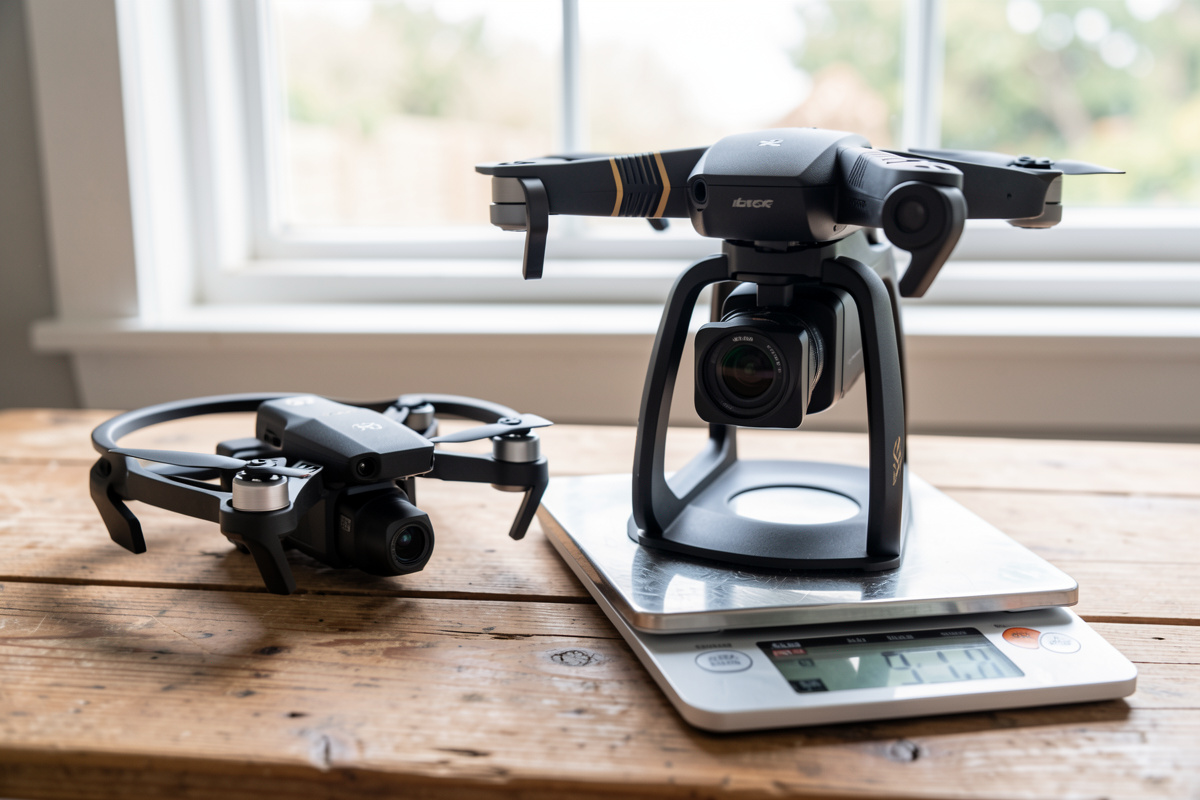
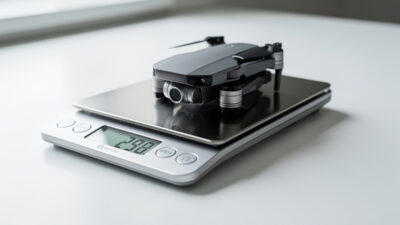
The practical effect, in most places, is that the lightest class faces the gentlest version of the rules. Fewer paperwork hurdles, more relaxed proximity allowances, and a lower barrier to simply going flying. That is the entire commercial logic behind why manufacturers fight so hard to keep these drones a hair under the line, sometimes sacrificing battery size or build robustness to get there. I have weighed mine on a kitchen scale, and the honest reality is that “249 grams” is a marketing-critical number the manufacturer engineers toward, not a comfortable margin.
Crucially, the weight is total takeoff weight. Strap on a propeller guard, a heavier aftermarket battery, or a payload, and you can shove a “sub-250” drone over the line without realizing it, which changes which rules apply to that flight. This is the first thing real owners get wrong and the first thing this guide exists to fix.
It is also worth being clear about what the threshold is not. It is not a safety guarantee — a sub-250 drone is still a spinning-propeller aircraft that can injure a person, damage property, and violate airspace just like any other. It is not a privacy exemption — the camera is the camera regardless of how light the drone is. And it is not a global standard that means the same thing everywhere; different regulators draw their lightest tier at the same 250-gram line but attach different obligations to it. The number is a useful, real, physics-grounded threshold, but it is the floor of your responsibilities, not the ceiling of your freedoms. I treat mine as a real aircraft that happens to be light, and that mindset has served me far better than treating it as a license-free toy.
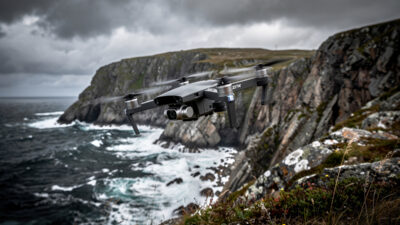
Here is what nobody selling you the drone wants to dwell on: the same lightness that earns you the easy rules is the same lightness that makes the drone worse at flying in real conditions. Physics does not care about your marketing department. A 249-gram aircraft has far less inertia to fight a gust than a 900-gram one. On a calm morning over a Swedish lake, my sub-250 and my Air-class drone produce footage that is honestly hard to tell apart at a glance. Add a coastal breeze, and the gap opens fast — the little one starts working visibly harder to hold position, the gimbal earns its keep, and at some point the drone simply tells you it cannot make headway.
The sensor is the other half of the tradeoff. To stay under the weight line, sub-250 drones carry small sensors — and I judge a drone camera the way I judge any lens on my bench, where sensor size is the quiet variable that decides how the image holds up when the light gets difficult. A larger sensor on a heavier drone gathers more light, holds more dynamic range in a bright sky over a dark forest, and degrades more gracefully as the sun drops. The sub-250 is genuinely good in good light. It is the heavier classes that pull ahead exactly when conditions get hard.
None of this makes the weight class a bad choice. It makes it a choice with a known shape. If you fly mostly in decent weather, want the lightest regulatory footprint, and value pocketability over ultimate image quality, the sub-250 is the correct daily driver — it is mine. If you chase image quality in marginal light and wind, you are buying into the heavier classes and their heavier rulebook on purpose.
This is the comparison I wish someone had handed me before I bought my first drone. It is the relative behavior I have observed flying both classes side by side, not a spec sheet — every cell is a verdict from the air, not a number off a box.
| Factor | Sub-250g (Mini class) | Heavier camera class (Air/Pro class) |
|---|---|---|
| Regulatory footprint | Lightest tier in most jurisdictions — check your own regulator | Heavier obligations: more proximity limits, more paperwork in most places |
| Wind handling | Struggles sooner; works hard in a breeze | More inertia, holds position in stronger wind |
| Sensor size | Small — excellent in good light, fades in hard light | Larger — more dynamic range, better low light |
| Portability | Jacket pocket, packs anywhere | Needs a proper bag |
| Flight time per battery | Compromised by the weight ceiling | More room for a bigger pack |
| Best for | Travel, hikes, easy regulatory life, fair weather | Image quality in marginal conditions, serious work |
Read that table as a personality profile, not a scoreboard. Neither column wins outright. The sub-250 wins on the rules, on the pack weight, and on how often it actually leaves the house with you. The heavier class wins the moment the conditions stop cooperating.
I fly under EU rules, in the open category, and I take registration and the proximity rules as adult obligations rather than annoyances. Under the EU framework, the sub-250 class sits in the gentlest sub-category of the open category, which is precisely why it is so popular. But — and this matters — even a sub-250 drone with a camera triggers operator registration in the EU, because anything with a sensor that can capture personal data brings registration into play regardless of weight. People assume “under 250 grams” means “no registration ever.” That is the most common and most expensive misconception in the whole class.
What I will not do is restate your country’s exact thresholds as if they were gospel, because they differ by jurisdiction and they change. A rule I state wrong is not just embarrassing — it can get you in real trouble. So here is the honest doctrine I fly by and recommend without reservation: find and read your own national aviation regulator’s drone pages before your first flight, and treat them as the only source that matters. For readers in the EU, that means your national aviation authority implementing the EASA framework. For readers in the United States, the relevant framework is the FAA’s rules — I am an EU pilot and do not fly under US rules, so I point you to the FAA directly rather than pretend to lived experience I do not have.
What is universal, and what I will say plainly: register as an operator where required, label your drone with your operator ID, fly within visual line of sight, keep clear of people and airports and restricted airspace, and never treat the low weight as permission to do something you would not do with a heavier drone. The weight class lowers the paperwork, not the responsibility.
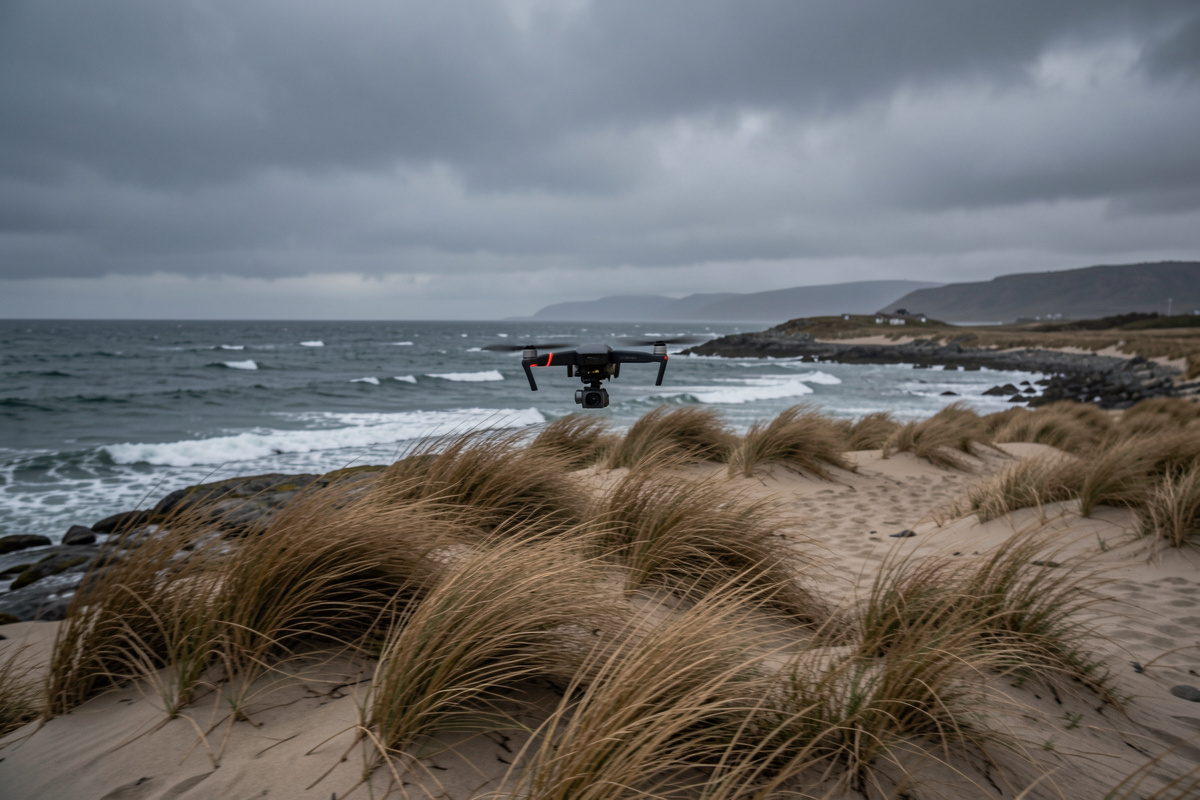
If you take one practical thing from this guide, take this: the sub-250 will teach you about wind faster than any other drone, because it loses the argument with a breeze sooner. The first time mine flashed a high-wind warning and started visibly crabbing to hold its spot, I learned more about flying lightweight than any manual taught me. The gimbal will keep your footage looking calm long after the airframe has started fighting — which is a trap, because the smooth image hides how hard the drone is working and how little margin you have left to fly home against the wind.
The honest rule I follow: the wind aloft is always stronger than the wind you feel standing on the ground, and battery you spend punching upwind is battery you do not have for the trip back. I plan the hard leg first and the easy leg home. That single habit has saved me more close calls than any feature on the drone.
I came to drones from the lens bench, and the single most useful instinct I brought with me is that sensor size, not megapixel count, decides how an image holds up when the scene gets difficult. A sub-250 drone’s small sensor can produce a stunning frame in even, generous light — a clear morning, a flat overcast, a golden-hour landscape with the sun behind you. Push it into high-contrast scenes, a bright sky over a shadowed valley, or the dim end of the day, and the small sensor’s limits arrive: less dynamic range to hold both highlights and shadows, more noise as it pushes sensitivity, and a faster slide from clean to mushy as the light drops.
This is not a flaw to be ashamed of — it is the cost of the weight class, and it is exactly why the heavier camera drones exist. The way I evaluate a sub-250 camera is to ask what it does at the edges, because anyone’s footage looks fine in perfect light. Mine earns its keep on the easy days and tells me honestly when the light is past its pay grade. If most of your flying happens in good conditions, the small sensor will never hold you back. If you live for the marginal hours, you already know which way to lean.
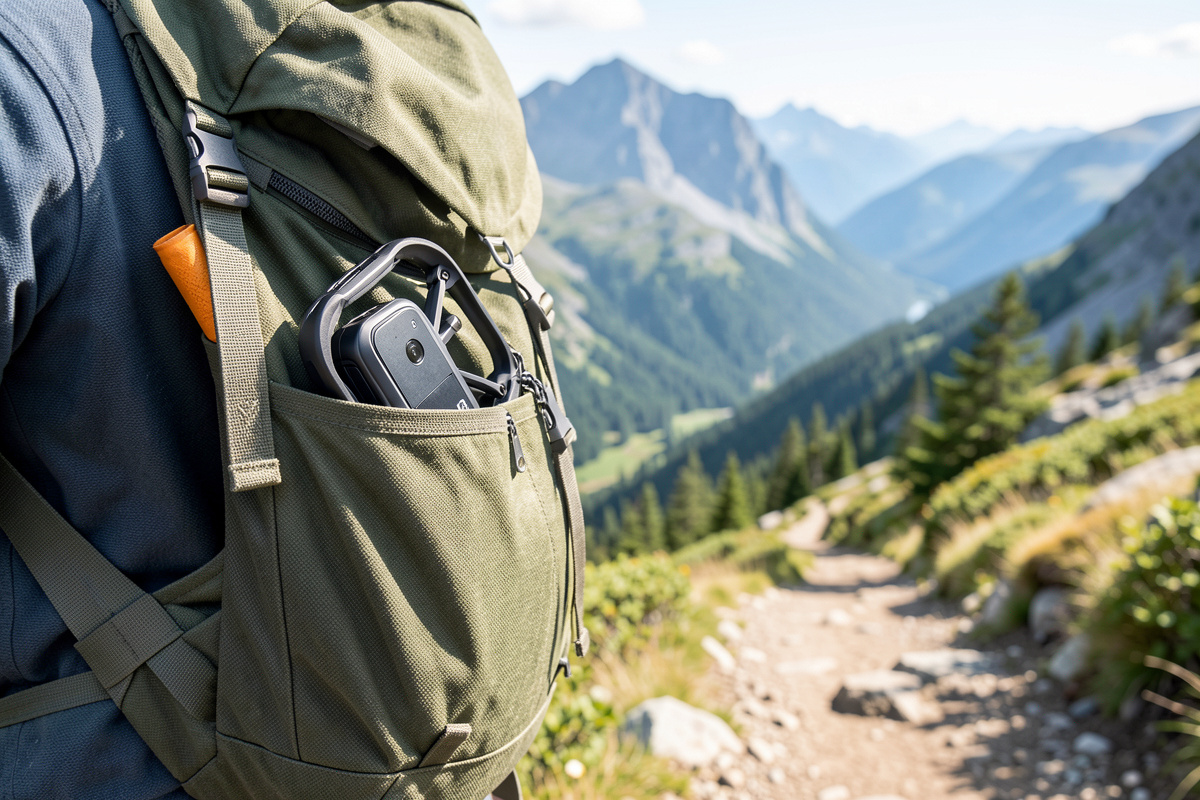
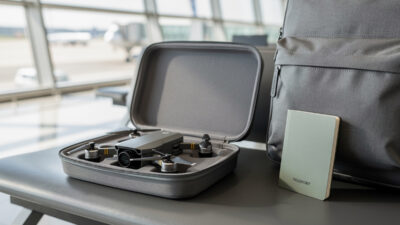
This is the use case the weight class was born for. A sub-250 folds into a jacket pocket, slips into a daypack without thought, and crosses most borders with the lightest version of whatever local rules apply. I have taken mine on trips where bringing the heavier Air-class drone would have meant a dedicated bag and a much heavier compliance conversation at the destination. The little one just comes along.
But travel adds its own layer of rules on top of flying rules — airline battery policy, destination-country registration that may differ from home, and locations where flying is simply forbidden regardless of weight. The pocketability is the easy part. The homework is checking the destination’s regulator before you pack, not after you land. The weight class makes the drone easy to bring; it does not make the rules come with it.
The 250-gram ceiling does not just shape the sensor — it shapes the battery, and that is the compromise people feel most in daily flying. Every gram the manufacturer spends on a bigger battery is a gram they cannot spend on the airframe, the gimbal, or the optics, and all of it has to fit under the line. The result is that sub-250 flight times look impressive on the box and shorter in the air, because the advertised number assumes calm air, no wind penalty, and a battery flown closer to empty than I am ever comfortable doing.
My real-world rule, learned the expensive way: treat the printed flight time as a ceiling you will never actually hit, plan to land with a healthy reserve, and carry at least one spare pack if the flight matters. The little drones make spares cheap and pocketable, which is the saving grace. I never fly the last fifth of a battery on a sub-250 in any wind, because that is exactly the margin the trip home eats. And on the battery itself, my doctrine is the same one I apply across every battery I own: charge to storage level when a pack is going to sit, balance-charge it properly, transport it in a fireproof bag, and retire any pack that puffs — a swollen LiPo is a dead LiPo, no heroics, no exceptions. That is care and habit, never pack surgery, and it is the difference between a hobby and an insurance claim.
After enough seasons flying mine and watching newer pilots fly theirs, the same handful of mistakes come up again and again. The biggest is the one I keep returning to: assuming the weight number is a rulebook bypass. It is not. The second is adding accessories — prop guards, ND filters in a heavy housing, a bigger aftermarket battery — without re-weighing the drone, then unknowingly flying a craft that has crept over 250 grams and now sits in a stricter rule tier than the pilot believes.
The third is buying the sub-250 expecting heavier-class image quality and being disappointed when the small sensor shows its limits at dusk. The fourth is flying it in wind it cannot handle because the smooth gimbal footage hides the airframe’s struggle. And the fifth, quietly the most dangerous, is skipping the boring homework — operator registration, the proximity rules, reading the actual regulator’s pages — because the drone felt like a toy. None of these are hard to avoid. All of them come from treating the weight class as a shortcut rather than a deliberate, well-understood tradeoff.
Be honest with yourself about the kind of flying you actually do, not the kind you imagine in the store. The sub-250 is the right call for the traveler who wants a camera drone that disappears into a daypack, the hiker who will not carry a kilogram of drone up a hill, the landscape shooter who flies in decent light, and the first-time buyer who wants the gentlest possible introduction to the rules and the lightest possible consequences if things go wrong. That covers most people, which is exactly why this is the volume segment of the market.
It is the wrong call for the pilot whose flying is genuinely defined by wind and marginal light — coastal work, winter shooting, anything where the conditions are the point rather than the obstacle. For that pilot the heavier class is not an upgrade, it is the correct tool, and the heavier rulebook is the price of admission they should pay knowingly. I own both because I genuinely need both. Most people need one, and for most people that one is the sub-250.
For most people reading this, yes — and I say that as someone who owns the heavier class too and still reaches for the little one most days. If your flying is mostly fair-weather, mostly travel and landscape, and you want the lightest regulatory and physical load, the sub-250 is the correct first drone and very often the only drone you will ever actually need. Buy it knowing its limits in wind and hard light, register where you are required to, read your own regulator’s pages, and you will get years of flying out of a drone that fits in a pocket.
If your priority is image quality in marginal conditions, or you already know you will be flying in real wind for real work, accept the heavier class and its heavier obligations with eyes open. There is no wrong answer here — only a wrong reason, and the wrong reason is buying the sub-250 because you think it lets you skip the rules. It does not. It just gives you the gentlest version of them, which is more than enough reason to love the class for what it actually is.
Once you have decided the weight class fits your flying, the buying checklist is shorter than the marketing suggests. Confirm the real takeoff weight including the battery you intend to fly, not a stripped-down spec, and remember that any accessory you add eats into your margin under the line. Look hard at the gimbal — on a light airframe the stabilization is doing more work to hide wind, so a good gimbal matters more here than the brochure implies. Check the obstacle-sensing situation honestly, because the lightest drones often trim sensors to save weight, and know what yours does and does not see.
Beyond that, I weigh battery ecosystem (cheap, available spares are the whole point of the class), transmission range and reliability for keeping a clean signal at line-of-sight distance, and how the drone behaves in wind according to people who fly it rather than people who unbox it. The camera spec is the last thing I obsess over, not the first, because in this class the sensor is constrained by weight no matter whose name is on it. Buy for the flying experience and the regulatory ease — the reasons the class exists — and treat the image as good-in-good-light, which is exactly what it is.
The full sub-250 cluster, in the order most beginners work through them:
Ask most new pilots why the 250-gram line matters and you get some version of…
Wind is the thing the sub-250 class teaches you about first, because it loses the…
Travel is the use case the sub-250 class was born for, and it is where…
Leave a Reply