Buy the FPV Controller Before the Drone: Here Is Why
I’m going to defend a piece of advice that sounds completely backwards to every newcomer:…
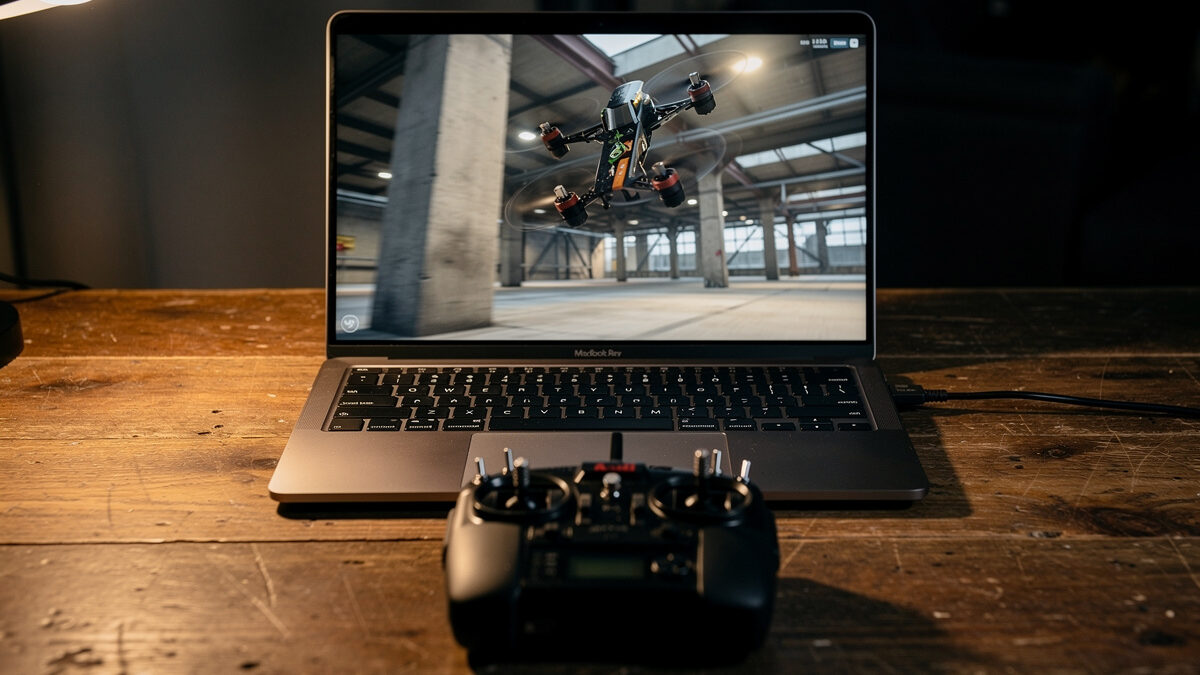
Ask ten FPV pilots which simulator is best and you’ll get ten answers, half of them tribal. I’ve actually run the major titles side by side — installed them, flew the same drills in each, and paid attention to which ones built skills that transferred to my real quads and which ones just felt like a game. So this is my honest take on the best FPV simulator for 2026, written from the seat of someone who used these to actually learn, not to farm a leaderboard.
Before I name names, the single most important thing I can tell you: the differences between the top sims matter far less than the hours you put into whichever one you pick. A mediocre sim flown for twenty focused hours will make you a better pilot than the perfect sim flown for two. That’s why my advice always ends the same way — pick one, then stop shopping and start drilling. But the choice isn’t meaningless either, so let’s make it well.
Reviews online obsess over graphics. Graphics are nearly irrelevant. Here’s what genuinely matters when a sim’s job is to build transferable skill:
I’ll describe these by character rather than chase a ranking, because the “best” one genuinely depends on what you want to fly. These are the titles that have earned a place on a serious beginner’s drive, and the broad strokes of what each one is for.
The physics-first freestyle sim. The one most experienced pilots point beginners toward when the goal is freestyle. Its physics are widely regarded as the closest to a real quad, which is exactly what you want when you’re building transferable muscle memory. Open environments, strong freestyle culture, and a feel that doesn’t fight you. If freestyle is your direction, this is where I’d start.
The race-track sim. Built around gates, tracks, and competition. If you’re drawn to racing — clean lines, fast laps, tight gates — a race-focused sim drills exactly the skills you’ll use. The physics on the best of these are excellent, and the structured tracks give your practice a built-in progression that pure freestyle sims lack.
The all-rounder. A sim that does a bit of everything — freestyle, racing, varied maps — without being the absolute best at any one. For a beginner who doesn’t yet know which way they’ll go, an all-rounder is a sensible first pick because it lets you sample both disciplines before committing.
The budget/entry option. There are cheaper and even free options that are genuinely fine for getting started. Their physics may be a notch behind the premium titles, but for your first ten hours of orientation drills, the gap barely matters. If budget is the deciding factor, start here and upgrade later if you catch the bug.
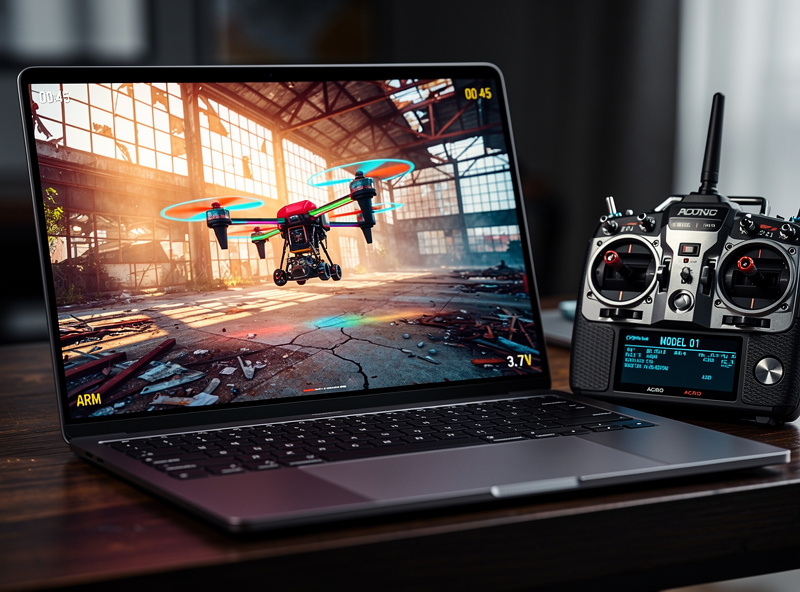
Here’s how the categories stack up against the things that actually matter for learning. I’ve deliberately compared sim types rather than chasing exact version numbers, because the categories are stable while specific titles update constantly.
| Sim type | Physics realism | Best for | Beginner verdict |
|---|---|---|---|
| Physics-first freestyle | Highest | Freestyle, transferable skill | Top pick if freestyle is your goal |
| Race-track focused | High | Racing, gates, lap times | Best if you want to race |
| All-rounder | Good | Sampling both disciplines | Safe first pick when undecided |
| Budget/entry | Adequate | First hours, tight budget | Fine to start, upgrade later |
If you put a gun to my head and demanded one answer: for a beginner whose goal is to learn to fly freestyle, get the physics-first freestyle sim, because the realistic physics mean every hour transfers cleanly to real hardware. If you already know you want to race, get a race-focused sim instead. And if you genuinely don’t know yet, the all-rounder lets you find out without buying twice.
But I’ll repeat the thing that matters more than any of this: the sim is a tool for accumulating focused practice hours. Whichever you pick, the value comes from drilling orientation, throttle control, and recovery until they’re automatic. The software is the cheap part. Your attention is the expensive part. Spend it well.
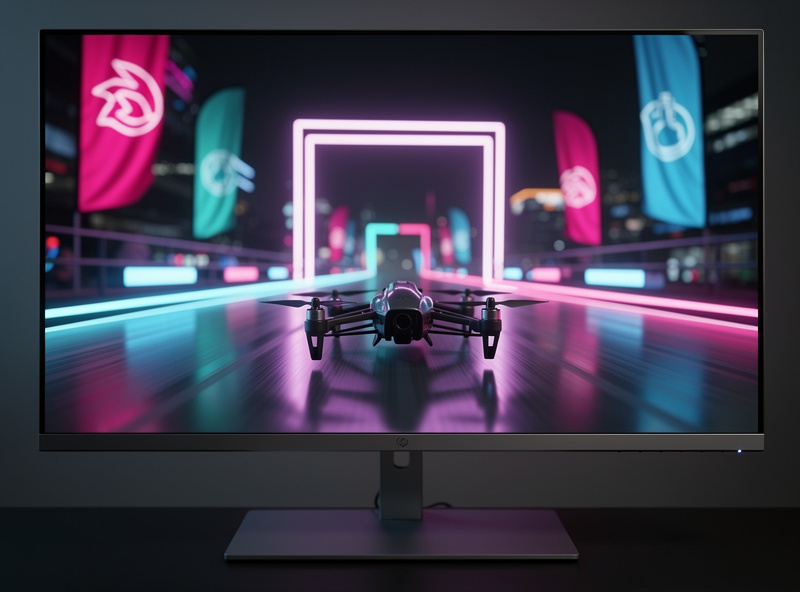
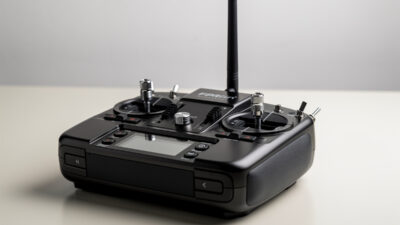
Every sim worth flying needs the same one thing from you: a real radio transmitter connected to your computer. Don’t fly these with a gamepad — it teaches the wrong thing entirely. A proper FPV radio with hall-sensor gimbals is the foundation, and it’s the same radio you’ll fly real quads with for years, so it’s never wasted money. Most modern radios connect over USB and are recognized by the sims natively.
Gear that makes sim practice actually work. As an Amazon Associate I earn from qualifying purchases. These are category search links, not endorsements of a specific listing.
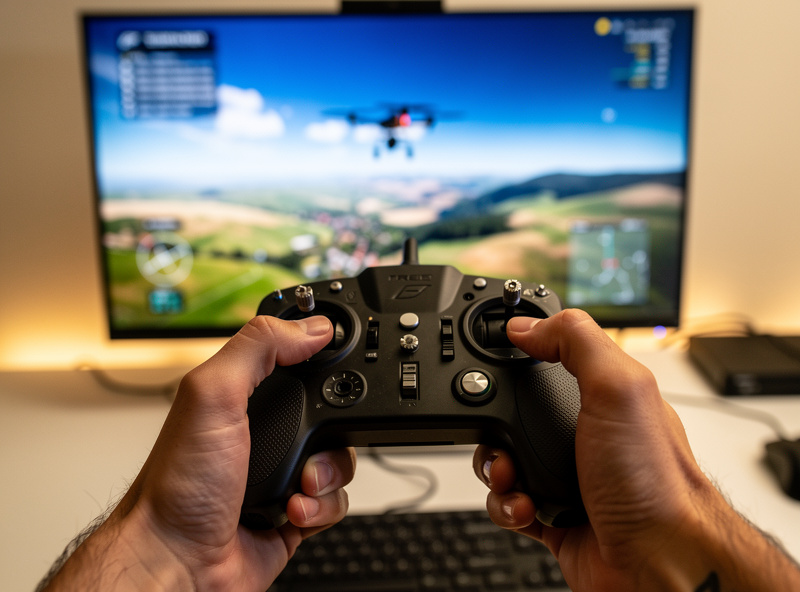
The best FPV simulator for 2026 is the one you’ll actually fly for hours, that uses your real radio, and whose physics are realistic enough to build transferable skill. For freestyle beginners that points at the physics-first freestyle sim; for racers, a race-focused title; for the undecided, an all-rounder. Beyond that, the sim wars are mostly noise. Pick one this week, plug in your radio, and start drilling orientation flips. The hours are the product. Everything else is preference.
I’m going to defend a piece of advice that sounds completely backwards to every newcomer:…
The 5-inch freestyle quad in the YouTube thumbnail is gorgeous, fast, and exactly the wrong…
Somewhere early in the hobby every newcomer hits the fork that splits the whole of…
Leave a Reply