How to Get Into FPV: The Beginner Entry Path That Saves Money
Every few months a message lands in my inbox that reads almost word for word…
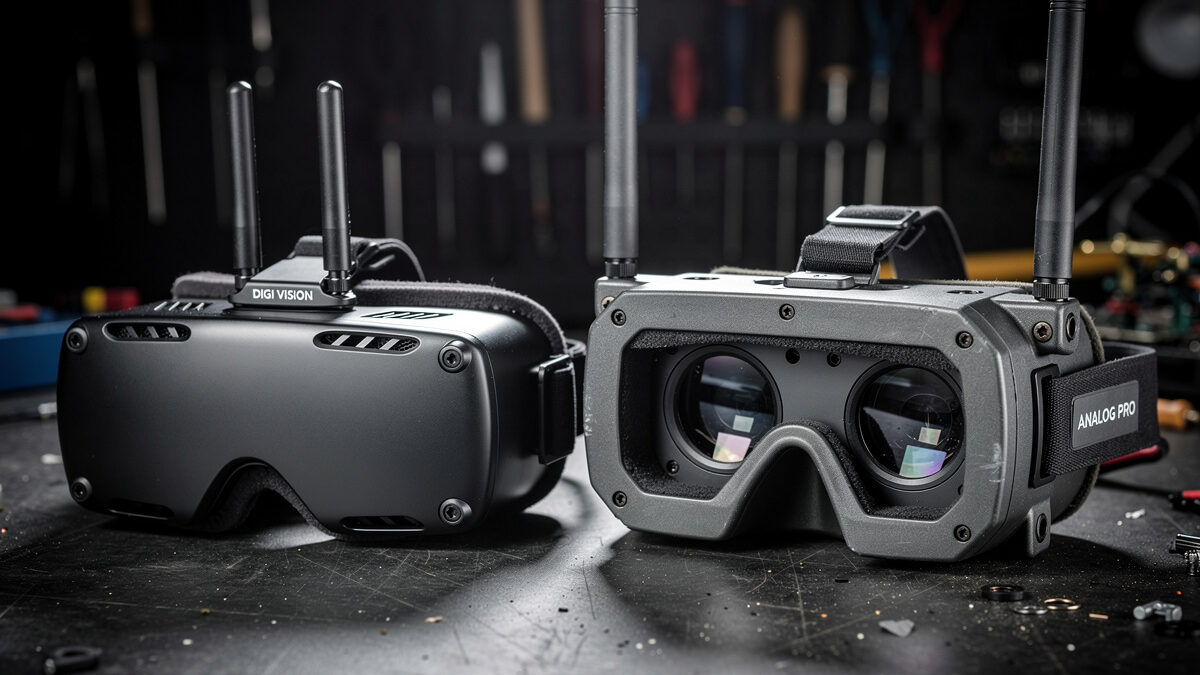
Somewhere early in the hobby every newcomer hits the fork that splits the whole of FPV: analog vs digital FPV for beginners. It’s the question I get asked with the most anxiety, because people sense correctly that it’s an expensive decision they don’t yet have the experience to make. I own and fly both systems specifically so I can answer it honestly, and the honest answer is more interesting than the tribal “digital is just better” you’ll hear in every comment section.
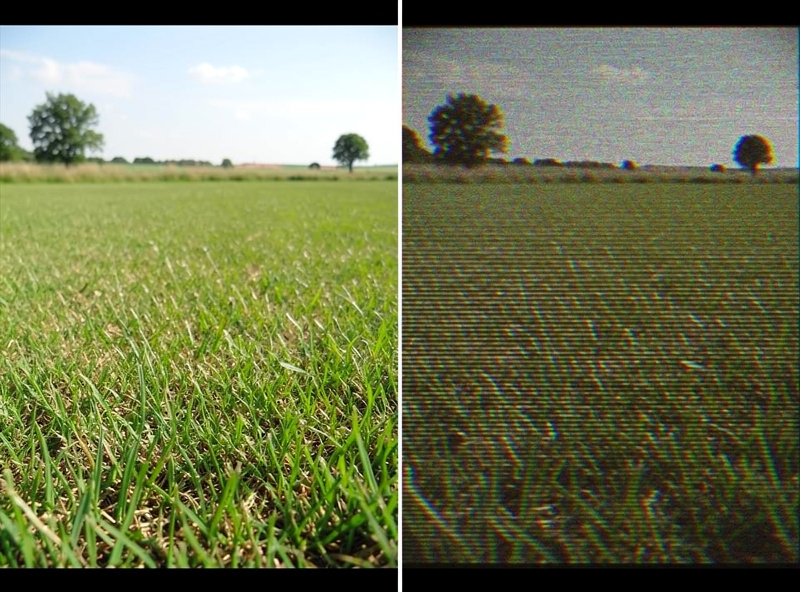
Here’s the short version before the detail: digital gives you a beautiful, crisp image in the goggles; analog gives you a fuzzy, lower-fidelity picture that is cheaper, lighter, lower-latency, and fails more gracefully. Neither is universally right for a beginner. The right choice depends on your budget, what you want to fly, and how much crash-resistance in cheap gear matters to you versus image quality. Let me walk you through it the way I’d talk a friend through it at my bench.
Both systems do the same job: send live video from a camera on your quad to the goggles on your face. The difference is how.
Analog sends an old-school analog video signal, the same fundamental technology as decades-old wireless cameras. The image is low-resolution and laced with static, and it gets snowier as the signal weakens. It’s been the backbone of the hobby for years.
Digital sends a compressed digital video stream, giving you a sharp, near-HD picture. It’s the newer technology and what most flashy footage is filmed through. The tradeoff is more cost, more weight, and a different failure behavior.
The first time you put on digital goggles after flying analog, the image quality is genuinely startling. Everything is crisp, colors are clean, and you can read detail in the scene that analog simply smears away. For a beginner, that clarity has a real practical benefit beyond looking nice: it’s easier to judge distance, spot obstacles, and stay oriented when the picture is sharp. Digital also tends to come bundled in polished, easy-to-set-up ecosystems that are friendly to newcomers who don’t want to fiddle.
The downsides are cost — digital systems are meaningfully more expensive across goggles, air units, and the quads to carry them — and weight, which matters on the smallest builds. There’s also the failure mode, which I’ll come back to because it’s the thing the comment-section enthusiasts gloss over.
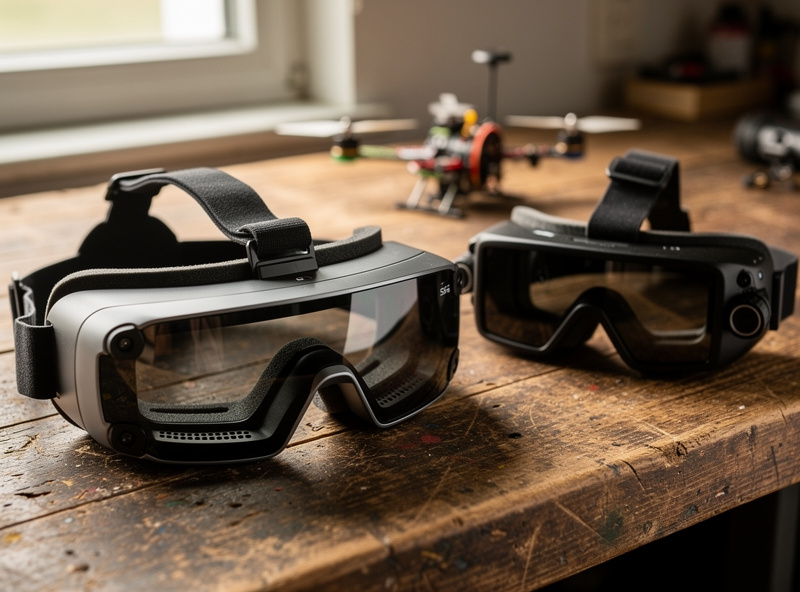
Analog refuses to die for genuinely good reasons, and a beginner should understand them. It’s cheap — dramatically cheaper to get into, which matters when you’re going to crash everything while you learn. It’s light, which keeps tiny builds nimble. It’s low-latency, meaning the picture in your goggles is closer to real-time, which some pilots strongly prefer for fast flying. And critically, it degrades gracefully: as you fly to the edge of range or behind an obstacle, an analog picture gets progressively snowier, warning you before it’s gone. You learn to read the static like a fuel gauge.
That graceful degradation is a real safety and learning feature. The image quality is undeniably worse, and there’s no pretending a static-laced picture is as pleasant as crisp digital. But for a beginner crashing constantly on cheap gear, analog’s affordability and forgiving failure behavior are arguments that deserve more respect than they usually get.
Here’s the part the “just buy digital” crowd skips. When an analog signal weakens, it degrades smoothly into static — annoying, but readable, and it gives you warning. When a digital signal hits its limit, it can break up into blocky artifacts and, at the edge, drop to a black screen more abruptly. Modern digital systems handle this far better than early ones did, but the fundamental difference remains: analog warns you it’s failing, digital can cut out with less notice. For a beginner who hasn’t yet learned to manage range, that’s worth understanding before you choose.
Here’s the comparison the way I’d lay it out for someone at my bench, focused on what actually matters to a beginner rather than spec-sheet trivia.
| Factor | Analog | Digital |
|---|---|---|
| Image quality | Low-res, static-prone | Crisp, near-HD |
| Cost to enter | Low — beginner-friendly | Higher across the board |
| Weight | Light, good for tiny builds | Heavier |
| Latency | Very low | Low, slightly higher than analog |
| Failure behavior | Graceful — snowy warning | Can cut out more abruptly |
| Best beginner fit | Tight budget, learning crashes | Budget room, values clarity |
My honest framework, not a one-line verdict:
Whichever you choose, it doesn’t change the rest of the entry path. You still want to put in your simulator hours before flying, still want to start on a tinywhoop rather than a 5-inch, and still want to avoid the usual expensive beginner mistakes. The video system is one decision inside a larger path, and it’s far from the most important one.
Goggle systems to research. As an Amazon Associate I earn from qualifying purchases. These are category search links, not endorsements of a specific listing.
There is no universal right answer to analog vs digital for beginners, and anyone who gives you one without asking your budget and goals is selling tribalism. Digital looks dramatically better and helps clarity; analog is cheaper, lighter, lower-latency, and fails more gracefully. For most budget-conscious beginners expecting plenty of crashes, analog is a perfectly respectable first system. For those with room to spend who prize image quality, digital is a fine first choice. Decide on your situation, not on the loudest voice in the comments, and remember it’s one decision inside the larger entry path — not the decision that makes or breaks you.
Every few months a message lands in my inbox that reads almost word for word…
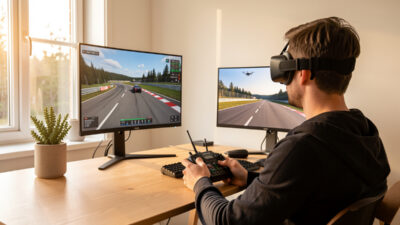
An FPV simulator is a piece of software that lets you fly a virtual quad…
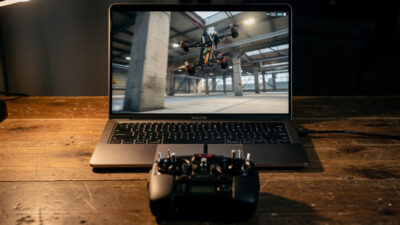
Ask ten FPV pilots which simulator is best and you’ll get ten answers, half of…
Leave a Reply