Stator Size Comparison for FPV Motors
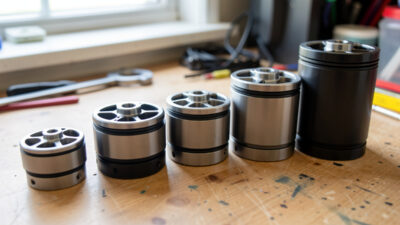
Stator size is the four-digit number on every FPV motor — 2207, 2306, 1404 —…
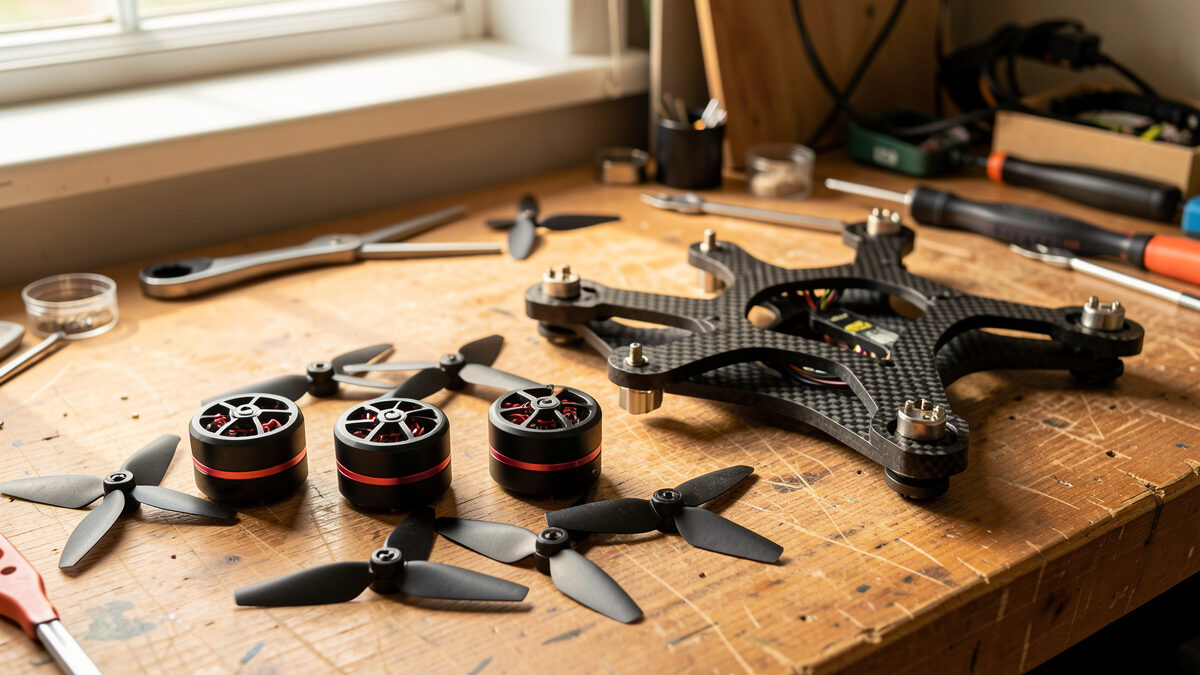
Choosing an FPV motor comes down to three numbers and one honest question. The numbers are stator size, KV, and the prop you intend to spin; the question is what you actually fly. A 5-inch freestyle quad lives happily on 2207-size motors around 1750–1950KV on 6S, while a tinywhoop runs tiny 0802 motors at 19000KV. Match the motor to the build, not to a YouTube thumbnail.
I build and fly both halves of this hobby in Sweden — sub-250g camera drones for the landscape light, and FPV quads I solder together at my own bench. The 5-inch freestyle quad on my bench was built from parts: frame, FC/ESC stack, VTX, receiver, and four motors I picked on purpose. This guide is the decision process I actually use when those four motors go in the cart, written so a first-time builder can follow it without buying the wrong thing twice.
Every FPV motor selection collapses into stator size, KV rating, and the propeller it has to drive. Stator size sets how much torque and raw power the motor can make; KV sets how fast it tries to spin per volt; the prop sets the load. Get those three in agreement and the quad flies clean. Get them fighting each other and you cook motors, sag your pack, or fly a brick.
Stator size is written as a four-digit number like 2207 — the first two digits are the stator width in millimetres (22mm), the last two its height (07mm, or 7mm). A taller, wider stator moves more air and makes more torque, which is why 5-inch quads settled on 2206 to 2208 motors. KV tells you RPM per volt with no load: a 1900KV motor spun on a 6S pack (about 22.2V nominal) wants to turn far faster than the same stator at 1700KV. The prop is the brake. I walk through each of these in its own deep-dive, but the hub-level rule is simple: pick the stator for your quad class first, then the KV for your cell count, then the prop that keeps current sane.
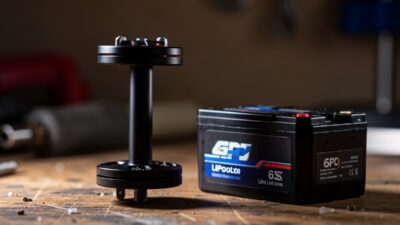
If you only remember one thing from this whole guide: bigger battery voltage means you want lower KV. The jump from 4S to 6S that swept through 5-inch builds a few years ago is exactly why stock KV numbers dropped from the 2400KV era down to the 1700–1950KV range. More volts, fewer KV, same rotor speed — but with less current and cooler motors. I dig into the why in my FPV motor KV explained guide.
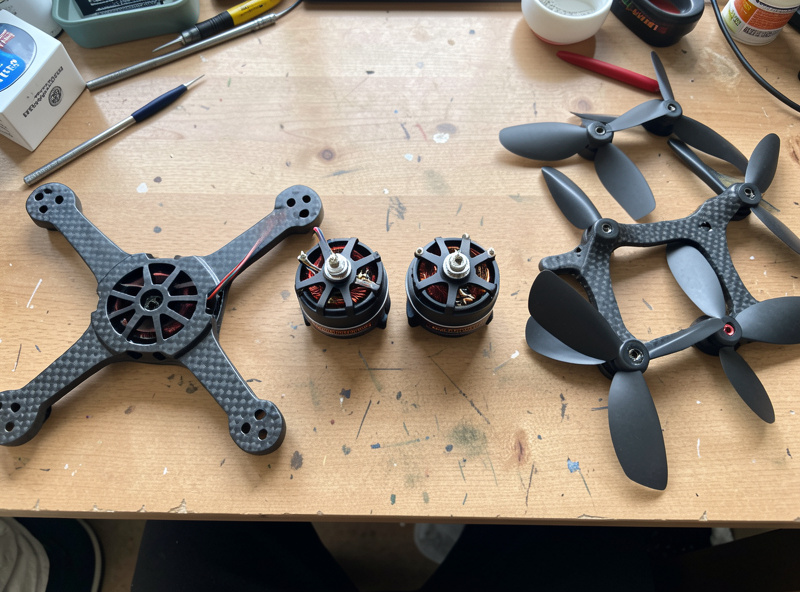
The most common beginner mistake is shopping by KV first. KV is the headline number every product page screams, so it gets the attention — but stator size is what actually determines the power class of the motor. On my bench I pick the stator from the airframe before I ever look at KV.
For a 5-inch freestyle or racing quad, that means a 22xx stator: 2207 is the modern default, 2306 and 2208 are the slightly punchier or torquier siblings. A 3.5-inch cinewhoop like the one I fly lives on 1404 to 1507-size motors. A tinywhoop runs 08xx motors. A 7-inch long-range cruiser wants a tall, efficient 2806.5 or 2807. Choose the wrong stator and no KV number rescues it — a 2306 on a 7-inch is screaming itself to death, and a 2807 on a tinywhoop is dead weight that will never spin up.
The reason stator size matters more than the marketing suggests is heat. A motor that is too small for its prop runs hot because it is working at the edge of its torque the entire flight, and heat is what kills bearings and de-laminates windings. Size up the stator and the same flight happens with the motor barely warm. I lay out the full size-by-size breakdown in my stator size comparison for FPV motors, including the 2207-vs-2306 argument that never ends in the comments.
Once the stator is locked, KV is a function of your battery. The whole point of KV is to land your motor-and-prop combination in a healthy RPM band: fast enough to fly with authority, slow enough that the motors do not glow and the pack does not sag to the floor on a hard punch-out.
The rough modern map for a 5-inch on a 2207 stator: 6S builds run 1700–1950KV, and 4S builds run 2400–2700KV to reach similar rotor speed on lower voltage. Cinewhoops and smaller quads climb the KV ladder as the stators shrink — my 3.5-inch runs motors in the 3000–4000KV range, and tinywhoops live up in the 19000KV+ territory because their stators are minuscule and their props are tiny. The arithmetic is genuinely just “smaller motor and smaller prop need more KV to make useful thrust.”
I avoid the temptation to over-KV a build for “more power.” Higher KV on the same prop pulls more amps, makes more heat, and shreds efficiency — you trade flight time and motor life for a top-end you rarely use in freestyle. If you want more punch, the smarter lever is usually prop pitch, which I cover in propeller pitch and size for FPV.
A motor product page is more than stator and KV. It lists shaft diameter, mounting hole pattern, wire gauge and length, magnet count and arrangement, bearing type, weight, and usually a thrust-test chart against a few props and cell counts — reputable makers like T-Motor and iFlight publish these per motor. Beginners skip all of that and lose money on incompatible parts — a motor with the wrong mount pattern simply will not bolt to your frame.
The two specs that bite people are the mounting pattern (the modern 5-inch standard is M3 bolts on a 16x16mm pattern, but plenty of micro motors use 9x9mm or 12x12mm) and the wire length, because a motor with stub leads forces you to extend wires on a frame with long arms. I read the thrust chart too — not for the headline grams, but for the current draw at full throttle, which tells me whether my ESC and pack can actually feed all four motors at once. I break the full spec sheet down line by line in how to read FPV motor specs.
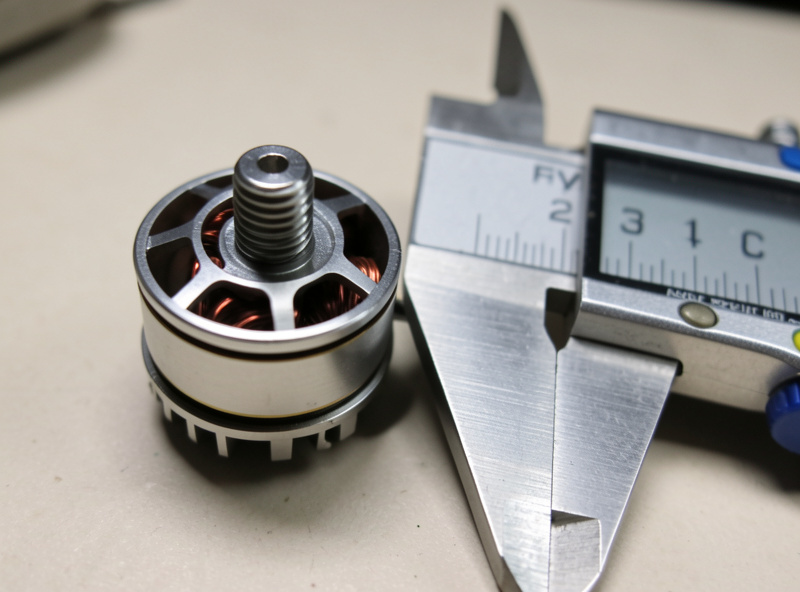
Motor brand matters less than the spec, but it is not nothing. The quality difference shows up in bearing life, magnet retention after crashes, and how honest the KV and thrust numbers are. I have run motors from the big names on my builds and rebuilds, and the pattern is consistent: the established brands cost a few dollars more per motor and pay it back in not having a bell pop off mid-pack.
For most builders I tell them to buy from a brand with a real warranty and a wide spares supply, because you will crash and you will replace a motor — that is FPV, not a defect. The exotic boutique motors are real and good, but their gains are marginal for anyone who is not racing for money. I compare the brands I have actually flown, where each one earns its keep, and where the price premium stops being worth it, in my FPV motor brand comparison. If you want to browse current options, a quick search for 2207 FPV motors shows the field. As an Amazon Associate I earn from qualifying purchases.
Half of motor selection is actually prop selection, because the prop is the load the motor pushes against. You can bolt a perfect motor to a frame and ruin it with the wrong prop. The two prop variables that interact with your motor are size-and-pitch and blade count, and both change how hard the motor works.
Pitch is how far the prop theoretically travels forward in one rotation — more pitch is a taller gear, more top speed and more current; less pitch is a shorter gear, more grip and cooler motors. Blade count trades efficiency for grip: a 2-blade is the most efficient and fastest, a 3-blade (the freestyle standard) adds grip and smoothness at a current cost, and a 4-blade adds even more bite for heavy or ducted builds at the expense of flight time. I cover the full trade in 2-blade vs 3-blade vs 4-blade FPV props.
The reason this lives in the motor guide is that a motor is only “right” for a prop-and-pack combination. The same 2207 1950KV motor is well-matched to a 5×4.3×3 prop on 6S and badly overloaded by an aggressive 5.1×5.1 bullnose. Matching the two is its own skill, and I wrote a dedicated walk-through: motor and prop matching guide for FPV.
Here is the map I keep in my head, condensed. It is a starting point, not a law — but if your build is not on this table, double-check you actually need the oddball setup before you buy it.
| Quad class | Stator size | Typical KV (cell count) | Common prop | What it is for |
|---|---|---|---|---|
| Tinywhoop (65–75mm) | 0802–0803 | 19000–22000KV (1S) | 31–40mm 3-blade | Indoor winter flying, learning |
| Cinewhoop (3.5-inch) | 1404–1507 | 3000–4000KV (4S/6S) | 3.5×2.5 3-blade | Smooth indoor and near footage |
| 5-inch freestyle | 2207 | 1750–1950KV (6S) | 5×4.3×3 | Freestyle, general flying |
| 5-inch racing | 2306–2207 | 1950–2100KV (6S) | 5.1×4.6×3 | Speed, sharp response |
| 7-inch long-range | 2806.5–2807 | 1300–1500KV (6S) | 7×4 2-blade | Efficiency, cruising far |
Read across a row and you can see the logic move together: as the stator grows for a bigger quad, KV drops so the bigger prop stays in a sane RPM band. The numbers are not arbitrary — they are four variables held in balance. Break one and you compensate with another.
Numbers on a spec sheet turn into a feel in the goggles, and it is worth knowing what each lever does to that feel before you buy. A bigger stator and a touch more prop give a quad that planted, authoritative push through a dive — it feels heavy in a good way, like it has reserves. A higher KV on a lighter prop feels twitchy and eager off the bottom of the throttle but can run out of grunt up top and runs hotter doing it.
For freestyle, which is most of what I fly, I want smooth, linear thrust I can meter precisely, not a hair-trigger that punches the moment I touch the stick. That points me at moderate KV and a moderate prop rather than the spiciest combination on the shelf. A racer chasing the fastest possible gate-to-gate time makes the opposite trade and accepts the heat and the shortened motor life as the cost of doing business. Neither is right or wrong; they are different jobs. The reason I keep hammering on this is that beginners read “more power” as “better” and buy the aggressive setup, then find the quad twitchy and hard to fly smoothly while it eats motors and packs. Boring, balanced, and cool-running is the setup that actually teaches you to fly — and it is the setup I still run on my daily quad after years of building. Save the spicy combinations for when your thumbs have earned them.
Your motor choice writes a cheque your ESC and battery have to cash. Four 2207 motors on 6S spinning aggressive props can pull serious current on a punch-out, and if your ESC is rated below that or your pack has a weak C-rating, you get voltage sag, desyncs, or in the worst case a popped ESC. I size the ESC to comfortably exceed the motors’ combined peak draw, not just match it.
This is also where battery discipline lives. The motors and ESC pull hardest at the exact moment a tired or cold pack is least able to deliver, so a sagging old LiPo makes a perfectly good motor combo feel gutless and runs everything hotter. I keep my packs at storage charge between sessions and retire any pack that puffs — the whole habit set is in my LiPo battery care guide and the specific storage charge routine. A motor decision and a battery decision are the same decision viewed from two ends of the wires. The other end — choosing the FC and ESC themselves — is in my FC/ESC stack guide.
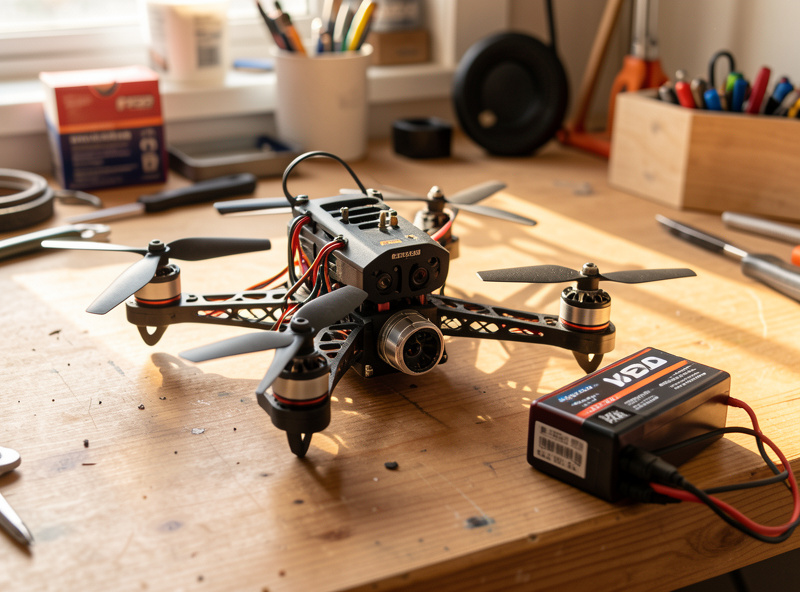
Before a freshly built quad ever sees a prop, I check the motors with the props off and the quad on the bench. In Betaflight’s motor tab I spin each motor up gently one at a time and listen. A healthy FPV motor sounds smooth and identical to its three siblings; a sick one growls, grinds, or has a wobble you can feel through the frame. That two-minute check has caught a bearing damaged in shipping before it could turn into a mid-air desync.
After the first flight I do the back-of-the-hand temperature test the instant I land. I touch each motor bell — not long enough to burn, just long enough to judge. Warm is fine and expected. Hot enough that you cannot hold a finger on it means the motor is working too hard for its prop-and-KV combination, and that is your signal to drop prop pitch, drop KV on the next build, or check for a bent shaft adding drag. A motor that runs cool while its three neighbours run warm is usually one that desynced and was not actually pulling its share. None of this needs special gear — it is just the habit of paying attention, the same way I check a pack for puffing every time I unplug it. If a motor sounds or feels wrong, I would rather diagnose it on the bench than read about it in my won’t-arm diagnosis after it takes the quad down. Eventually a motor does die, and when it does the swap is covered in my motor replacement guide.
When I add motors to a cart for a build, I run the same short list every time. It has saved me from ordering the wrong mount pattern more than once. First: does the stator size match the quad class? Second: is the KV right for my cell count? Third: does the mounting pattern match my frame (16×16 for most 5-inch)? Fourth: is the wire length enough for my arms, or do I need to plan extensions? Fifth: does the thrust chart’s peak current stay inside my ESC and pack budget for all four motors together?
Sixth, and the one beginners forget: buy a fifth motor. You will crash, and a single replacement keeps a matched set instead of running three of one batch and one of another. Motors do age and wear slightly differently between production runs, and a matched set keeps your tune honest. If you are still assembling the whole quad, my full 5-inch FPV build guide and the parts list and budget put motor choice in the context of the rest of the bird.
The expensive mistakes are predictable. Buying boutique race motors for a first freestyle quad you will crash repeatedly is the classic — you will smash a forty-dollar motor learning power loops that a fifteen-dollar motor would have survived just as well. Over-KV-ing a build chasing power, then wondering why flight times collapsed, is the second. Mixing a high-pitch prop with a high-KV motor on a small pack, melting the motors, is the third.
None of these are about being a bad pilot; they are about not understanding that the motor, the prop, the battery, and the KV are one system. New pilots also tend to skip the cheapest insurance in the hobby: simulator time before any of this matters in the air. I would rather you log simulator hours on a perfectly matched virtual quad than crash-test motor theory on real hardware. If you are brand new, start at the FPV entry path and read the expensive beginner mistakes before you build, and let your first quad be a tinywhoop, not a 6S 5-inch.
For a first 5-inch freestyle quad, a 2207 stator at 1800KV on 6S is the safe modern default. It is forgiving, widely supported for spares, and cheap enough to crash. Smaller builds scale down: cinewhoops use 1404 to 1507 motors and tinywhoops use 0802 motors.
No. Higher KV spins faster per volt but pulls more current, runs hotter, and cuts flight time. KV should match your cell count, not be maximized. A 6S 5-inch build wants roughly 1700 to 1950KV, while a 4S build of the same quad needs 2400 to 2700KV to reach similar rotor speed.
The first two digits are the stator width in millimetres and the last two are the stator height. So 2207 means a 22mm wide, 7mm tall stator. A bigger number means a physically larger, more powerful stator that can drive a bigger prop and make more torque.
Yes. The propeller is the load the motor pushes against, so motor and prop are chosen together. A motor that is perfect with a mild prop can be overloaded and overheated by an aggressive high-pitch prop on the same pack. Always check the motor thrust chart against the prop and cell count you plan to run.
Buy at least one spare beyond your four. You will crash and replace a motor, and having a spare from the same batch keeps a matched set, which keeps your tune consistent. Motors from different production runs can vary slightly, so a matched four is worth the small extra cost.
The hobby shifted from 4S to 6S batteries. More voltage reaches the same rotor speed at lower KV, while drawing less current and running cooler. That is why typical 5-inch KV ratings fell from the 2400KV era to today 1700 to 1950KV range on 6S.
Stator size is the four-digit number on every FPV motor — 2207, 2306, 1404 —…
KV is the single number on an FPV motor that confuses beginners most, and it…
Leave a Reply