The FPV Motor Selection Guide: Pick the Right Quad Motor
Choosing an FPV motor comes down to three numbers and one honest question. The numbers…
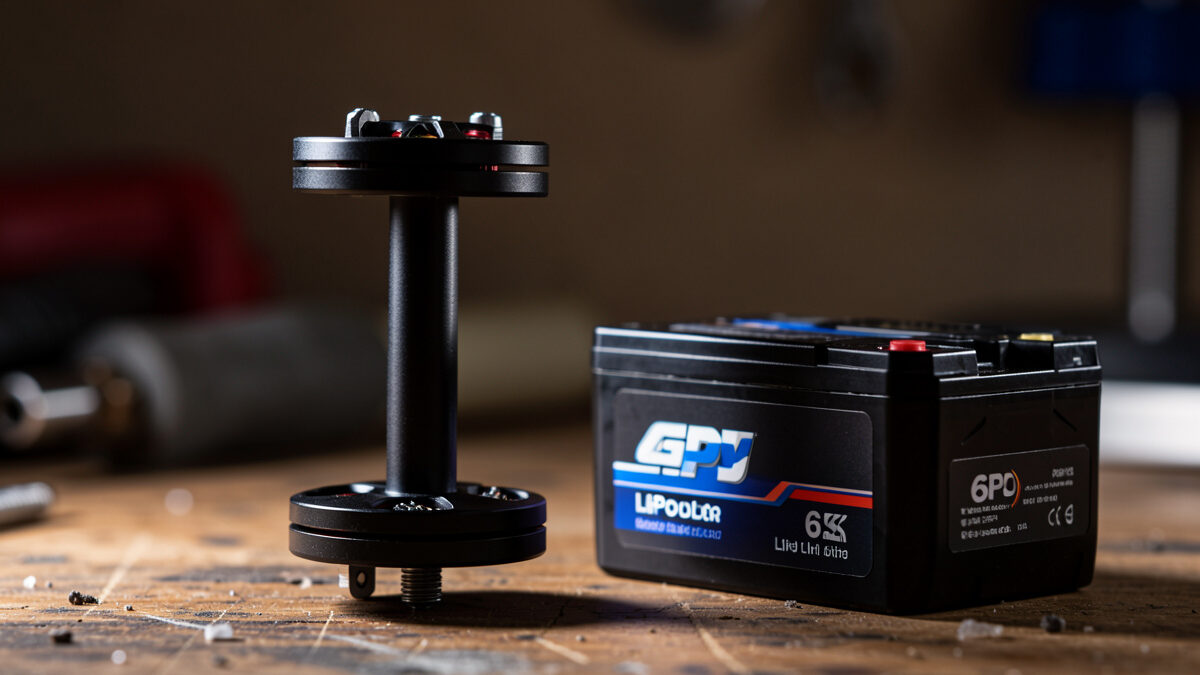
KV is the single number on an FPV motor that confuses beginners most, and it is simpler than it looks. KV is the RPM a motor turns per volt with no propeller attached — a 1900KV motor on a 6S pack at 22.2V wants to spin around 42,000 RPM unloaded. It is not power, it is not quality, and higher is not better. KV is just how a motor trades voltage for speed, and your job is to match it to your battery.
I build my own quads on the bench in Sweden, and KV is the spec I see new builders fixate on the way they fixate on horsepower in a car. Then they buy the highest KV they can find, bolt it to a 6S build, and wonder why the motors run hot and the flight times collapsed. Let me unpack what KV actually does so you pick it on purpose.
KV stands for RPM per volt, measured with no propeller on the shaft. Multiply the motor’s KV by the pack voltage and you get its theoretical no-load top speed: 1900KV times 22.2V is roughly 42,000 RPM. Bolt a prop on and that number drops, because the prop is a load the motor has to fight, but the no-load figure tells you the ballpark the motor lives in.
The thing to internalise is that KV says nothing about how strong a motor is. A high-KV motor and a low-KV motor of the same stator size make similar total power — they just deliver it differently. High KV spins a smaller or milder prop very fast; low KV spins a bigger or more aggressive prop more slowly with more torque. Power is mostly set by the stator, which I cover in the stator size comparison. KV decides the character of the delivery, not the size of it.
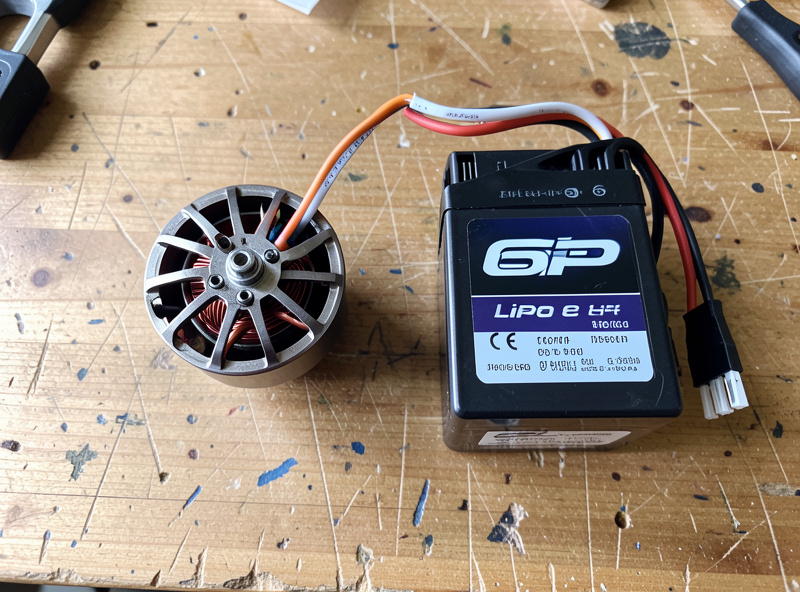
You never choose KV in isolation. You choose it for a battery, because voltage and KV multiply together to set rotor speed. This is the part that trips people up: the “right” KV for a 5-inch quad on 4S is completely wrong for the same quad on 6S.
When the hobby ran on 4S packs (about 14.8V nominal), 5-inch motors were commonly 2400 to 2700KV to reach a useful rotor speed. The shift to 6S (about 22.2V) added roughly fifty percent more voltage, so KV had to drop by about the same proportion to land in the same RPM band — which is why modern 6S 5-inch motors sit at 1700 to 1950KV. Same rotor speed, more volts, less current, cooler motors. That last part is the whole reason the hobby moved to 6S, and it is why I run 6S on every 5-inch I build now.
Here is the rough map of where KV lands once you account for cell count and quad size. Smaller motors spin smaller props, and small props need more RPM to make thrust, so KV climbs as the quad shrinks.
| Build | Cell count | Typical KV | Why |
|---|---|---|---|
| Tinywhoop | 1S | 19000–22000KV | Tiny stator and tiny prop need huge RPM |
| Cinewhoop 3.5-inch | 4S | 3000–4000KV | Small prop, moderate voltage |
| 5-inch | 4S | 2400–2700KV | Lower voltage needs higher KV |
| 5-inch | 6S | 1700–1950KV | More voltage, so lower KV stays cool |
| 7-inch long-range | 6S | 1300–1500KV | Big efficient prop wants low RPM |
If your build is not on this table, find the closest row and reason from it. The pattern never breaks: more voltage means lower KV, smaller prop means higher KV. Manufacturers like T-Motor and iFlight publish the KV options offered for each stator, so you can match cell count to the RPM band. Everything else is fine-tuning.
Here is what the KV number hides. For a given stator, winding a motor for lower KV means more copper turns, which gives more torque per amp and better efficiency, but a lower top speed. Winding it for higher KV means fewer turns, less torque per amp, higher top speed, and more heat under load. So the KV choice is really a torque-versus-RPM dial on the same hardware.
In practical flying terms, a slightly lower-KV motor on a slightly more aggressive prop often feels punchier and runs cooler than a high-KV motor on a mild prop, because the low-KV setup makes its thrust with torque instead of frantic RPM. This is why I do not chase KV for power. If I want more grunt out of a 6S 5-inch, I would sooner drop from 1950KV to 1800KV and add a touch of prop pitch than climb to 2100KV and cook the motors. The pitch side of that lever is in my propeller pitch and size guide.
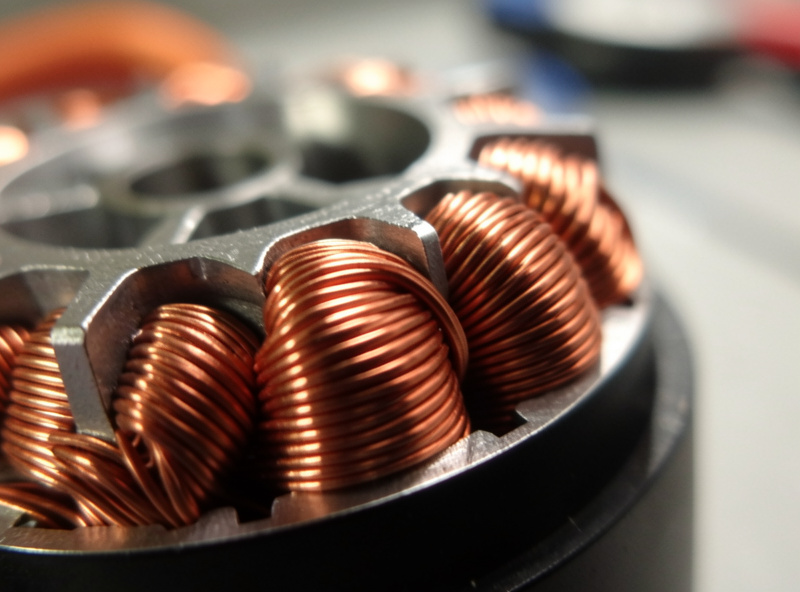
Over-KV-ing a build is the most common KV mistake, and it always costs the same things: heat, current, and flight time. A higher-KV motor on the same prop and pack pulls more amps to spin faster, and amps become heat in the windings and sag in the pack. You get a slightly higher top speed you rarely use, in exchange for hotter motors that wear faster and a battery that dies sooner.
The damage is worst when high KV meets high prop pitch on a small pack — that combination can put motors into temperatures that de-laminate windings within a few packs. If your motors come down too hot to hold a finger on, KV (or prop pitch) is too high for the rest of the system. I check motor temperature with the back-of-the-hand test the moment I land, every time, the same way I check a pack for puffing. Warm is fine; too hot to touch is a warning. The full habit set around that is in my LiPo battery care guide, because a hot motor and a sagging pack usually show up together.
A few KV myths circulate so widely they are worth killing directly. The first is “higher KV means a faster quad.” It can mean a higher top speed on the right prop, but on the wrong prop it just means a hotter, thirstier motor with no real-world speed gain, because the prop and the pack become the limit long before the motor does. Speed comes from the whole system, not the KV digit.
The second myth is that you should match a friend’s KV because their quad flies well. KV only transfers between builds if the cell count, stator size, and prop all match too — copy their 1700KV onto your 4S build and you will have a gutless quad, because 4S needs much higher KV than 6S to reach the same rotor speed. Always translate KV through voltage, never copy it raw.
The third is that exotic high KV numbers are a performance feature worth paying for. Past the range that suits your build, KV is just a liability: more heat, more current, less flight time. I have never once wished for more KV on a quad that was already in its correct range; I have, more than once, wished I had gone a notch lower for cooler motors and longer packs. When in doubt, round down. A slightly low-KV quad is cool, efficient, and long-lived; a slightly high-KV quad is hot, thirsty, and short-lived.
My process is short. First I fix the cell count, because that is usually decided by the rest of my gear — 6S for any modern 5-inch. Then I pick the stator for the quad class. Only then do I choose KV, and I default to the middle of the normal range for that combination: about 1800KV for a 6S 5-inch freestyle quad. Middle-of-the-range KV is forgiving, runs cool, and flies with plenty of authority. I save the high end of the range for when I specifically want sharper response and accept the heat, and the low end for long-range efficiency builds.
For a first quad, do not overthink it: a 2207 motor at 1800KV on 6S is the safe, boring, correct answer, and boring is exactly what you want while you are still learning. KV is one of four variables — stator, KV, prop, and pack — and the whole system only works in balance. The hub guide ties all four together: read the FPV motor selection guide for the complete picture, and the motor and prop matching guide for how KV and prop interact once you are dialling a build in. If you are still new to the whole hobby, start at the FPV entry path.
KV is the RPM a motor turns per volt with no propeller attached. Multiply KV by your pack voltage for the theoretical no-load top speed. For example 1900KV on a 6S pack at 22.2V is about 42,000 RPM unloaded. KV measures speed per volt, not power or quality.
No. For a given stator size, high and low KV motors make similar total power. Higher KV spins a milder prop faster, while lower KV spins a bigger prop with more torque. Power comes mostly from stator size. KV only sets how that power is delivered.
Around 1700 to 1950KV, with 1800KV being a safe, cool-running default for freestyle. The shift to 6S batteries is why these numbers are lower than the old 2400KV-plus ratings used on 4S builds of the same quad.
Because rotor speed is KV multiplied by voltage. Going from 4S to 6S adds about fifty percent more voltage, so KV must drop by roughly the same amount to keep the same rotor speed. The payoff is lower current and cooler motors at the same performance.
Yes. Higher KV on the same prop pulls more current and makes more heat, which can de-laminate windings, especially when paired with high prop pitch on a small pack. If your motors are too hot to hold a finger on after landing, your KV or prop pitch is too high.
Yes. Higher KV draws more current for the same prop, which drains the pack faster and shortens flight time. Choosing a moderate KV that matches your cell count keeps current sane and flight times longer, which is one reason not to maximize KV.
Choosing an FPV motor comes down to three numbers and one honest question. The numbers…
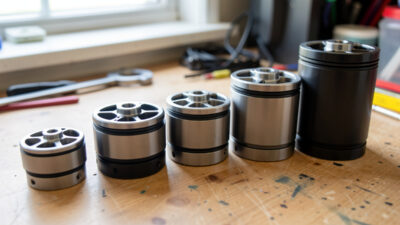
Stator size is the four-digit number on every FPV motor — 2207, 2306, 1404 —…
Leave a Reply