Long-Range FPV Builds: What You Actually Need
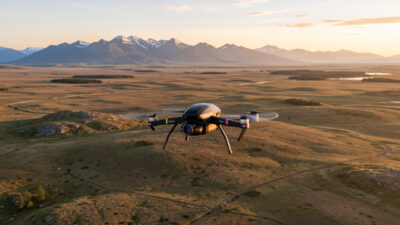
A long-range FPV build is a 7-inch quad optimised for efficiency and link margin rather…
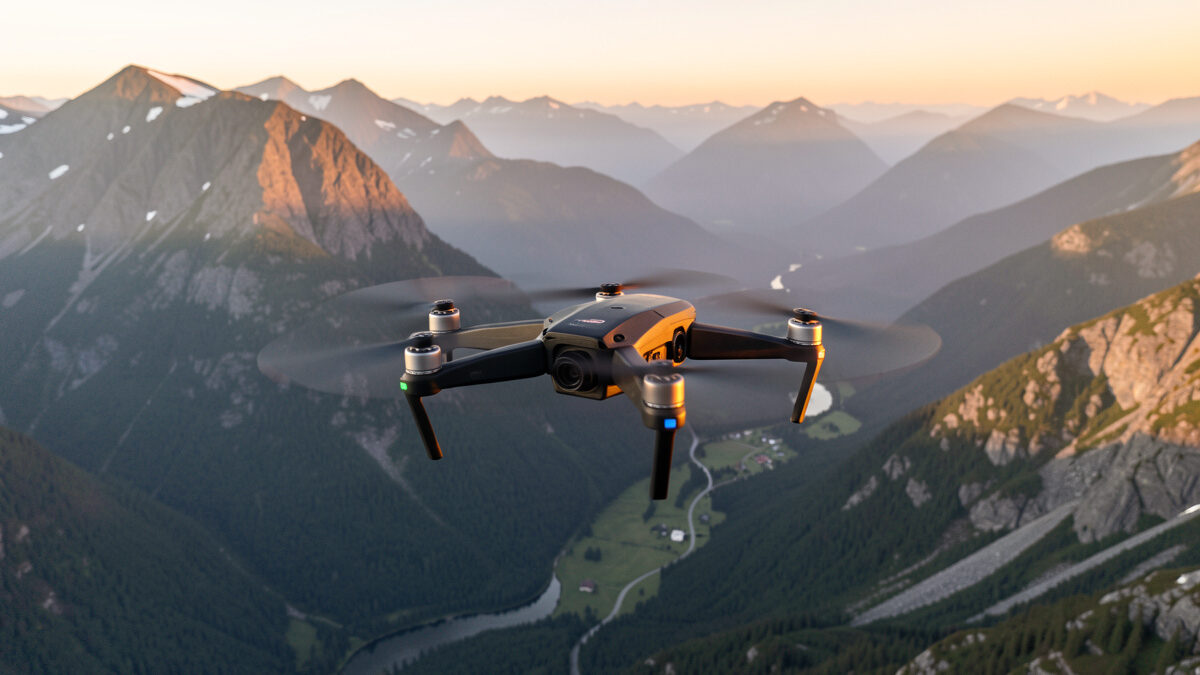
Long-range FPV is the discipline of building a quad that stays connected and stays flyable when the action is far from where you are standing. The single biggest gain is not raw transmitter power — it is link margin, and the cheapest way to buy it is a long-wavelength control link like 900MHz ExpressLRS plus a clean video system. In the EU open category I fly under, “long range” means range capability and a fat link budget, not flying past what I can legally see.
I came to long-range from two directions at once: the camera-drone side, where I chase Nordic landscape light with a sub-250g machine, and the build bench, where I solder my own FPV quads and have rebuilt every one of them after a crash. Long-range pulls both halves together. You need the airframe efficiency of a builder, the battery discipline of someone who runs a charging bench, and the regulatory honesty of an operator who reads the rulebook before reaching for a faster motor. This guide is the map; each section points to the deeper article where I take a single piece apart.
Long-range FPV is an airframe and link built for distance and endurance: a larger, efficient prop, a control link on a low frequency that travels well, a video link with enough margin to degrade gracefully, and a GPS rescue safety net for when the link finally gives out. A well-set-up 7-inch on 900MHz ExpressLRS will hold a usable control link kilometres out — far beyond what most pilots can legally or safely fly.
That last clause matters. In the European open category, the hard rule is visual line of sight (VLOS) — you, or a dedicated spotter standing next to you, must keep eyes on the aircraft. “Long range” here is about capability and safety margin: the quad that can comfortably reach the far ridge with the link still rock-solid is the quad that is relaxed and safe at the distances you actually fly. Genuine beyond-line-of-sight flying is a different rulebook (the Specific category) with its own authorisation. I do not derestrict transmit power past legal EIRP limits, and nothing on this site will teach you to. The whole point of a good long-range setup is that you do not need to cheat the rules to fly far and feel safe doing it.
Every long-range build is really five subsystems working together, and a weakness in any one caps the whole machine. Get these right in order: airframe efficiency, control link, video link, navigation/rescue, and battery endurance. Most “my quad fell out of the sky at 800m” stories trace back to exactly one of these being the runt of the litter.
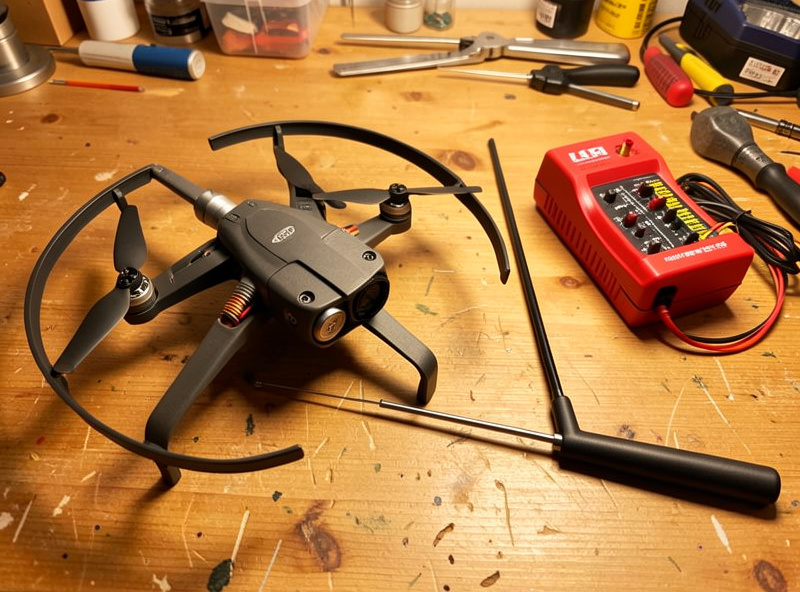
The frame and prop set the endurance floor. A 7-inch pulls far less current to stay airborne than a 5-inch, which is why long-range pilots gravitate to it — more on that trade in my 7-inch vs 5-inch comparison. The control link decides how far you can steer before you lose authority. The video link decides how far you can see, which is usually the real limit. Navigation and failsafe decide whether a lost link ends in a controlled return or a search party. And the battery decides whether any of it lasts more than three minutes. I unpack the complete shopping list in the long-range build guide.
| System | Long-range choice | Why it wins at distance | Deeper guide |
|---|---|---|---|
| Airframe | 7-inch efficient frame | Lower hover current = longer flight, more range per pack | 7″ vs 5″ |
| Control link | 900MHz ExpressLRS | Long wavelength penetrates terrain; huge link budget | ExpressLRS |
| Video link | Digital (DJI O3) or sensitive analog | Graceful degradation and recorded onboard footage | Video link |
| Navigation | GPS + Betaflight GPS Rescue | Autonomous return-toward-home on failsafe | GPS rescue |
| Battery | Li-ion or low-C LiPo pack | Higher energy density for endurance, not punch | LiPo care |
The control link is the cheapest range upgrade you can buy, because radio physics does the heavy lifting. A 900MHz link has a longer wavelength than the 2.4GHz most freestyle pilots run, so it bends around terrain and pushes through foliage far better for the same power. ExpressLRS on 900MHz gives you a control link with kilometres of margin and a telemetry downlink so you can watch your link quality (LQ) and RSSI live in the goggles.
Watching LQ is the single habit that separates pilots who fly far from pilots who lose quads. The number tells you when to turn around before the link breaks, not after. I cover module choice, antenna pairing, packet rates, and the legal power question in the ExpressLRS for long-range guide — including why I keep my output inside legal EIRP limits and let the antenna, not the amplifier, do the work.
Here is the truth most beginners learn the hard way: your control link will out-range your video link almost every time. You will still have perfect stick authority while the picture turns to static, and flying blind toward a mountain is not flying — it is gambling. The video link is what actually defines how far you can go.
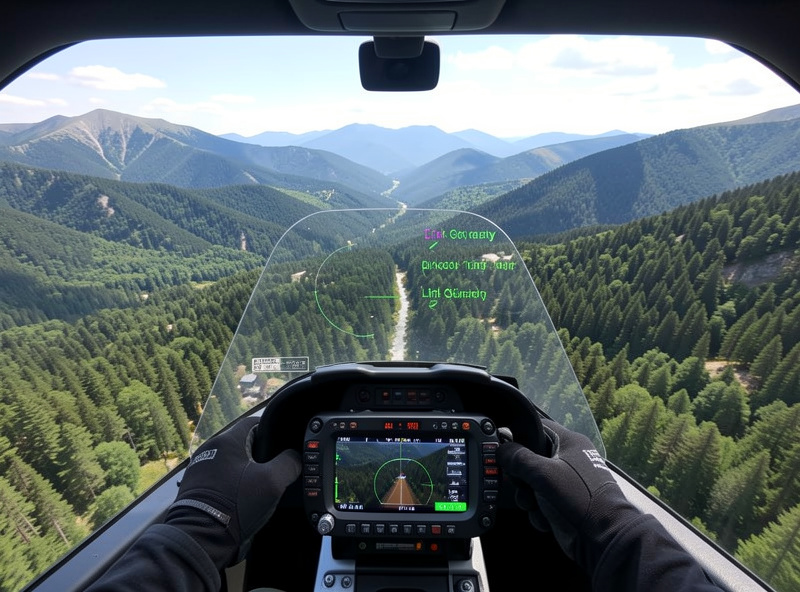
This is where the digital-versus-analog question gets real. Modern digital systems like DJI O3 hold a crisp picture much further than older kit and record sharp onboard footage, but they tend to fall off a cliff at the very edge — clean, then suddenly nothing. Good analog degrades into noisy-but-readable static that experienced pilots can still fly on. I own and fly both, and I lay out the honest trade in DJI O3 vs analog for long range and the deeper signal-chain mechanics in the video link explained. If you are still choosing goggles, start with my beginner goggles guide and the full link-layer map.
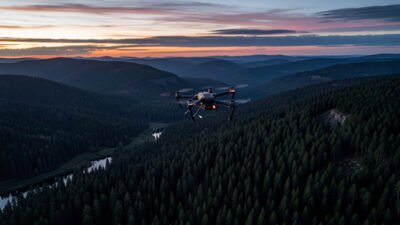
Long-range flying without GPS rescue is a bet that nothing will ever go wrong far from home. It will. Betaflight GPS Rescue uses an onboard GPS module so that on a failsafe — a lost control link — the quad climbs to a set altitude, turns toward your home point, and flies back until it either reconnects or you take over. It is not a beginner’s autopilot and it has sharp edges, but it is the difference between losing a link and losing a quad.
It has to be set up correctly or it does more harm than good: home point lock before arming, a sane return altitude that clears the terrain, and a tested failsafe behaviour. I walk through my exact configuration and the bench test I run before every long-range session in GPS rescue and failsafe for long-range FPV. This is the one section I would not let a new long-range pilot skip.
Long-range batteries are chosen for energy density, not burst current. Freestyle wants high-C LiPo that dumps amps; long-range wants the most watt-hours you can carry, which is why Li-ion packs (think 18650 or 21700 cells) and low-C high-capacity LiPo dominate the discipline. A 7-inch on a good Li-ion pack can fly far longer than the same airframe on a punchy freestyle LiPo.
Whatever the chemistry, the care rules are non-negotiable, and they are the same ones I preach across my whole battery bench: storage charge any pack you are not flying within a day, balance charge every time, respect the cold (range and voltage sag get worse fast in Nordic winter — see cold-weather flying), and retire a puffed pack with no heroics. I do not build or modify packs and neither should you; long-range endurance comes from buying the right cells and treating them with respect. My full routine lives in the LiPo care guide and the habits that stretch pack life are in extending LiPo life.
Mountain and long-range flying is where planning beats reflexes. Terrain blocks both your control and video links — fly behind a ridge and you can lose the picture instantly even at modest distance, because radio is line-of-sight at these frequencies. Reading the terrain before you arm, picking launch points with clear sightlines, and knowing where your link will shadow out is the skill that keeps the quad coming home.
I plan every mountain session: I map the ridgelines, pick a return corridor, set my GPS rescue altitude above the highest terrain in the bowl, and — this is the legal and practical key — I fly with line of sight maintained, using a spotter when the geometry gets tricky. My full method, including the apps and the pre-flight terrain read, is in terrain mapping and flight planning for FPV.
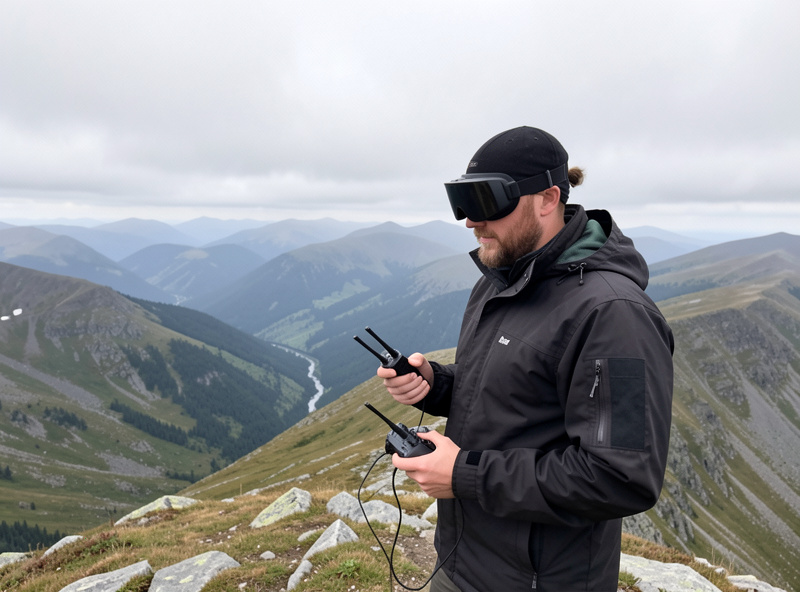
I fly under EU open-category rules and I will not pretend long-range exempts you from them. Long-range FPV in the open category lives almost entirely in subcategory A3 — far from people, far from built-up areas, in open country — and it requires visual line of sight throughout. You also need to register as an operator and put your operator ID on the aircraft. None of this stops you flying far and fast in the right place; it just keeps you legal and keeps the hobby open for everyone.
If you are new to the rulebook, read my open category explainer (A1/A2/A3) and the EU registration guide before your first big flight. These are the rules I fly under as an operator, not legal advice — when in doubt, the EASA civil-drone rules and your national aviation authority’s published guidance are the source of truth.
Almost every lost long-range quad traces back to a short list of avoidable errors, and knowing them is half of flying safely. The most common is arming without a solid GPS lock, which poisons the home point so a rescue flies the quad to the wrong place. The second is setting a rescue altitude below the terrain, turning the safety net into a guided flight into a ridge. The third is chasing distance instead of watching link quality — pushing out until the link breaks rather than turning around while it is still healthy.
The rest of the list is just as preventable. Pilots fly a punchy freestyle pack on a long-range quad and run out of voltage far from home; they bury the receiver antenna against carbon and throw away the range they paid for; they reach for transmit power instead of better antennas; and they forget the wind, flying out downwind so the return leg fights both the wind and a tired battery. None of these are exotic failures — they are discipline failures, and the cure is preparation, not better gear.
My own habit is a fixed pre-flight ritual that closes each of these holes: wait for a strong satellite lock before arming, confirm the rescue altitude against the terrain I mapped, check the wind direction and plan to fly out into it, verify the receiver and video antennas are clear and mounted right, and set a turn-around point on link quality and voltage that I do not argue with in the air. The whole point of building a quad with margin is so the flight is relaxed; the ritual is what keeps the margin real. When something does go wrong far out, the crash repair guide and disciplined battery storage habits get you flying again without drama.
Do not make your first long-range quad your first quad. The path that saves money and props is the same one I followed: sim hours first, then a tinywhoop, then a standard 5-inch you learn to build and fly, and only then a dedicated long-range machine. If you have not built a quad yet, my 5-inch build guide is the foundation the long-range build assumes you already understand. When you do crash — and at distance, recovery walks are longer — my crash repair guide gets the quad back in the air.
Long-range FPV is not about one magic component or a derestricted radio — it is about a balanced quad and a disciplined pilot. An efficient 7-inch airframe, a 900MHz control link with margin, a video link you understand and respect, a GPS rescue net configured against real terrain, and a battery chosen for endurance and cared for like the fire risk it is: get those five right and you fly far with a quad that comes home. Add terrain planning and honest line-of-sight discipline and you do it legally, safely, and repeatably. Everything else on this site is just the detail of doing each of those five well.
A well-built 7-inch on 900MHz ExpressLRS can hold a usable control link several kilometres out, and the video link usually fails first. But in the EU open category you must keep visual line of sight, so legal range is far shorter than radio capability. Long-range is about link margin and safety, not flying out of sight.
Yes. A GPS module enabling Betaflight GPS Rescue is the core safety net of long-range flying. On a lost control link it turns the quad toward your home point and flies it back. Without it, a failsafe far from home usually means a lost quad and a long search.
For penetration and link budget, yes. A 900MHz signal has a longer wavelength, so it bends around terrain and pushes through foliage better than 2.4GHz at the same power. That is why ExpressLRS on 900MHz is the long-range default, while 2.4GHz stays popular for short-range freestyle.
Energy density wins over burst current. Li-ion packs (18650 or 21700 cells) and low-C high-capacity LiPo carry the most watt-hours for endurance, unlike the high-C LiPo freestyle pilots use for punch. Whatever the chemistry, storage-charge and balance-charge it, and retire any puffed pack.
Yes, within limits. Long-range FPV in the EU open category sits in subcategory A3, far from people and built-up areas, and requires visual line of sight throughout, often with a spotter. You must register as an operator. Flying genuinely beyond line of sight needs Specific category authorisation.
Both work. Digital systems like DJI O3 hold a sharp picture much further and record clean onboard footage, but can cut out abruptly at the edge. Good analog degrades into flyable static. Many long-range pilots still value analog’s graceful fade; I fly both and choose by mission.
Antenna quality and frequency matter more than raw power. A good circularly polarised antenna and a sensitive receiver buy more usable range than cranking transmit power, which also risks breaking legal EIRP limits. Tune the whole signal chain before reaching for watts.
A long-range FPV build is a 7-inch quad optimised for efficiency and link margin rather…
GPS Rescue is the Betaflight feature that, on a lost control link, makes your quad…
Leave a Reply