Best Cinewhoop Frames 2026: A Builder’s Buying Guide
The best cinewhoop frame in 2026 is the one matched to your prop size, camera,…
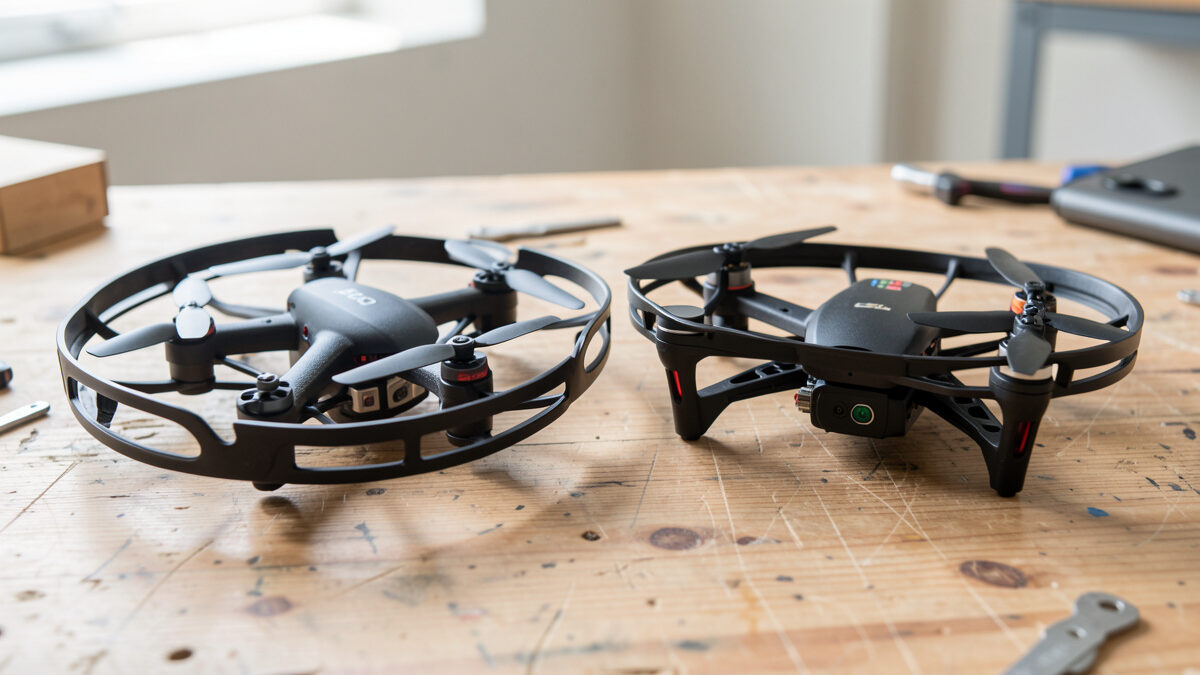
The honest answer to cinewhoop vs freestyle quad is that they are not rivals — they are two different cameras. A cinewhoop has fully ducted props for smooth, safe footage near people and objects; a freestyle quad has open 5-inch props for speed and acro. One flies the shot, the other flies the pilot. Most pilots who stick with FPV end up owning both.
I build and fly both. My freestyle machine is a 5-inch I soldered together on my own bench; my cinewhoop is a 3.5-inch ducted build that lives in the bag for jobs where I need a clean, gimbal-like line through a tight space. They share a parts family and a control system, and almost nothing else about how they feel in the goggles. If you are trying to decide which to buy or build first, the right question is not which is better — it is which one matches the footage you want home on the SD card.
The defining split is the propellers. A cinewhoop encloses every prop in a duct, which protects the props and anything they hit, and adds a little static thrust at hover. A freestyle quad runs naked 5-inch props in the open, which is lighter, faster, and far more efficient — and unforgiving of contact. That one design choice cascades into every other difference: weight, speed, flight time, where you can fly, and what the footage looks like.
Everything else flows from there. The cinewhoop is built around safety and smoothness; the freestyle quad is built around agility and speed. You cannot tune one into the other, because the difference is mechanical, not just software. This is why I keep both rather than trying to compromise on a single do-everything quad — that machine does not exist.
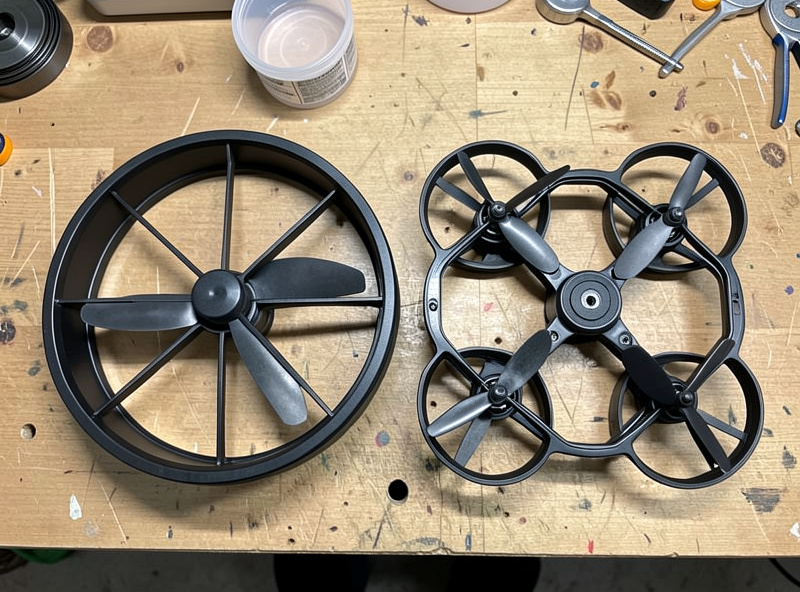
A cinewhoop flies heavy and deliberate. It is slow to change direction, planted at a hover, and rewards a soft, anticipatory hand — you lead your movements and let momentum carry the shot. A freestyle quad is the opposite: light, responsive, and built to flip, roll, and dive on command. In the goggles they feel like different vehicles entirely. New pilots coming off a freestyle quad consistently over-control a cinewhoop, and pilots coming the other way find the freestyle quad twitchy and nervous at first.
This is why your stick time still starts the same place for both: an FPV simulator like VelociDrone and a tinywhoop. The fundamentals of holding a line in the headset are shared. Once you can do that, the cinewhoop asks you to slow down and the freestyle quad asks you to commit. The full entry path is in my FPV beginner guide.
This is the decision that actually matters. A cinewhoop produces smooth, stabilised, gimbal-like footage and can place the camera within a meter of a subject — through a doorway, alongside a moving person, under an obstacle. That proximity is its signature and the reason it exists. A freestyle quad produces dynamic, energetic footage full of speed, dives, and rotation. It is the look of an FPV chase reel, not a smooth product shot.
Both rely on a good camera and post-stabilisation, and here my lens bench matters: sensor size and bitrate decide how the footage holds up once you stabilise it, on either machine. I judge a drone camera the way I judge any lens — the propellers are just a very expensive tripod. The deeper image reasoning lives in my drone camera guide, and freestyle-specific camera picks are in best FPV camera for freestyle.
Here is the comparison the way I lay it out when someone asks me which to buy first. Note the trade is consistent: the cinewhoop pays for safety and smoothness with speed and flight time.
| Attribute | Cinewhoop | Freestyle Quad |
|---|---|---|
| Props | Fully ducted (2.5–3.5 inch) | Open (5 inch) |
| Typical all-up weight | 250–450 g | 500–700 g |
| Top speed | Slow, deliberate | Fast, aggressive |
| Flight time | 3–5 minutes | 4–6 minutes |
| Fly near people/objects | Yes, by design | No, keep clear |
| Footage style | Smooth, cinematic, proximity | Dynamic, acro, speed |
| Crash cost | Lower (ducts absorb hits) | Higher (exposed props) |
| Best environment | Indoors, tight spaces | Outdoors, open space |
A cinewhoop is generally cheaper to crash. The ducts absorb impacts that would shred open props and snap freestyle arms, so a bad bump usually costs you a cracked duct rather than a teardown. A freestyle quad takes harder hits at higher speed, and a real crash can mean bent arms, stripped motors, and a bench session. Neither is fragile if you fly within your skill, but the freestyle quad punishes mistakes harder.
Both are repairable on the same bench with the same skills, which is the whole appeal of building your own. When I bin a prop or pop a motor lead on either machine, the fix is the same craft. My crash repair guide and motor replacement guide cover both, and the battery discipline is identical — the same balance-charge and storage habits from my LiPo care guide keep packs on either quad safe and long-lived.
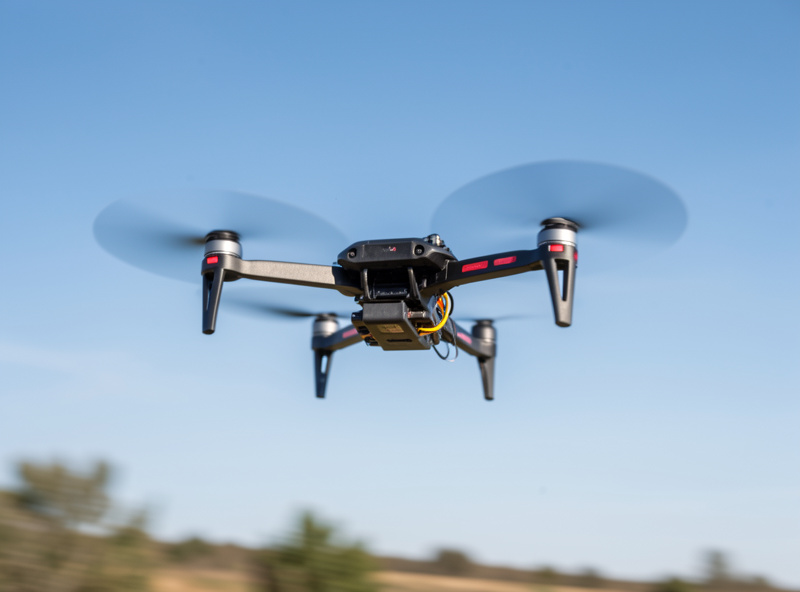
If your goal is footage you would actually use — a venue walkthrough, a real-estate fly-through, a smooth follow of a person — build the cinewhoop. If your goal is the pure joy of flying, dives and rolls and speed, build the freestyle quad. There is no wrong answer, only a wrong match to your goal.
For a first build, I lean toward the cinewhoop for one practical reason: the ducts protect your mistakes while you are still learning the bench and the sticks. The soldering is the same as a 5-inch and the stakes are lower. If you do want to start with the freestyle route, my 5-inch build guide walks the whole thing, and either way the cinewhoop build guide for beginners shows how forgiving a ducted build can be. Whichever you pick, do not skip the first-arm checklist — excitement is the most common cause of a new pilot’s first crash.
Pick by footage, build by forgiveness, and accept that you will probably end up with both. I reach for the cinewhoop when I need a controlled, smooth, close shot and the freestyle quad when I want to fly for the sake of flying. They cover different days. If you only have the budget and time for one right now, let the kind of video you actually want decide — the machine that produces it is the right machine. The full picture of where the cinewhoop fits is in my complete cinewhoop guide.
A cinewhoop is more forgiving for a first build because the ducts protect the props and absorb crashes, while the soldering is the same as a 5-inch. A freestyle quad is faster and punishes mistakes harder. Either way, start your stick time on a simulator and a tinywhoop first.
A freestyle quad gets dynamic, energetic footage full of speed and rotation, but it cannot match a cinewhoop’s smooth proximity shots near people and objects. The open props mean you must keep clear of subjects. For gimbal-like calm close to a subject, the ducted cinewhoop is the right tool.
The ducts that protect a cinewhoop’s props add weight and create drag, costing top speed and efficiency. A freestyle quad’s open 5-inch props are lighter and far more efficient, so it is faster and more agile. The cinewhoop trades that speed for safety and smoothness.
They share a parts family: flight controller and ESC stack, motors, video transmitter, camera, receiver, and LiPo, all running Betaflight. The differences are in sizing and the frame. Cinewhoop motors favour torque to haul the ducts and camera, while freestyle motors favour high RPM for speed.
A cinewhoop usually crashes cheaper because the ducts absorb impacts that would shred open props and snap freestyle arms. A freestyle quad hits harder at higher speed, so a real crash can mean bent arms and stripped motors. Both are repairable on the same bench with the same skills.
The best cinewhoop frame in 2026 is the one matched to your prop size, camera,…
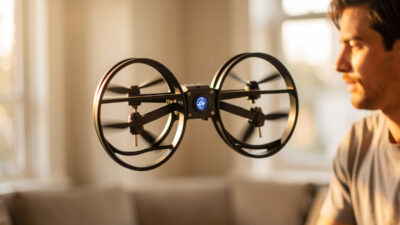
A cinewhoop is a ducted FPV quad built for smooth, close-up footage rather than speed.…
Leave a Reply