EU Drone Class Marks Explained: C0, C1 and C2
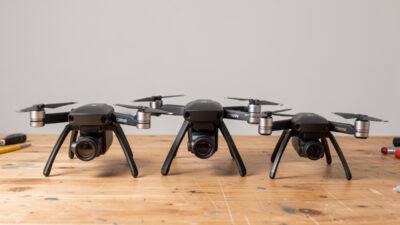
The little C-class label on a new EU drone — C0, C1, C2 and so…
The EU drone rules all flow from one rulebook: Regulation (EU) 2019/947, administered by EASA and enforced by your own national aviation authority. Almost every hobby flight lands in the Open category, where no permit is needed as long as you stay under 120 m, in visual line of sight, away from crowds, and registered as an operator. Everything else is detail — and this guide is the map to that detail.
I fly both halves of this hobby in Sweden. A sub-250g camera drone for the landscape light, and FPV quads I build and rebuild on my own bench. The rules are the one part of this hobby I refuse to wing, because a wrong regulation claim is not just an awkward forum reply — it is a fine, a confiscated quad, or worse. So I treat the law the way I treat a LiPo: with respect and a checklist. This hub pulls together everything I have learned flying inside the European framework, and every regulatory claim here points back to the source at EASA’s civil drones pages. Rules change — treat this as orientation, then confirm the current text with EASA and your national authority before you fly.
EASA sorts every drone operation into one of three risk buckets. The Open category covers low-risk flying — recreational and most light commercial work — and needs no prior authorisation. The Specific category covers higher-risk operations that need either an operational authorisation, a declaration under a standard scenario, or a light UAS operator certificate. The Certified category is aviation-grade: drone taxis, large cargo, the stuff with passengers and airworthiness certificates. As a hobby pilot you live almost entirely in Open, and you only brush against Specific if you want to fly beyond visual line of sight or closer to people than Open allows.
The genius of this split is that it is risk-based, not weight-based alone. A 249-gram camera drone and a 5-kilo cinema rig are not treated the same, but the deciding factors are who you might hurt and how far you can see your aircraft — not just the number on the scale. Once that clicks, the rest of the framework stops feeling arbitrary. EASA publishes the full text as the Easy Access Rules for Unmanned Aircraft Systems, and it is more readable than aviation law has any right to be.
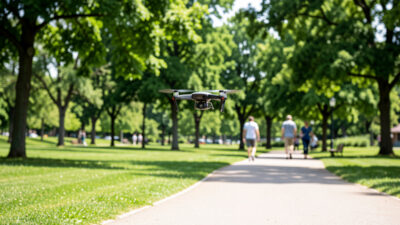
Inside Open there are three subcategories, defined by how close you are allowed to fly to uninvolved people. A1 is fly over people (but never over assemblies). A2 is fly close to people, with a 30-metre horizontal buffer from uninvolved people — or 5 metres if your drone has a low-speed mode. A3 is fly far from people, at least 150 m from residential, commercial, industrial and recreational areas. Which subcategory you can use depends on your drone’s weight and its class mark.
This is the single most useful thing to internalise: the subcategory is a relationship between your specific aircraft and the people around it, not a licence you carry. My sub-250 lives in A1 because it weighs under 250 g; my heavier camera drone lives in A2 or A3 depending on what it is class-marked as. I cover the whole map in the dedicated A1, A2 and A3 explained guide, because getting this one right keeps you legal more than any other single fact.
Since the framework matured, new drones sold in the EU carry a C-class label from C0 to C6, a small sticker that tells you exactly which subcategory the aircraft was built for. C0 is the sub-250g class that flies in A1. C1 is under 900 g and also flies in A1 with extra conditions. C2 is under 4 kg and unlocks A2’s close-to-people flying with its low-speed mode. C3 and C4 are the heavier A3 machines, and C5 and C6 are built for the Specific category’s standard scenarios.
If your drone predates the class-mark system — a “legacy” aircraft with no C-label — you are not grounded, but you are limited: under 250 g you fly A1, and from 250 g up to 25 kg you are restricted to A3, far from people. That transitional arrangement is why an old 900-gram drone is suddenly an A3-only machine while a new C1-marked one of the same weight can fly in A1. The full breakdown lives in the C0, C1 and C2 class marks guide, and EASA’s class-mark detail sits within its civil drones framework.
Here is the rule that trips up more new pilots than any other: you register yourself as an operator, not each drone. You must register if your drone weighs 250 g or more, OR if it carries a camera or any sensor able to capture personal data — which is nearly every camera drone ever sold, including sub-250g ones. So the 249-gram weight that frees you from a lot of rules does not, by itself, free you from registration once a camera is bolted on.
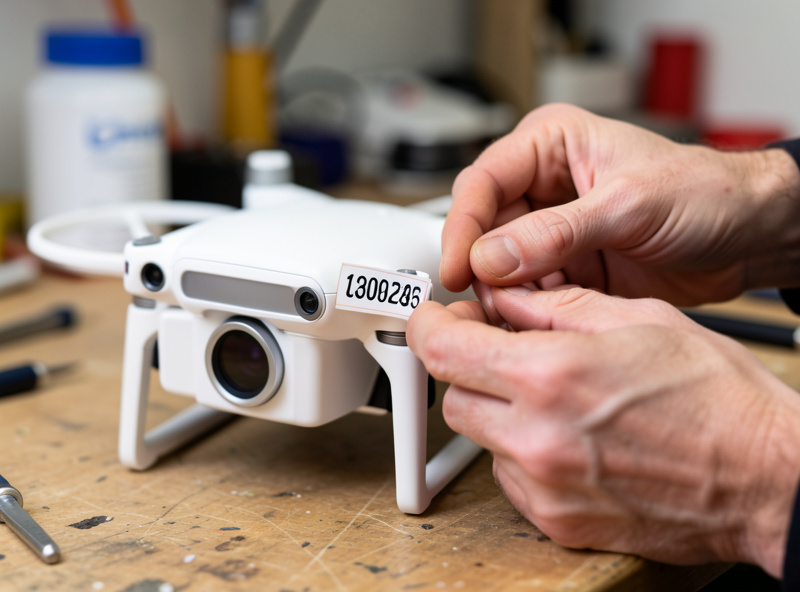
You register once, in your country of residence, and that registration is valid across the EU. You receive an operator registration number that has to be displayed on every drone you fly and loaded into the aircraft’s remote identification. I walk through the whole process — what it costs, where to do it, what the number looks like — in the EU drone registration guide, and the related operator ID explainer covers where that number actually goes. EASA summarises the registration obligation on its drones pages; the registry itself is run by each member state.
Registration makes you an operator. Flying legally in most subcategories also asks you to be a competent remote pilot, and the two are separate things. For A1 and A3 you complete free online training and a 40-question theory exam through your national authority, which issues a proof of completion. For A2 — flying that 30 metres from people — you add a further theoretical exam and a declared period of practical self-training, earning a certificate of remote pilot competency for A2.
None of this is hard. The A1/A3 test took me an evening, and it is genuinely worth doing properly rather than guessing the answers, because the questions map onto the situations that actually get pilots in trouble: airspace, privacy, and what to do when you lose line of sight. Your operator number and your pilot competency together are what make a flight legal — one without the other is half-compliant.
Whatever subcategory you are in, the Open category sets hard ceilings. Maximum height is 120 metres above the closest point of the surface. You must keep the drone in visual line of sight at all times — actual eyes-on, not just FPV goggles, which is why FPV flying legally requires a spotter beside you. You may not carry dangerous goods or drop anything. And you never fly over assemblies of people, in any subcategory, with any class of drone. These are the non-negotiables.
The 120-metre ceiling has practical exceptions near tall obstacles and stricter limits in controlled airspace, which is where geographical zones come in. The point to hold onto is that altitude and line of sight are not subcategory-specific niceties — they bind every Open-category flight equally, from my tiny whoop indoors to a heavy cinema rig in a field.
Controlled airspace around airports deserves its own mention because it is where good pilots get into the most trouble. The protected zones around airfields are large, they are not always obvious from the ground, and flying into one without clearance is treated seriously by every national authority. This is precisely why the geographical-zone map exists and why I check it first, not last. When I travel with a drone the zone check is the very first thing I do on landing, before I have even unpacked the props — my travelling with a drone notes go deeper on that habit.
The whole Open framework is really a system for managing distance to people, so it is worth stating the buffers plainly. In A1 with a C0 or C1 drone you may overfly uninvolved people but must never linger over them deliberately, and assemblies are always off-limits. In A2 you keep 30 metres horizontal from uninvolved people, reducible to 5 metres with a C2 drone’s low-speed mode active. In A3 there should be no uninvolved people present at all, and you stay 150 m clear of residential and built-up areas.
“Uninvolved” is doing a lot of work in those sentences — it means anyone not part of your operation and not aware of it. The people helping you fly are involved; the family on the next bench is not. I break down every distance, what counts as an assembly, and how to read a real-world site in the flying near people guide.
| Subcategory | Drone classes allowed | Distance to uninvolved people | Pilot competency |
|---|---|---|---|
| A1 | C0, C1 (and legacy under 250 g) | Overflight allowed; no assemblies | A1/A3 online training |
| A2 | C2 | 30 m horizontal, or 5 m in low-speed mode | A2 certificate of competency |
| A3 | C2, C3, C4 (and legacy up to 25 kg) | No uninvolved people; 150 m from built-up areas | A1/A3 online training |
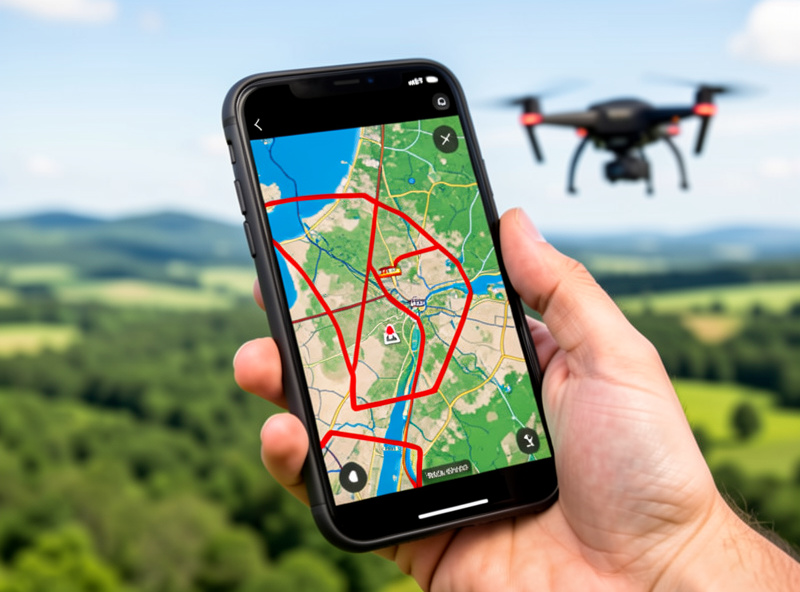
Even a perfectly compliant flight can be illegal in the wrong place. Member states publish UAS geographical zones — areas where drone flight is banned, restricted, or allowed only under conditions. Airports, military sites, nature reserves, prisons and city centres are the usual suspects, and many countries publish them as an app or an online map you are expected to check before every flight. EASA does not run a single pan-European map; each national authority does, which is why I check the local zone map the way I check the weather.
This is the part of the rulebook that changes most often, because zones are added and lifted constantly — a temporary restriction over an event, a new permanent zone around infrastructure. My no-fly zones guide explains how the zone system works and how to find your country’s authoritative map, and EASA links every national authority from its drones portal.
The moment you want to fly beyond visual line of sight, closer to people than A2 allows, or above 120 m, you leave Open and enter the Specific category. That means a real risk assessment and one of three routes: an operational authorisation from your national authority, a declaration under a predefined standard scenario (STS), or a light UAS operator certificate (LUC) for established operators. The standard scenarios STS-01 and STS-02 each need a specific certificate of remote pilot competency and a C5- or C6-class drone.
Most hobby pilots never need this, and that is fine — I have flown for years entirely within Open. But if your ambitions grow, the Specific category and STS certificate guide explains the path without the legalese. EASA’s Specific category material is the authoritative reference, and a national authority is always the body that actually grants the authorisation.
All of this collapses into a short routine I run before I arm anything. Operator number on the drone and in remote ID? Pilot competency current for the subcategory I am flying? Drone’s class mark matched to the subcategory and the people around me? Geographical zone clear for this spot right now? Battery healthy, weather sane, line of sight unbroken? That checklist is muscle memory, and it is the same instinct I bring to a LiPo charge or a first-arm sequence — the boring discipline that keeps a hobby from becoming an incident.
The single biggest mistake I see is treating compliance as a one-time setup. It is not. Your registration renews, zones change, and a firmware update can alter your drone’s behaviour. Re-check before each session, and when in doubt, the answer is always the same: read the current text at EASA and your national authority rather than a forum thread. The rules I fly under are clear enough that staying inside them is mostly a matter of paying attention.
The aviation regulation tells you how to fly legally; it does not, by itself, cover what happens when a quad falls out of the sky onto someone’s car. Liability is a separate question, and several member states require third-party liability insurance for drones — some for any drone, some above a weight threshold. Even where it is not strictly mandatory for the lightest aircraft, carrying it is the adult move. A sub-250g toy can still crack a windscreen or spook a horse, and the cost of cover is trivial against the cost of being uninsured when something goes wrong.
I treat insurance as part of compliance even though it sits outside the EASA text, because the two failure modes — breaking a rule and causing damage — tend to arrive together. Check whether your country mandates cover and at what weight, and read what your policy actually excludes; some standard home-contents policies quietly refuse drone claims. Your national authority’s site, linked from the EASA drones portal, usually states the insurance position for your country.
The second rulebook that catches camera-drone pilots is privacy. The moment your drone carries a camera, GDPR and national privacy law are in play, entirely independently of the aviation rules. Flying a perfectly legal A1 mission and pointing the gimbal into a neighbour’s garden is an aviation-legal, privacy-illegal flight. The framework even uses your camera as a trigger for registration precisely because a flying camera is a data-collection device.
In practice this means I keep the lens on the landscape, not on identifiable people or their property, and I do not publish footage that singles people out without thought. This is judgement rather than a distance you can measure, but it is the area where a careless pilot does real reputational damage to the whole hobby. The aviation authority polices the airspace; data-protection authorities police the footage, and both can act on the same flight.
If you are shopping today, the single most useful habit is to look for the C-class label before you look at the camera specs. A drone’s class mark decides which subcategory you can legally fly it in, and that decision outlives any feature on the spec sheet. A C0 or C1 machine keeps you in the friendly A1 world close to where people are; a C2 buys you A2’s measured proximity; an unmarked legacy drone over 250 g locks you into A3, far from everything. Two drones of identical weight can have completely different legal envelopes depending on that one sticker.
This is where my optics habit and my regulation habit meet. I judge a drone camera the way I judge any lens on my bench — sensor size, bitrate, gimbal behaviour — but I check the class mark first, because the best camera in the world is useless if its class mark grounds it in the only field two kilometres from anywhere. If you want help shopping by weight class, my DJI Mini class limits piece is an honest look at what the sub-250 world actually does, and the broader sub-250g guide sets the context.
Not a licence in the traditional sense. For the Open category you register as an operator and complete free online training plus a theory exam for A1/A3, with an extra exam for A2. There is no flying licence for recreational Open-category use, but registration and pilot competency are required. Confirm current rules at EASA.
No. A sub-250g drone avoids several rules and flies in subcategory A1, but if it carries a camera able to capture personal data you still must register as an operator. The 250 gram line lowers your obligations; it does not remove them. Always verify with EASA and your national authority.
120 metres above the closest point of the surface, in visual line of sight, with limited exceptions near tall obstacles. Controlled airspace and geographical zones can impose lower limits. This applies to every Open-category subcategory equally, from A1 to A3, per EASA Regulation 2019/947.
Yes. You register once in your country of residence and that operator registration is valid across all EU member states. You do not re-register in each country you visit, though you must always respect local geographical zones and any national rules. EASA coordinates this single-registration principle.
The operator is the person or entity responsible for the drone and who registers and gets the operator number. The remote pilot is whoever is actually flying and must hold the relevant competency. They are often the same person, but they are distinct legal roles under the EU framework.
The core regulation is stable, but geographical zones change frequently and transitional provisions and class-mark details have shifted over time. Treat any guide, including this one, as orientation and confirm the current text on EASA and your national aviation authority site before you fly.
This hub links every part of the EU regulatory picture. Work through the spokes in order, or jump to the one you need:
For the weight-class logic that underpins so much of this, my sub-250g drone guide and the explainer on why 250 grams matters are the natural companions to the law.
The little C-class label on a new EU drone — C0, C1, C2 and so…
The EU Open category splits into three subcategories — A1, A2 and A3 — and…
Leave a Reply