DJI Drone Camera Quality: Mini vs Air vs Pro
DJI drone camera quality climbs in real steps from the Mini class to the Air…
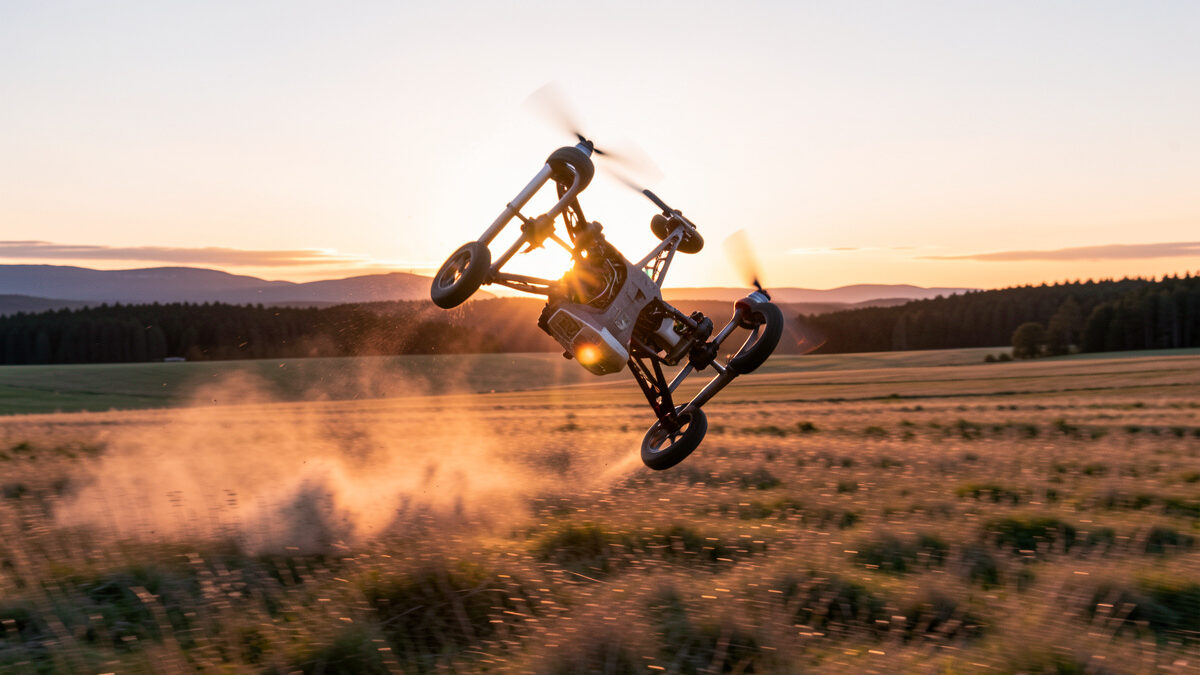
The best FPV camera for freestyle is the one with the widest dynamic range and the most forgiving exposure response, because freestyle flying lives in the brutal transition between bright sky and dark ground. Resolution and brand matter far less than how the camera handles a dive from sunlight into shade without blinding you or crushing the shadows. In my own freestyle builds, I prioritize dynamic range first, low-light recovery second, and color last — in that exact order. Get those three right in a camera light enough for an acro build — a micro FPV cam runs roughly 8 to 10 grams — and the brand badge stops mattering.
Freestyle is the discipline I actually fly, day in and day out, so this is lived bench-and-stick experience rather than a spec roundup. A freestyle FPV camera is a flying camera, not a recording one — its only job is to keep your eyes ahead of the quad through chaotic light. If you want the wider map of how flying cameras differ from recording cameras, the drone camera guide lays out the whole landscape; this piece is about the one slot on a freestyle quad.
Freestyle means power loops, dives, and flips that swing the camera from open sky to shaded ground in a fraction of a second. A camera with narrow dynamic range blows out the sky to white or crushes the trees to black, and in that instant you lose the visual reference you need to land the trick. A wide-dynamic-range camera holds detail in both, so you keep flying. This is why I rate dynamic range above every other spec for acro — it is the difference between a camera that disappears and one that fights you.
The exposure response — how fast the camera adjusts when the light changes — matters just as much as the raw range. A camera that takes half a second to recover from a sun hit is a camera that flies you blind through the most critical part of a line. The cameras I trust for freestyle adjust almost instantly and lean toward protecting the shadows, because a slightly bright sky is survivable but a black hole where the ground should be is not.
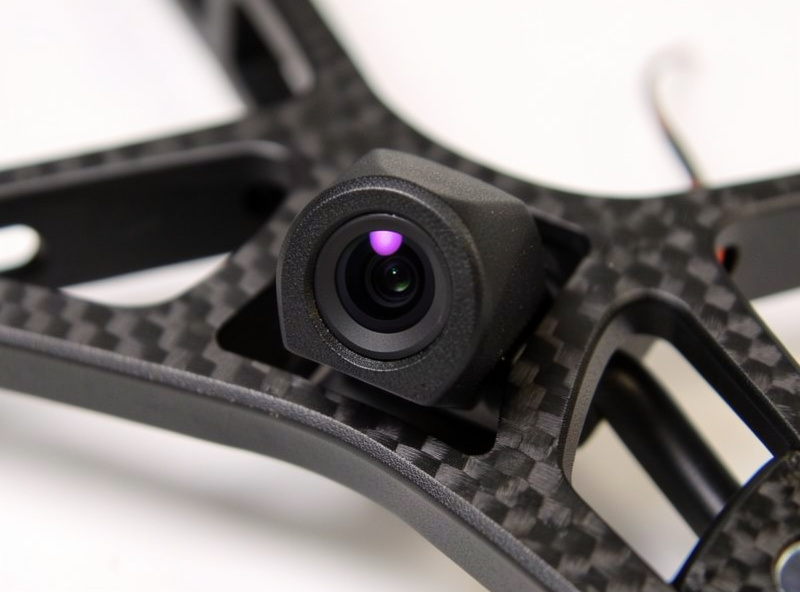
When I evaluate a camera for an acro build, I run it through the same ordered checklist every time. Color tuning is the easiest thing to fix in your goggles or in post; dynamic range and exposure speed are baked into the sensor and cannot be tuned around. So I spend my money where it cannot be recovered later.
| Priority | Why It Matters for Freestyle | Can You Fix It Later? |
|---|---|---|
| Dynamic range | Holds sky and ground in the same dive | No — sensor-baked |
| Exposure speed | Recovers instantly from a sun hit | No — sensor-baked |
| Low-light recovery | Keeps detail in shade and dusk | Partly, via settings |
| Latency | Keeps hands ahead of the quad | Mostly link-dependent |
| Color / saturation | Looks good, not flight-critical | Yes — tune freely |
| Durability | Survives the crash you will have | Spare lens on hand |
The camera choice sits downstream of one bigger decision: analog or digital. For pure freestyle, analog still has a real argument — the lowest latency and graceful failure, where a weak signal degrades to static instead of freezing the frame mid-flip. Digital gives a sharper image but historically cost a few milliseconds of latency that hardcore freestyle pilots feel. I fly both and the gap has narrowed, but for someone learning hard acro, I still lean analog for the failure behavior alone. Work through that decision in the analog vs digital FPV guide before you commit to a camera, because it constrains which cameras you can even buy.
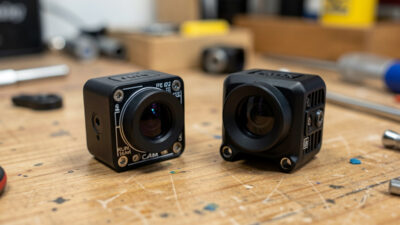
Brand-wise, this is where the RunCam-versus-Caddx question lands for freestyle pilots specifically. My short version: RunCam’s low-light-tuned cameras suit the shaded and dusk flying freestyle often happens in, while Caddx gives punchier color out of the box. I break the brands down fully in the RunCam vs Caddx comparison.
A freestyle camera is only as good as how it is mounted. Freestyle quads run a steep upward camera tilt — often 30 to 45 degrees — so the camera looks where the quad is going at speed, not at the ground in front of it. The camera you pick has to physically allow that tilt in your frame, which is a fit question worth checking before you buy. A camera that bottoms out against the frame at 40 degrees is the wrong camera for an acro build no matter how good its sensor is.
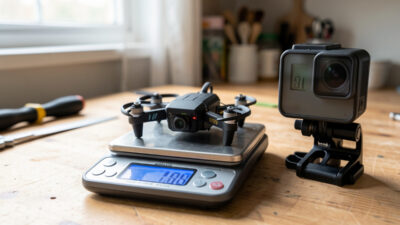
Weight matters too, though less than on a sub-250 build. A micro versus a full-size camera is a handful of grams, but on a light freestyle quad chasing maximum agility, those grams shift the center of mass at the nose and change how the quad rotates. I cover that trade-off in camera weight and drone performance. When you are ready to buy, a quick look across current freestyle FPV cameras shows how tightly the good options cluster on price.
As an Amazon Associate I earn from qualifying purchases.
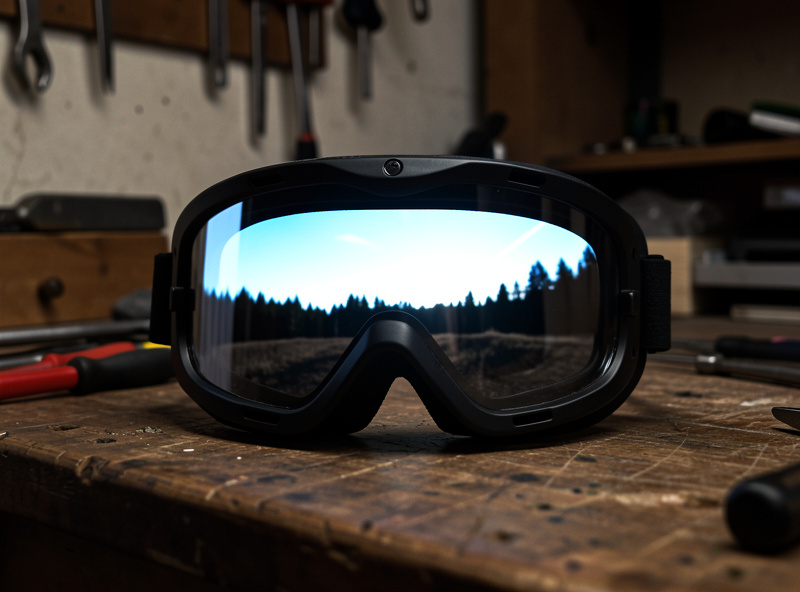
One spec people skip until it bites them: the camera’s aspect ratio. Most analog FPV cameras are native 4:3, and most analog goggles are 4:3, so a 4:3 camera fills the screen with no stretching or black bars. Run a 16:9 camera into 4:3 goggles and you either squash the image or letterbox it, losing vertical view exactly where you need to see the ground coming up in a dive. For analog freestyle I match the camera’s native ratio to the goggles, full stop.
Field of view is the other half of this. Freestyle wants a wide FOV — typically around 150 to 160 degrees — because a wider view makes speed read on screen and shows more of the obstacle field as you flow through it. Too narrow and the world rushes at you with no warning; too wide and the fisheye distortion makes judging distance harder. I settle around the 155-degree mark for most of my acro builds and only push wider for tight, technical proximity flying where seeing more of the gap matters more than clean geometry. It is the kind of setting I dialed in by flying it wrong first — my earliest builds ran too narrow and every dive felt like it arrived a beat early.
If you are building a freestyle quad, buy the camera with the best dynamic range you can afford in your chosen video system, mount it with a steep upward tilt, keep a spare lens in your field bag, and stop worrying about the rest. The brand wars and the color debates are noise next to the one thing that decides whether you can fly your line through hard light. Every freestyle camera I trust shares that one trait, and every one I have set aside failed exactly there.
And remember the camera is the last thing that makes you a better freestyle pilot — sim hours and stick time do that. If you are early on, the FPV simulator guide will improve your flying more than any camera upgrade. The best camera in the world cannot fly a line you have not practiced.
Dynamic range. Freestyle flying swings the camera from bright sky to dark ground in a fraction of a second, and a wide-dynamic-range camera holds detail in both so you never lose your visual reference mid-trick. It matters more than resolution or brand.
Both work, but analog still has an edge for hard freestyle because of its lowest latency and graceful failure, degrading to static instead of freezing the frame. Digital looks sharper and the gap has narrowed. Decide the video system first, then pick the camera.
A steep upward tilt, usually 30 to 45 degrees, so the camera looks where the quad is heading at speed rather than at the ground in front of it. Make sure your chosen camera physically clears the frame at that angle before buying.
Yes, though less than on a sub-250 build. A micro versus a full-size camera is only a few grams, but on a light freestyle quad those grams sit at the nose and change how the quad rotates and balances. Lighter usually means snappier.
No. Past a certain point you are paying for color and resolution that do not help you fly. Spend on dynamic range and exposure speed, which are baked into the sensor and cannot be fixed later, and stop there.
Both RunCam and Caddx make excellent freestyle cameras. RunCam’s low-light-tuned models suit shaded and dusk flying, while Caddx gives punchier color out of the box. The sensor’s dynamic range matters more than the logo.
DJI drone camera quality climbs in real steps from the Mini class to the Air…
RunCam vs Caddx is the FPV camera question I get asked most, and the honest…
Camera weight and FPV drone performance are tied together by simple physics: every gram of…
Leave a Reply