FPV Sim Controller Setup Guide: Radio, Modes, Rates
Setting up your controller in an FPV simulator takes about ten minutes and decides whether…
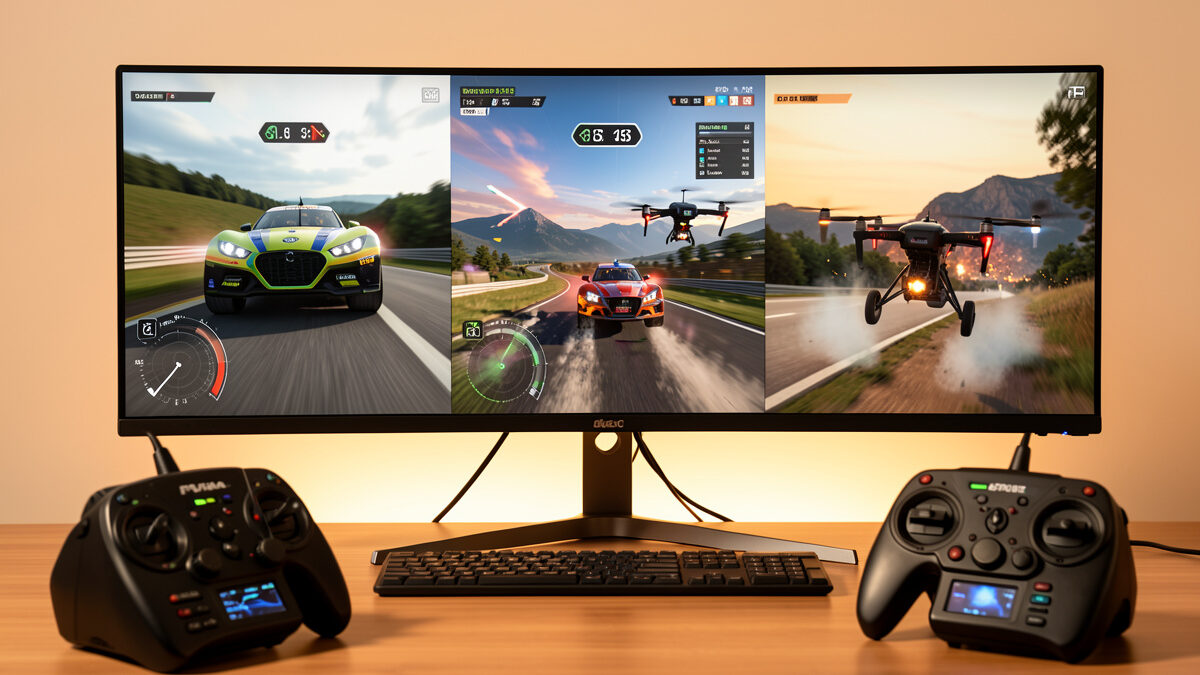
For honest physics and racing, pick Velocidrone; for the gentlest learning curve and the best freestyle, pick Liftoff; for structured leagues and tracks, pick DCL — The Game. All three cost around $20 to $25 once, and serious pilots eventually own more than one. But if you can only buy a single sim today, the right choice depends entirely on why you fly.
I have logged real hours in all three across my winter whoop seasons, when the weather in Sweden makes the couch the only runway. This is the head-to-head I wish I had read before spending money: where each sim genuinely wins, where each one frustrates, and which pilot each one is built for. One caveat I will repeat — a sim teaches your thumbs, not your nerves, so read every “best for” below as “best for building that skill,” not “best for replacing real flight.”
Match the sim to your goal and you will not waste a krona. Velocidrone is the racer’s and skill-builder’s pick because its physics are the most honest of the three — what works there works on a real quad. Liftoff is the freestyler’s and beginner’s pick for forgiving onboarding and gorgeous maps. DCL is the structured competitor’s pick for its league format and defined tracks.
If you want one sentence: most pilots serious about flying end up on Velocidrone for skill and keep Liftoff for fun. DCL is the specialist choice. The rest of this guide is why. If you have not chosen a sim category at all yet, my best FPV simulator pick for 2026 frames the whole decision, and the broader FPV simulator training guide covers how to actually practice once you have one.
Velocidrone is the sim racers trust because its flight model is the closest to a real quad — the prop wash, the momentum, the way the craft behaves at the edge of control all translate. If your goal is skill that transfers, this is the one. The graphics are plain and the interface is dated, but nobody serious flies Velocidrone for the scenery.
What it does best: racing lines, time-trial leaderboards, a massive library of community tracks, and a physics model that does not flatter you. When you nail a line in Velocidrone, you have actually learned something your real quad will reward. The trade-off is the learning curve — it is unforgiving, and a raw beginner can find it discouraging because it does not hold your hand. That honesty is exactly why it is the best place to drill racing lines before you carry that speed to a real gate.
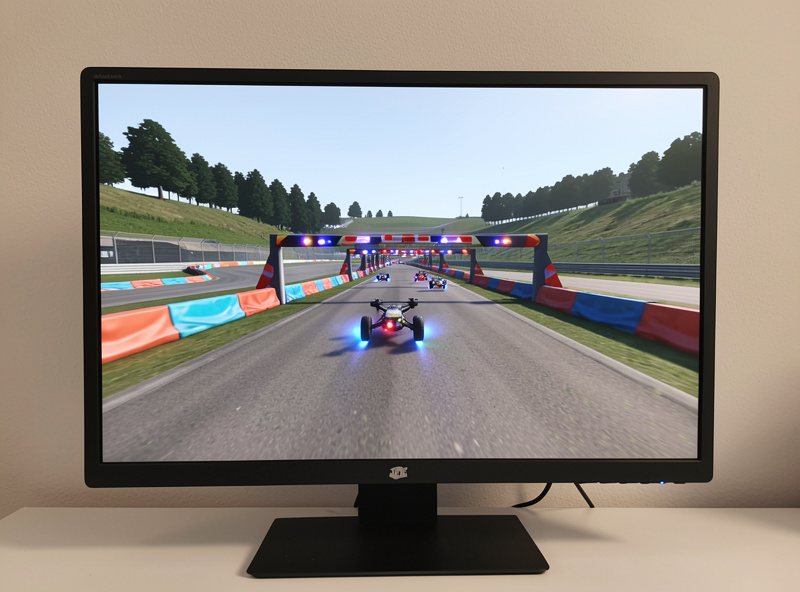
Liftoff is the easiest sim to fall in love with because it looks beautiful and flies forgivingly, which is exactly what a nervous beginner needs. The maps are the best-looking of the three, the freestyle environments are genuinely fun, and the onboarding does not punish you for being new. For building confidence and practicing tricks, it is my first recommendation to anyone starting out.
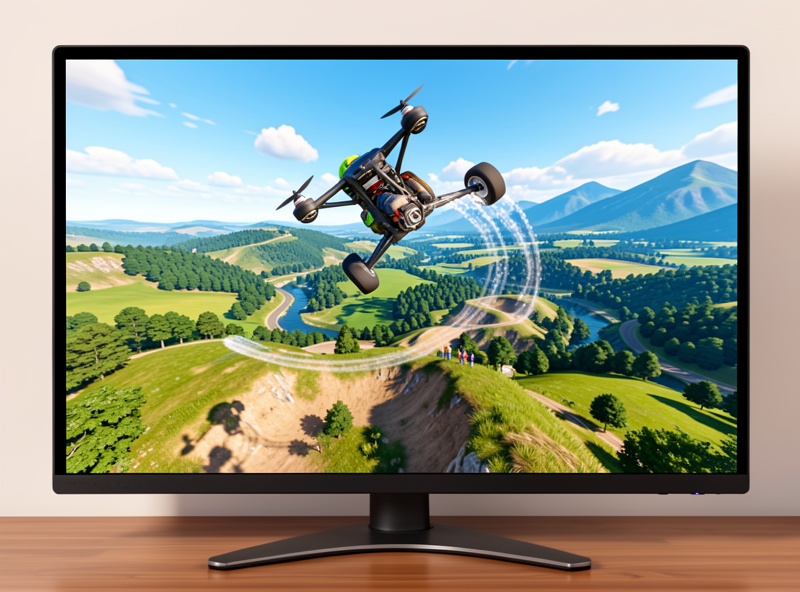
Where it shines: freestyle practice, immersion, and a gentle on-ramp into acro. Where it gives a little back: the physics are slightly more forgiving than real life, so a line that works in Liftoff might bite you on a real quad if you lean on that forgiveness. It is the best place to grind freestyle tricks safely — just stay honest that the real quad has less margin. Pair it with Velocidrone once your basics are solid and you get the best of both: fun and honesty.
DCL — The Game is built around the Drone Champions League format, so its strength is structure: defined tracks, a career mode, and a competitive ladder that gives your practice a clear shape. If you are motivated by leagues, progression, and racing against a defined standard rather than open practice, DCL keeps you coming back.
Its physics sit between Velocidrone’s realism and Liftoff’s forgiveness — medium-high, good enough to build real skill, not quite the pure transfer of Velocidrone. The tracks are polished and the career progression is genuinely motivating for goal-driven pilots. The trade-off is a smaller community than the other two and less open free-flight sandbox. Think of DCL as the sim for the pilot who wants a season to climb, not just a map to roam.
| Feature | Velocidrone | Liftoff | DCL — The Game |
|---|---|---|---|
| Physics realism | Very high | High (forgiving) | Medium-high |
| Best for | Racing, skill transfer | Freestyle, beginners | Structured leagues |
| Learning curve | Steep | Gentle | Moderate |
| Graphics | Plain | Excellent | Polished |
| Community / tracks | Huge custom library | Large | Smaller, structured |
| Price (approx.) | $20 one-time | $20 one-time | $25 one-time |
Prices and feature sets change, so confirm the current store page before buying. The realism row is the one to weight most heavily if skill transfer is your goal; the graphics row matters most if motivation is what keeps you practicing.
Buy Velocidrone first if you are serious about flying well, and buy Liftoff first if you need fun to stay motivated — that is the honest fork. A disciplined learner who will do boring hover drills gets more from Velocidrone’s honest physics. A pilot who needs the practice to feel good to keep showing up gets more from Liftoff, then graduates to Velocidrone.
For most people I suggest starting on the free options to confirm you enjoy FPV at all — the free FPV simulator guide covers what you can learn for nothing — then buying Velocidrone once you are committed. Whatever you pick, set the controller up properly first; bad calibration teaches bad habits in any sim, and the controller setup guide walks through it. When the sim feels easy, the tinywhoop is your next step toward a real build.
No simulator on this list — not even Velocidrone — teaches composure, and that is the gap every new pilot underestimates. The stick inputs you drill transfer beautifully; the racing line you memorize transfers; the muscle memory transfers. What does not is the way a real $300 quad screaming past your head rewires your nervous system the first dozen flights. Pick whichever sim fits your goal, but read every “skill transfer” claim here as transfer of thumbs, not nerves.
The other thing the screen leaves out is the physical world: wind gusts that shove the quad off your memorized line, prop wash near the ground that the sim only approximates, battery sag that changes how the craft feels at the end of a pack, and the radio link dropping at the worst moment. None of the three sims model all of that faithfully, and they are not supposed to. They make you capable on the sticks so that when you finally arm real props, the only new variable is the one that matters: consequence. That is why I treat any sim as the start of the path, never the whole of it.
Liftoff is friendlier for raw beginners thanks to its gentle learning curve and forgiving physics. Velocidrone has the more honest flight model and transfers better to a real quad, but its steeper curve can discourage someone brand new. Many start on Liftoff and add Velocidrone later.
Velocidrone has the most realistic flight model of the three. Racers trust it because momentum, prop wash, and edge-of-control behavior closely match a real quad. DCL sits at medium-high realism, and Liftoff is high but slightly more forgiving than real life.
No. One is enough to learn on. Many serious pilots own Velocidrone for skill and Liftoff for fun, but that is optional. Pick the one that matches your goal: racing and transfer favor Velocidrone, freestyle and onboarding favor Liftoff, leagues favor DCL.
Reasonably. Its physics are medium-high, good enough to build real stick skill, though not quite the pure transfer of Velocidrone. Its real strength is structure: defined tracks, career mode, and a competitive ladder that motivates goal-driven pilots.
All three are inexpensive one-time purchases, roughly $20 for Velocidrone and Liftoff and around $25 for DCL. Prices shift with sales, so check the current store page. Compared with the cost of crash repairs on a real quad, any of them pays for itself quickly.
Setting up your controller in an FPV simulator takes about ten minutes and decides whether…
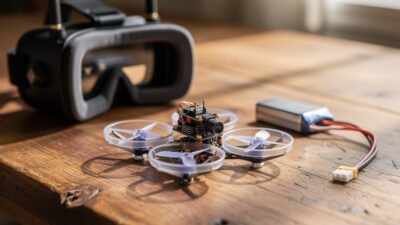
The 5-inch freestyle quad in the YouTube thumbnail is gorgeous, fast, and exactly the wrong…

You can learn the entire foundation of FPV flight for exactly zero kronor. Free FPV…
Leave a Reply