Best FPV Camera for Freestyle: My Picks and the Why
The best FPV camera for freestyle is the one with the widest dynamic range and…
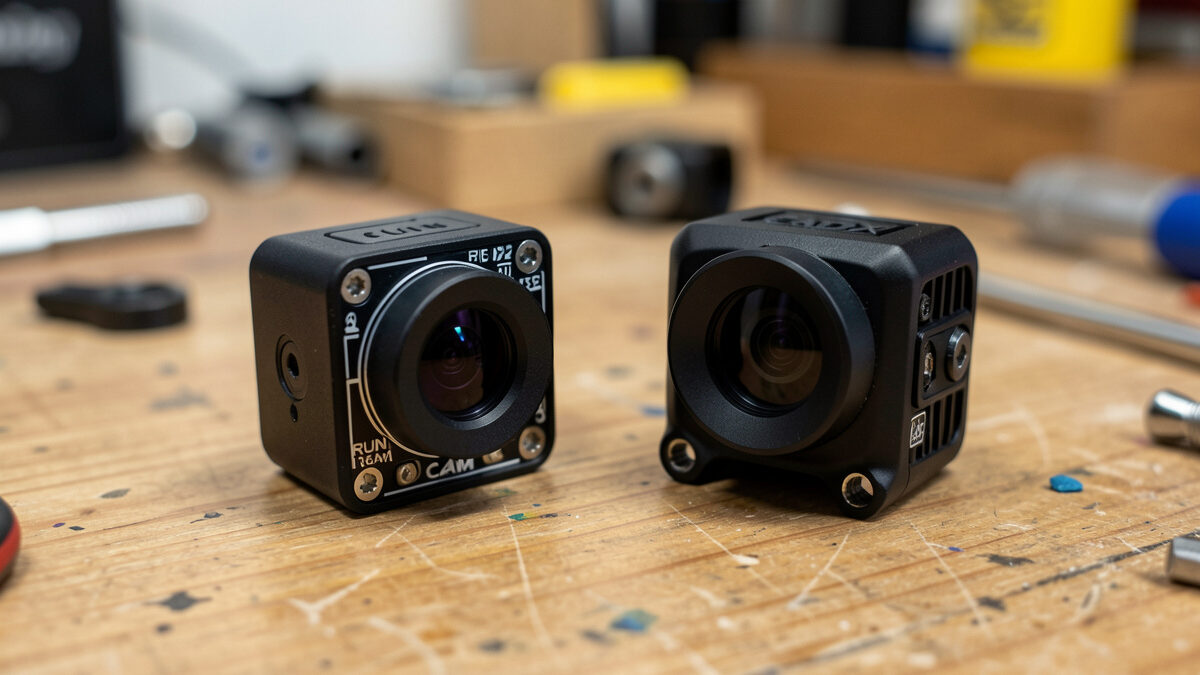
RunCam vs Caddx is the FPV camera question I get asked most, and the honest answer is that both make excellent cameras and the gap between their best models is smaller than the forums pretend. After bolting both brands into my own freestyle and cinewhoop builds, my rule is simple: Caddx tends to win on out-of-the-box color and a slightly more cinematic image, RunCam tends to win on consistency, tuning depth, and parts you can still find a year later. The right pick depends on whether you fly for the footage or for the feel.
This is a flying-camera decision, not a recording-camera one — the camera you choose here feeds your goggles so you can pilot, and its job is a usable, fast, well-exposed image, not a 4K masterpiece. If you are still mapping how the whole camera market fits together, start with the drone camera guide; this piece zooms into the one decision every FPV builder faces at the camera slot.
RunCam and Caddx both build analog and digital FPV cameras across the same size classes — nano, micro, and full-size — so the real differences live in image tuning, not hardware category. In my builds, Caddx cameras like the Ratel and Nebula line lean toward punchy, saturated color that looks great straight out of the box. RunCam cameras like the Phoenix and Night Eagle line lean toward a flatter, more neutral image with deeper menu control, which rewards pilots who actually tune their camera settings.
The practical split: if you want to plug a camera in and have it look good immediately, Caddx is the safer bet. If you want to dial exposure, sharpness, and color to your exact flying light and you enjoy that process, RunCam gives you more rope. Neither is wrong. I keep both brands on the bench precisely because they suit different builds.
For a flying camera, latency is the spec that decides whether your hands stay ahead of the quad. Both brands’ analog cameras sit in the low single-digit-millisecond range at the sensor, which is functionally a wash — the real latency in an analog system lives in your goggles and video link, not the camera. So if someone tells you to buy RunCam over Caddx “for lower latency” on analog, treat that as marketing noise. The camera contributes a rounding error.
Where latency genuinely diverges is on the digital side, but that is a system choice, not a brand one — a Caddx digital camera is locked to the Walksnail ecosystem and a digital RunCam to its matching system. That is why I treat the analog-vs-digital decision as the prerequisite to this one. Settle it first using the analog vs digital FPV guide, then pick the brand within whichever world you chose.
Freestyle and proximity flying live in the hardest light there is — bright sky above, dark ground and trees below, and fast transitions between them as you flip. This is where a flying camera earns its money, and it is where I see the clearest brand differences. RunCam’s Night Eagle and similar low-light-tuned cameras genuinely pull more detail out of shade and dusk, which matters for winter and forest flying. Caddx’s cameras handle bright-to-dark transitions with smooth, fast exposure shifts that look natural on a dive.
My own bias, flying mostly in the lower Nordic light half the year, leans RunCam for the low-light edge. But I would not overstate it — a well-set Caddx in good light beats a badly-set RunCam every time. The camera that wins is the one whose exposure response matches your flying light, which is exactly the priority I lay out in the best FPV camera for freestyle piece.
| Factor | RunCam | Caddx |
|---|---|---|
| Out-of-box color | Flatter, neutral | Punchy, saturated |
| Menu / tuning depth | Deeper, more control | Simpler, faster setup |
| Low-light strength | Strong (Night Eagle line) | Good, smooth transitions |
| Analog latency | Negligible difference | Negligible difference |
| Digital ecosystem | Own digital systems | Walksnail |
| Parts availability | Excellent, long support | Good, model-dependent |
| Best for | Tuners, low-light flyers | Plug-and-fly, color-first |
Both brands sell the same mount sizes — 19mm, 14mm nano, and the micro standard — so swapping between them is rarely a frame problem. What matters more on the bench is wiring and durability. I solder my own FPV cameras in during the build, and in my experience both brands survive crashes about equally; the lens housing is the usual casualty, not the board. Keep a spare lens around regardless of brand, because a cracked lens is the most common camera failure I log after a hard tumble.
If you are building a quad from scratch and the camera is just one slot on the bench, my full soldering and assembly approach lives in the FPV entry path, and the camera’s contribution to your all-up weight matters too — see camera weight and drone performance. A micro camera versus a full-size one is a few grams, but on a light build a few grams is real. When you shop, a quick search across both brands’ micro cameras shows how close they sit on price and size.
As an Amazon Associate I earn from qualifying purchases.
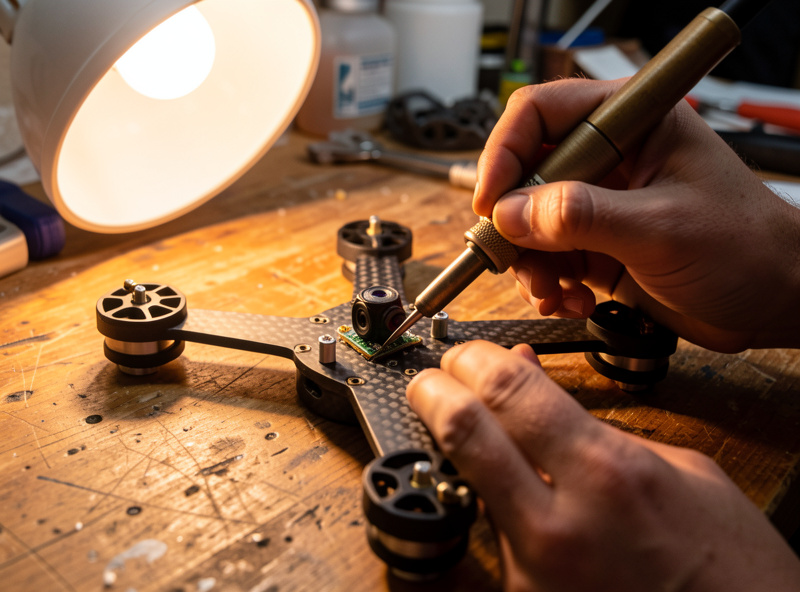
When I start a build, I pick the camera by the flying I plan to do with that quad. For a freestyle quad I will fly in mixed and low light, I reach for RunCam and spend ten minutes in the menu. For a cinewhoop or a quad I want looking good with zero fuss, I reach for Caddx and fly it as-is. For a build where parts availability matters — a quad I want to keep flying for years — RunCam’s longer support history nudges it ahead. None of those are universal truths; they are how I weight the trade-offs after living with both.
Do not let the brand war stall your build. Both companies make cameras good enough that your flying, your tuning, and your video link will affect the image far more than the logo on the board. Pick the one whose strengths match your light and your patience, bolt it in, and go fly. The camera is rarely the weakest link in a new pilot’s image — the goggles, the link, and the exposure settings usually are.
Both are excellent. Caddx tends to win on out-of-the-box punchy color and simple setup, while RunCam wins on tuning depth, low-light performance, and long-term parts availability. The better choice depends on your flying light and how much you like adjusting settings.
On analog, barely. Both brands sit in the low single-digit milliseconds at the sensor, and most real latency comes from your goggles and video link, not the camera. On digital, latency is set by the system the camera is locked to, not the brand itself.
RunCam’s low-light-tuned cameras like the Night Eagle line generally pull more detail from shade and dusk, which helps forest and winter flying. Caddx handles bright-to-dark transitions smoothly. A well-set Caddx still beats a badly-set RunCam in good light.
Usually yes. Both brands build to the same standard mount sizes (19mm, nano 14mm, and micro), so the frame fit is rarely an issue. You only need to re-check the wiring pinout when you swap.
RunCam has a longer track record of keeping models and spare lenses available over time, which matters if you want to keep a quad flying for years. Caddx availability is good but more model-dependent. Keep a spare lens on hand regardless of brand.
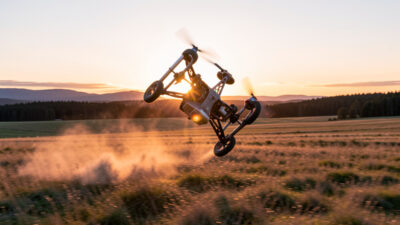
The best FPV camera for freestyle is the one with the widest dynamic range and…
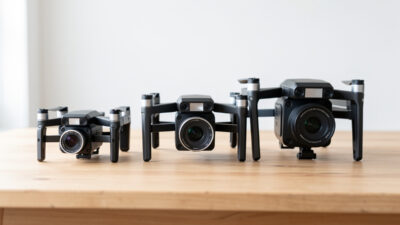
DJI drone camera quality climbs in real steps from the Mini class to the Air…
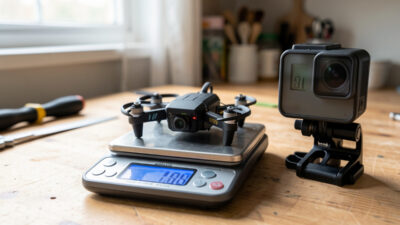
Camera weight and FPV drone performance are tied together by simple physics: every gram of…
Leave a Reply