DJI Drone Case and Bag Guide: Match It to Your Travel
The right DJI drone case is the one that matches how you travel, and getting…
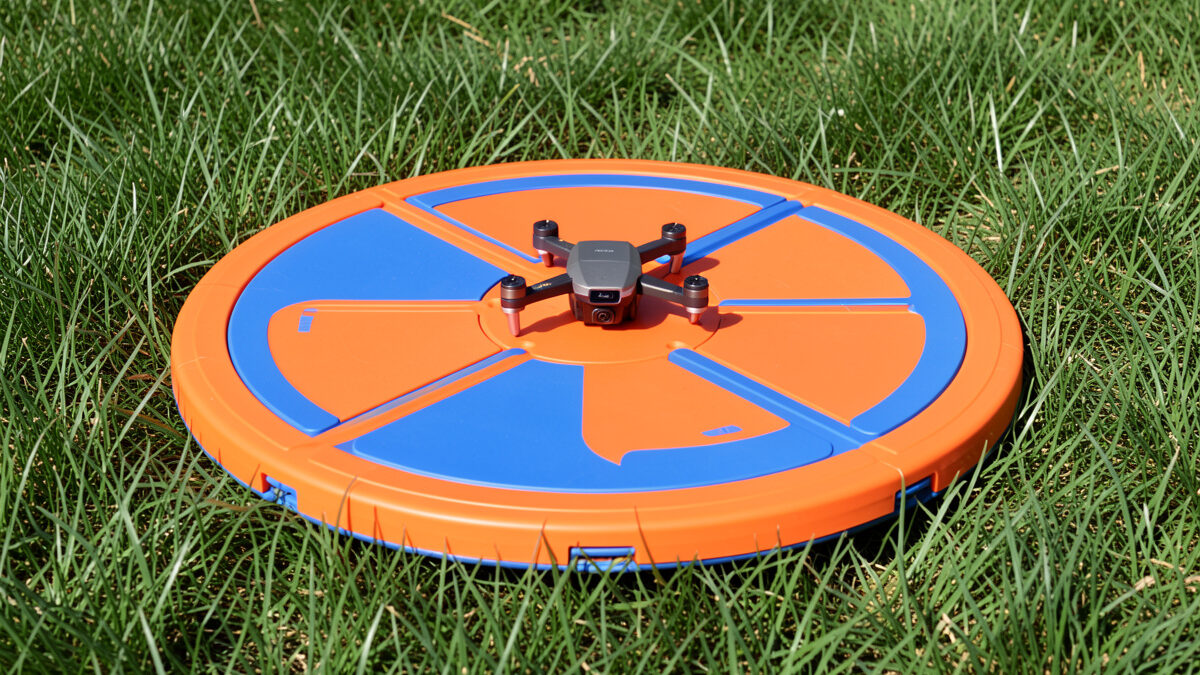
A drone landing pad solves one specific, expensive problem: grass, sand, gravel, and dust thrown up by prop wash on takeoff and landing, which goes straight into the gimbal and motors. A cheap collapsible pad gives you a clean, flat, visible launch surface and a clear home point for the return-to-home system to aim at. It is one of the least glamorous accessories in the bag and one I use on almost every flight. If you fly off natural ground — fields, beaches, trails — a pad is cheap insurance against grit where it hurts most.
This is the launch-surface chapter of my DJI drone accessories guide. It is not a complicated purchase, but there are a few details — size, material, anchoring, and visibility — that separate a pad that helps from one that blows away on the first gust.
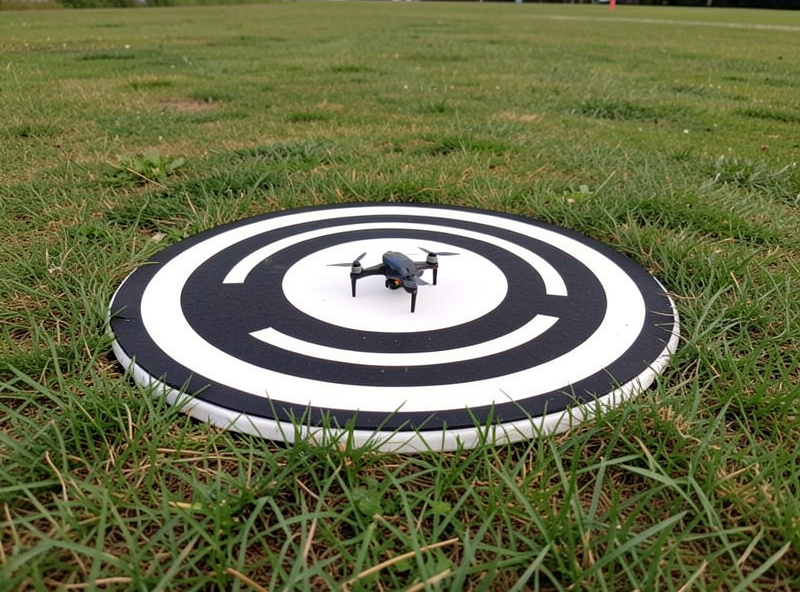
The core problem is debris. A drone’s propellers move a surprising amount of air close to the ground, and on a grass field or a sandy beach that air picks up loose material and throws it into the most fragile parts of the aircraft — the gimbal assembly and the motor bells. Sand in a motor bearing shortens its life; grit on a gimbal can scratch the lens or jam the movement. A landing pad gives you a clean surface so the prop wash has nothing to throw.
There is a second benefit that matters more than people expect: the downward vision sensors. Modern DJI drones use downward cameras and sensors to hold position and judge landings, and tall grass, water, or a featureless surface can confuse them. A high-contrast pad gives those sensors a clear, patterned target to lock onto, which makes takeoff and landing steadier — especially the automated return-to-home descent. On uneven natural ground, the pad is also simply a flat place to set down without tipping.
Landing pads come in diameters from small Mini-sized discs up to large pads for bigger aircraft. The rule is simple: bigger is more forgiving on landing but less portable. For a sub-250g Mini, a small pad packs tiny and is plenty for a careful pilot, but a slightly larger pad gives you margin on a windy automated landing where the drone may drift before it settles. For a larger Air-class or Mavic-class drone, size up so an imperfect descent still lands on the pad.
My practice: I carry a mid-sized pad that suits both my Mini and my heavier drone rather than a tiny one. The extra few centimeters of diameter cost almost nothing in pack size and save the occasional drift-landing from ending in the grass. If you only ever fly the Mini and pack space is precious, the small pad is fine — just plan your landings rather than trusting the drone to nail the center every time.
| Pad size | Typical diameter | Best for | Trade-off |
|---|---|---|---|
| Small | Around 50 cm | Sub-250g Mini, tight pack space | Less landing margin |
| Medium | Around 70-75 cm | Most flyers, mixed fleet | Good all-round balance |
| Large | Around 100+ cm | Larger drones, windy automated landings | Bulkier to carry |
The biggest real-world failure of a landing pad is that it blows away. A lightweight nylon disc on a breezy day will lift and flip the moment you step back, and a pad chasing across a field while your drone tries to land on it is worse than no pad at all. This is the detail that separates a good pad from a frustrating one. Look for a pad that comes with ground stakes or pegs, and actually use them — most pads include three or four metal stakes through edge loops.
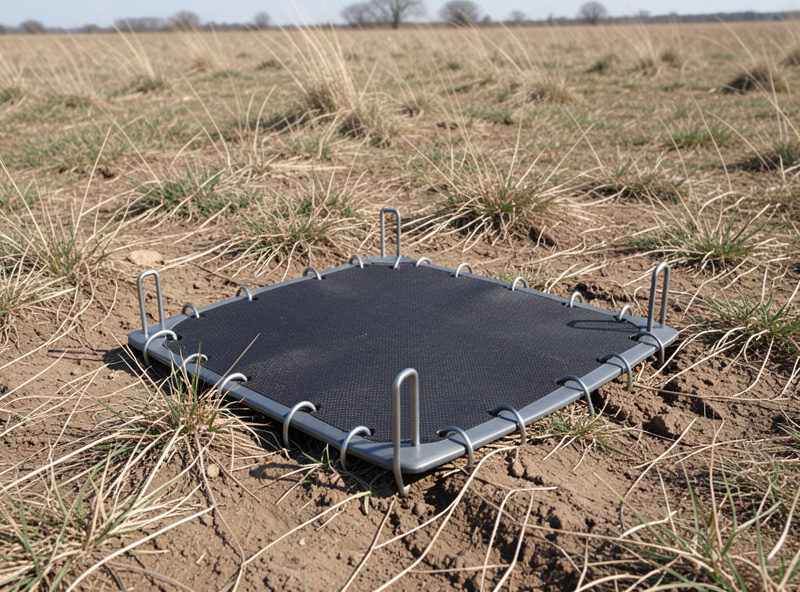
On surfaces where you cannot stake — concrete, rock, a parking area — weigh the corners with whatever you have: your bag, a battery case, a couple of stones. Some pads have weight pockets sewn into the edge for exactly this. The material itself should be a tough, water-resistant fabric (most are a coated nylon) that wipes clean and folds back into its spring-steel hoop. Speaking of which: learning the figure-eight fold that collapses a spring-hoop pad back into its pouch is a genuine rite of passage — watch it once and you will save yourself a field-side wrestling match.
Most good pads are double-sided with two high-contrast color schemes — typically orange on one side and blue on the other — so you can flip to whichever stands out against the ground you are on. Orange pops against green grass and snow; blue or a darker pattern can read better against sand or pale concrete. The point is contrast: you want the pad obvious both to your own eye at distance and to the drone’s downward sensors. Some pads add reflective strips or a printed landing target, which helps in low light and gives the return-to-home descent a clear bullseye.
For night-adjacent or low-light flying within the rules, a pad with reflective edging or one you can mark with a small light makes the home point findable as the light drops. I keep a mid-size, double-sided, staked pad and that covers every surface I fly off in Sweden, from summer fields to a dusting of snow.
A pad only helps if it is part of a repeatable launch habit, and mine is the same every flight. I scout a flat, open spot clear of people and obstacles, stake the pad down with the high-contrast side up, and set the drone in the center facing away from me. I step back the full distance the manual asks for before arming, and I let the aircraft find its home point over the patterned pad rather than over featureless grass. That patterned surface is what the downward sensors lock the home position to, and it makes the eventual return-to-home descent land where I started instead of drifting into the rough.
On landing I bring the drone back manually to a low hover over the pad and set it down gently rather than trusting a fully automated descent in wind. The pad gives me a target I can judge against, and the clean surface means the final burst of prop wash as it touches down throws nothing into the gimbal. This is the same discipline I bring to every bench in the workshop: a clean, prepared work surface prevents the small contamination problems that become expensive later. A motor that never eats sand lasts a lot longer than one that does, and the pad is the cheapest way to keep grit out.
A landing pad lives a hard life — staked into dirt, rained on, folded wet, dragged across gravel — so a little care keeps it usable for years. I shake the worst grit off before folding, and if it has been on wet ground I let it dry before it goes back in the pouch, because a damp pad folded away grows mildew and the coated fabric starts to smell and degrade. The spring-steel hoop is the part that fails if you abuse it; forcing the fold the wrong way can kink the steel and then it will never sit flat again, so it is worth learning the proper figure-eight collapse.
I also keep the stakes in a small bag clipped to the pad pouch, because loose ground stakes are the easiest accessory in the whole kit to lose in long grass. If you fly off sand or salt regularly — beaches are some of the best places to fly but the worst for your gear — rinse the pad occasionally so salt does not work into the fabric and stitching. None of this is demanding, but a pad that is looked after is one that still anchors properly and reads clearly to the sensors after a couple of seasons of hard use.
A landing pad is useful, not mandatory, and there are times I skip it. Off a clean hard surface — a wooden deck, smooth concrete, a flat rock — there is no debris to throw and the pad adds nothing but a step. Hand-launching and hand-catching, which experienced pilots do with light drones in tight spots, also removes the need for a ground surface entirely, though it is a skill to learn carefully and not something to attempt over hard ground or with spinning props near your hand before you are confident. For most flying off natural ground, though, the pad earns its tiny pack space many times over.
As an Amazon Associate I earn from qualifying purchases. A double-sided staked drone landing pad on Amazon is the version that does not blow away.
If you are building out the rest of the bag, the landing pad pairs naturally with the protection gear in my case and bag guide and the launch discipline that keeps grit out of your batteries and gimbal. For the full picture of what belongs in a sub-250g kit, start at the accessories hub and the Mini 4 Pro accessories guide, and if grit has already found your gimbal or motors, my traveling with a drone notes cover keeping the aircraft clean on the move.
The right DJI drone case is the one that matches how you travel, and getting…
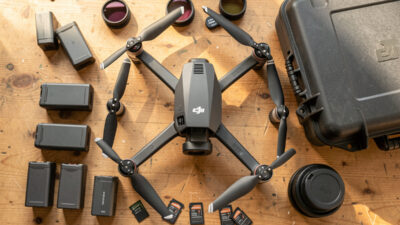
The accessories that actually matter for a DJI camera drone are the ones that protect…
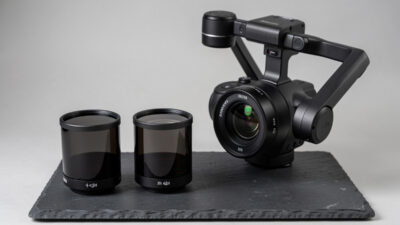
ND filters fix the single most common problem in daylight drone footage: choppy, stuttery motion…
Leave a Reply